

Not mission creep, at least not yet
Advertisement
Read this article for free:
or
Already have an account? Log in here »
To continue reading, please subscribe:
Monthly Digital Subscription
$0 for the first 4 weeks*
- Enjoy unlimited reading on winnipegfreepress.com
- Read the E-Edition, our digital replica newspaper
- Access News Break, our award-winning app
- Play interactive puzzles
*No charge for 4 weeks then price increases to the regular rate of $19.00 plus GST every four weeks. Offer available to new and qualified returning subscribers only. Cancel any time.
Monthly Digital Subscription
$4.75/week*
- Enjoy unlimited reading on winnipegfreepress.com
- Read the E-Edition, our digital replica newspaper
- Access News Break, our award-winning app
- Play interactive puzzles
*Billed as $19 plus GST every four weeks. Cancel any time.
To continue reading, please subscribe:
Add Free Press access to your Brandon Sun subscription for only an additional
$1 for the first 4 weeks*
*Your next subscription payment will increase by $1.00 and you will be charged $16.99 plus GST for four weeks. After four weeks, your payment will increase to $23.99 plus GST every four weeks.
Read unlimited articles for free today:
or
Already have an account? Log in here »
Hey there, time traveller!
This article was published 23/04/2011 (5342 days ago), so information in it may no longer be current.
AS the situation continues to deteriorate in Libya, Britain announced this week it would send about 20 military advisers to assist rebels in Libya who find themselves hard-pressed by the armed forces answering to Libyan leader Moammar Gadhafi.
France, and even Italy, which had previously distanced itself from NATO’s involvement in the civil war, have since said that they would do the same.
The no-fly zone proclaimed by the United Nations Security Council and enforced by an alliance of mostly NATO nations, including Canada, has proved to be largely ineffective in protecting the Libyan rebels in recent weeks.
The government in Tripoli denounced the European move Wednesday as an escalation of foreign aggression, calling the introduction of a handful of foreign advisers equivalent to a military operation. There is nothing in the UN resolution that actually forbids the use of alliance forces on the ground to protect civilians in Libya, but few nations are willing to contemplate such an escalation. The United States in particular is adamant it will not participate in any such manoeuvres, and is now reluctant even to commit its warplanes that had begun enforcing the no-fly before command of the mission was handed over to NATO.

While Britain and France, and now Italy, remain committed to supporting the revolution in Libya, and Canada continues to participate in the air mission there, other NATO nations have been less enthusiastic. Washington continues to talk a good fight as the revolutionaries across the Arab world continue to fight the good fight — American Secretary of State Hillary Clinton deplores, on almost a daily basis, the brutality of Arab regimes in Libya, Syria, Yemen and Bahrain. On Wednesday, she condemned the continuing repression of demonstrations in Syria and the torture of protesters there, but it has become increasingly clear to alliance members, to Arab dictators, and to pro-democracy activists that, among the Western democracies, the U.S. may be the most frail reed to lean on right now.
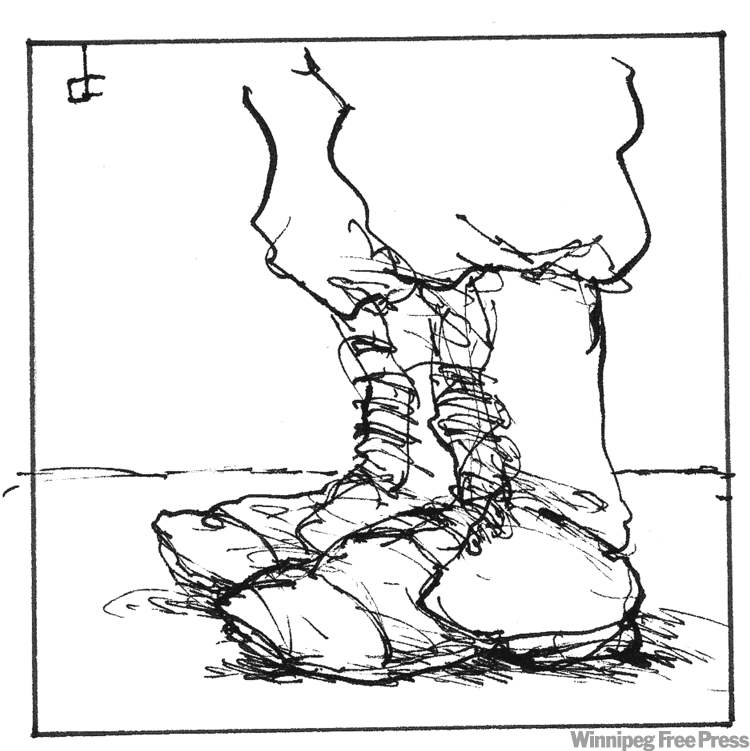
Britain denies its commitment of advisers to Libyan rebels represents so-called “mission creep,” the much-dreaded phenomenon that would see Western military “boots on the ground” in that conflict. And the British are right. It is not mission creep, at least not yet. It is instead a welcome demonstration that at least a few democracies are willing to follow up on what they began when they first defended democracy in the luckless land of Col. Gadhafi.