

Denmark reports cases of bluetongue disease that can be fatal to sheep but is harmless to humans
Advertisement
Read this article for free:
or
Already have an account? Log in here »
To continue reading, please subscribe:
Monthly Digital Subscription
$0 for the first 4 weeks*
- Enjoy unlimited reading on winnipegfreepress.com
- Read the E-Edition, our digital replica newspaper
- Access News Break, our award-winning app
- Play interactive puzzles
*No charge for 4 weeks then price increases to the regular rate of $19.00 plus GST every four weeks. Offer available to new and qualified returning subscribers only. Cancel any time.
Monthly Digital Subscription
$4.75/week*
- Enjoy unlimited reading on winnipegfreepress.com
- Read the E-Edition, our digital replica newspaper
- Access News Break, our award-winning app
- Play interactive puzzles
*Billed as $19 plus GST every four weeks. Cancel any time.
To continue reading, please subscribe:
Add Free Press access to your Brandon Sun subscription for only an additional
$1 for the first 4 weeks*
*Your next subscription payment will increase by $1.00 and you will be charged $16.99 plus GST for four weeks. After four weeks, your payment will increase to $23.99 plus GST every four weeks.
Read unlimited articles for free today:
or
Already have an account? Log in here »
Hey there, time traveller!
This article was published 03/09/2024 (462 days ago), so information in it may no longer be current.
COPENHAGEN, Denmark (AP) — Denmark reported Tuesday cases of bluetongue in the country’s east, a non-contagious, insect-borne viral disease that is harmless to humans but can be fatal for so-called ruminant animals — mainly sheep but also cows and goats.
Authorities said the virus known as bluetongue serotype 3, or BTV-3, has been crawling up through Europe in the past weeks. It’s spread by midges that carry the virus and that are typically found in warmer weather.
It has been reported on the island where Copenhagen is located. Cases have also been reported in Germany, the Netherlands and France, Danish authorities said.
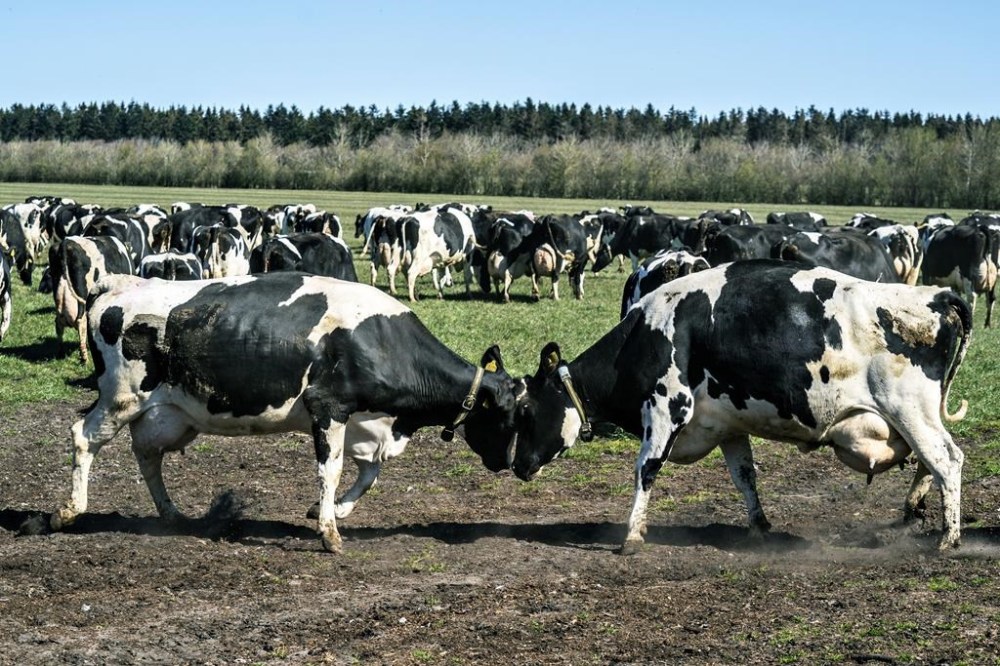
The first case in Denmark was recorded in early August, on a Danish farm with sheep and cows near the German border. Danish authorities have also informed the European Commission about the case and animals have since been vaccinated to try and contain the spread.
The Danish Veterinary and Food Administration said tests results are upcoming from the island of Funen in central Denmark, where it is also suspected.
“The probability of the virus spreading via mites to the whole country is therefore considered to be high,” the administration said in a statement.
Major signs in animals include high fever, mouth ulcers and swelling of the face and tongue — as well as a blue color of the tongue, known as cyanosis, stemming from a lack of oxygen. Sheep, cattle and goats also tend to have breathing difficulties.
Infected animals yield less milk, though the milk is safe for human consumption, authorities said.