

Indian drama a delicate look at human connection

Advertisement
Read this article for free:
or
Already have an account? Log in here »
To continue reading, please subscribe:
Digital Subscription
One year of digital access for only $1.44 a week*
- Enjoy unlimited reading on winnipegfreepress.com
- Read the E-Edition, our digital replica newspaper
- Access News Break, our award-winning app
- Play interactive puzzles
*Billed as $5.77 plus GST every four weeks. After 52 weeks, price increases to the regular rate of $19.95 plus GST every four weeks. Offer available to new and qualified returning subscribers only. Cancel any time.
To continue reading, please subscribe:
Add Free Press access to your Brandon Sun subscription for only an additional
$1 for the first 4 weeks*
- Enjoy unlimited reading on winnipegfreepress.com
- Read the E-Edition, our digital replica newspaper
- Access News Break, our award-winning app
- Play interactive puzzles
*Your next Brandon Sun subscription payment will increase by $1.00 and you will be charged $17.95 plus GST for four weeks. After four weeks, your payment will increase to $24.95 plus GST every four weeks.
Read unlimited articles for free today:
or
Already have an account? Log in here »
Hey there, time traveller!
This article was published 05/07/2019 (2518 days ago), so information in it may no longer be current.
This plot of this Indian drama, about a wealthy but depressed young urbanite who falls in love with his impoverished servant, seems ripe for romantic Bollywood cliches.
Filmmaker Rohena Gera deftly avoids them. Whenever she seems to be veering toward peppy messages like “love conquers all” or “money doesn’t buy happiness,” she pulls up. In this quiet, closely observed film (in Hindi, Marathi and English, with subtitles), the feelings of our star-crossed couple are always set within a much bigger and more complicated context of class structures, patriarchal power and massive demographic shifts.
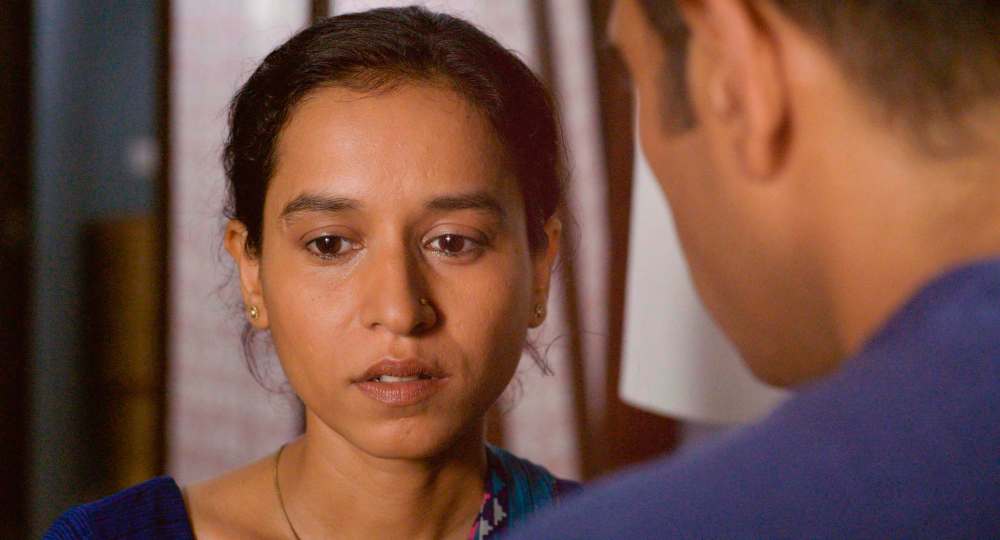
Widowed at 19, Ratna (Tillotama Shome of Monsoon Wedding) has no future in her small, traditional rural community and has come to Mumbai to work as a live-in maid for “Sir,” as she always calls him. She sends money home for her sister’s education and dreams of training as a tailor.
Ashwin (Vivek Gomber), meanwhile, has rich-people problems. He has recently broken off an engagement to a “suitable” woman of his own socio-economic class, and he’s frustrated at work. His mother coddles him, and his father doesn’t trust him with business matters.
At first, Ashwin seems mopey and passive, while Ratna can appear silent and deferential. Initial impressions are misleading, though. Aided by naturalistic performances that gradually draw out the characters’ layers, we start to see Ratna’s tough, independent core and Ashwin’s kindness.
The relationship between the two begins to change, but this is no story of grand, all-consuming passion. Ratna and Ashwin’s emotions are muted and mysterious, even to themselves. The growing closeness proceeds through indirection, small gestures and silence, and the tension is both understated and effective.
Gera also takes some time to suggest the endless everyday round of Ratna’s domestic labour, with lots of scenes of her picking things up and straightening things out. As in Alfonso Cuarón’s recent Roma and the Brazilian film The Second Mother, there is a nuanced depiction of the uneasy proximity of the employer-servant relationship, which is both highly intimate and profoundly unequal.
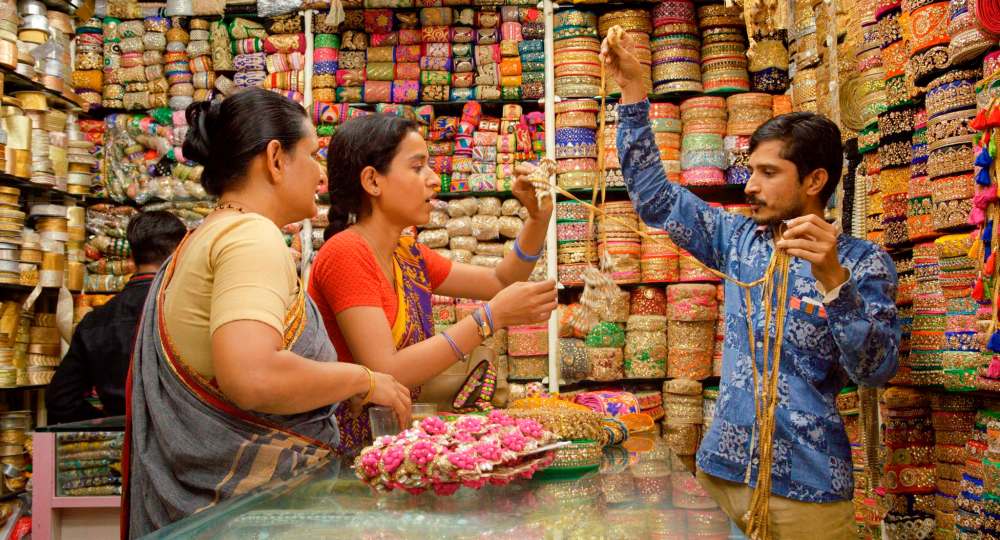
Gera alternates between enclosed scenes in Ashwin’s high-rise apartment and sequences that open up the city, both through glamorous aerial nighttime views and the crowded, noisy, on-the-ground experience of the streets and marketplaces.
Gera’s previous work includes the documentary What’s Love Got to Do with It?, in which she looked at modern middle-class Indians choosing between marrying for romantic love or making a more practical arranged union. That experience informs Sir, which deals with relationships between men and women in a rapidly changing culture, while keeping a sharp eye on women’s issues.
Ratna has been promised that “here in Mumbai, you can make your own life by your own rules,” but the obstacles put in her way suggest this isn’t necessarily true for poor young women. In one standout scene, she deflates Ashwin’s romantic vows with her clear-eyed and very unsentimental realization that she stands to lose much more than he does with a love affair gone wrong.
There are some uneven and awkward spots, and moments where Gera’s neo-realistic approach falters. A scene in which Ashwin observes the subsistence living conditions of the men who work for his family company feels thrown in, for example, but overall, Sir is a delicate and powerful look at human connection.
(If you really want to dive into Indian neo-realism, Cinematheque this weekend will show Satyajit Ray’s Pather Pancahli — a masterpiece of that genre and a landmark of world cinema.)
alison.gillmor@freepress.mb.ca
Studying at the University of Winnipeg and later Toronto’s York University, Alison Gillmor planned to become an art historian. She ended up catching the journalism bug when she started as visual arts reviewer at the Winnipeg Free Press in 1992.
Our newsroom depends on a growing audience of readers to power our journalism. If you are not a paid reader, please consider becoming a subscriber.
Our newsroom depends on its audience of readers to power our journalism. Thank you for your support.
Movie REVIEW
SIR
Starring Tillotama Shome and Vivek Gomber
● Cinematheque
● PG ● 99 minutes
★★★1/2 out of five
Studying at the University of Winnipeg and later Toronto’s York University, Alison Gillmor planned to become an art historian. She ended up catching the journalism bug when she started as visual arts reviewer at the Winnipeg Free Press in 1992.
Our newsroom depends on a growing audience of readers to power our journalism. If you are not a paid reader, please consider becoming a subscriber.
Our newsroom depends on its audience of readers to power our journalism. Thank you for your support.
Advertisement Advertise With Us
Advertisement Advertise With Us