

The EU and Germany will give Albania $88 million to turn the capital’s 3 main bus lines electric
Advertisement
Read this article for free:
or
Already have an account? Log in here »
To continue reading, please subscribe:
Monthly Digital Subscription
$0 for the first 4 weeks*
- Enjoy unlimited reading on winnipegfreepress.com
- Read the E-Edition, our digital replica newspaper
- Access News Break, our award-winning app
- Play interactive puzzles
*No charge for 4 weeks then price increases to the regular rate of $19.00 plus GST every four weeks. Offer available to new and qualified returning subscribers only. Cancel any time.
Monthly Digital Subscription
$4.75/week*
- Enjoy unlimited reading on winnipegfreepress.com
- Read the E-Edition, our digital replica newspaper
- Access News Break, our award-winning app
- Play interactive puzzles
*Billed as $19 plus GST every four weeks. Cancel any time.
To continue reading, please subscribe:
Add Free Press access to your Brandon Sun subscription for only an additional
$1 for the first 4 weeks*
*Your next subscription payment will increase by $1.00 and you will be charged $16.99 plus GST for four weeks. After four weeks, your payment will increase to $23.99 plus GST every four weeks.
Read unlimited articles for free today:
or
Already have an account? Log in here »
Hey there, time traveller!
This article was published 06/03/2024 (641 days ago), so information in it may no longer be current.
TIRANA, Albania (AP) — The European Union and Germany said Wednesday they would give Albania a combined 81.09 million euros (about $88 million) to turn the three main bus lines in the capital Tirana electric, part of helping the Balkan country meet requirements to join the 27-nation bloc.
The bloc will give the Green Transport Tirana project 31.09 million euros ($34 million) as a grant while Germany’s KFW Development Bank will loan it 50 million euros ($54 million). The Tirana municipality will also invest 29.17 million euros ($31.6 million).
This will be the first electric Bus Rapid Transport system, known as “e-BRT,” in Albania.
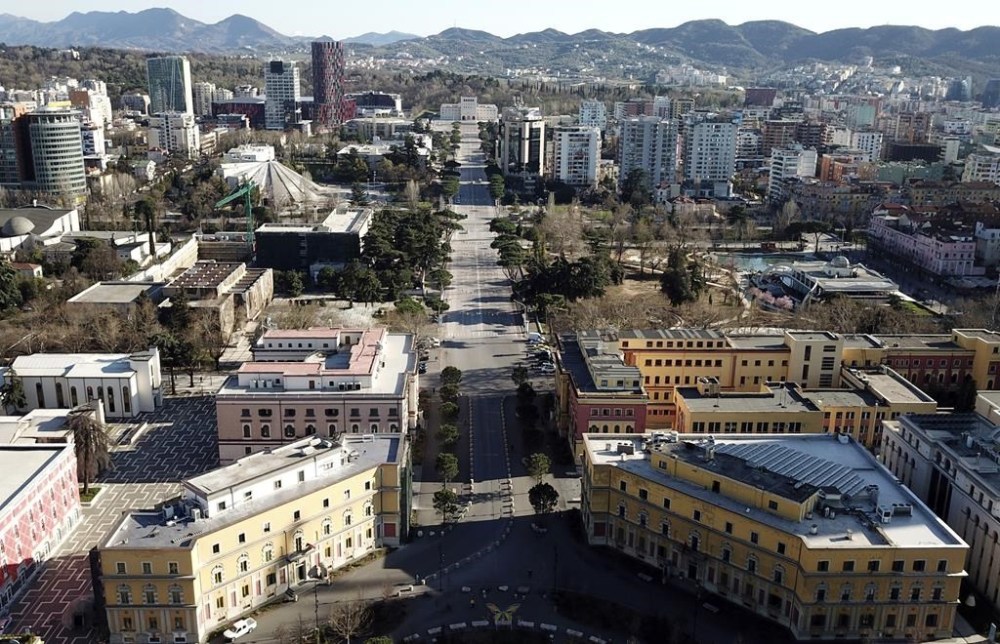
The project, expected to start this year, aims to significantly improve public transport service and reduce carbon dioxide emissions as well as air pollutants.
Tirana’s post-communist population has increased more than three-fold: from 300,000 in 1990 to one million. Its current transport lines operate second-hand buses that slowly drive around the city’s packed streets, with few dedicated lanes to them.
The Western Balkans countrie s — Albania, Bosnia, Kosovo, Montenegro, North Macedonia and Serbia — are at different stages in their applications for EU membership which has frustrated residents due to its slow pace. Russia’s invasion of Ukraine, which started in Feb. 2022, has propelled European leaders to push the six to join the bloc.

Russia traditionally holds sway in the Balkans, particularly among Orthodox Christian Serbs.
Recently, EU officials offered a 6 billion euro (about $6.4 billion) package for the Balkan nations to encourage reform and lure them away from Russian influence.