

Arkansas stops offering ‘X’ as an alternative to male and female on driver’s licenses and IDs
Advertisement
Read this article for free:
or
Already have an account? Log in here »
To continue reading, please subscribe:
Monthly Digital Subscription
$0 for the first 4 weeks*
- Enjoy unlimited reading on winnipegfreepress.com
- Read the E-Edition, our digital replica newspaper
- Access News Break, our award-winning app
- Play interactive puzzles
*No charge for 4 weeks then price increases to the regular rate of $19.00 plus GST every four weeks. Offer available to new and qualified returning subscribers only. Cancel any time.
Monthly Digital Subscription
$4.75/week*
- Enjoy unlimited reading on winnipegfreepress.com
- Read the E-Edition, our digital replica newspaper
- Access News Break, our award-winning app
- Play interactive puzzles
*Billed as $19 plus GST every four weeks. Cancel any time.
To continue reading, please subscribe:
Add Free Press access to your Brandon Sun subscription for only an additional
$1 for the first 4 weeks*
*Your next subscription payment will increase by $1.00 and you will be charged $16.99 plus GST for four weeks. After four weeks, your payment will increase to $23.99 plus GST every four weeks.
Read unlimited articles for free today:
or
Already have an account? Log in here »
Hey there, time traveller!
This article was published 12/03/2024 (635 days ago), so information in it may no longer be current.
LITTLE ROCK, Ark. (AP) — Arkansas will no longer allow residents to use “X” instead of male or female on state-issued driver’s licenses or identification cards, officials announced under new rules Tuesday that will also make it more difficult for transgender people to change the sex listed on their licenses and IDs.
The changes announced by the Department of Finance and Administration reverse a practice that’s been in place since 2010, and removes the “X” option that had been used by nonbinary and intersex residents. The agency has asked a legislative panel to approve an emergency rule spelling out the new process.
Republican Gov. Sarah Huckabee Sanders, who last year signed an executive order banning gender-neutral terms from state documents, called the move “common sense.”
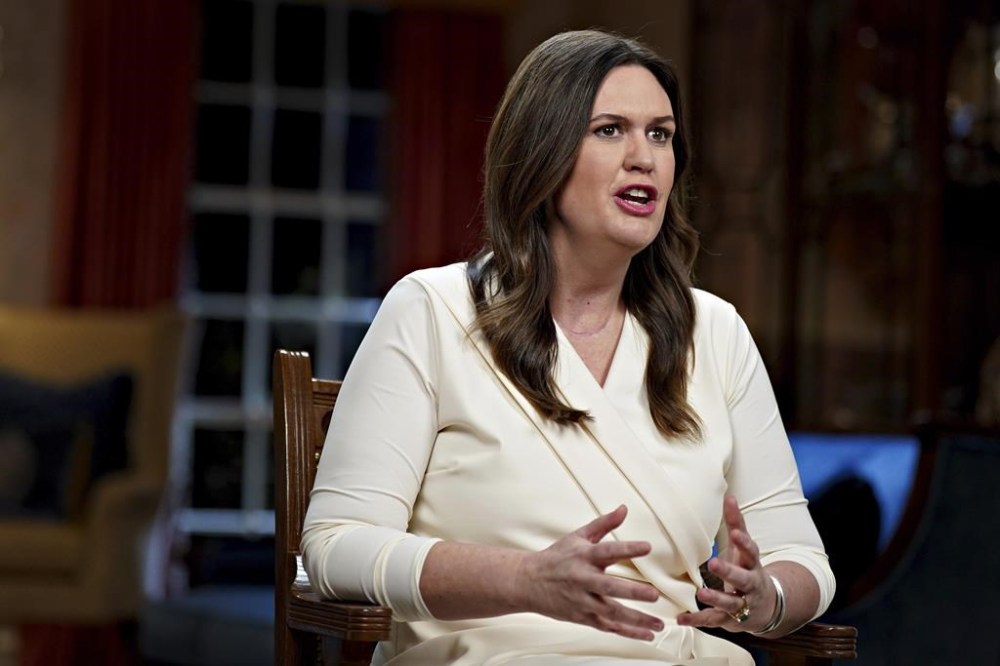
“As long as I’m governor, Arkansas state government will not endorse nonsense,” Sanders said in a news release.
The move is latest among Republican states to legally define sex as binary, which critics say is essentially erasing transgender and nonbinary people’s existences and creating uncertainty for intersex people — those born with physical traits that don’t fit typical definitions of male or female.
“This proposed policy seeks to erase the existence of non-binary and intersex Arkansans by denying them identity documents that reflect their true selves, forcing them into categories that do not represent their identities,” the American Civil Liberties Union of Arkansas said in a statement.
At least 22 states and the District of Columbia allow “X” as an option on licenses and IDs. All previously issued Arkansas licenses and IDs with the “X” designation will remain valid through their existing expiration dates, the department said. Arkansas has more than 2.6 million active driver’s licenses, and 342 of them have the “X” designation. The state has about 503,000 IDs, and 174 with the “X” designation.
The changes would also make it more difficult for transgender people to change the sex listed on their licenses and IDs by requiring an amended birth certificate be submitted. Currently, a court order is required to change the sex listed on a birth certificate in the state.
Under the new rules, the sex listed on an Arkansas driver’s license or ID must match a person’s birth certificate, passport or Homeland Security document. Passports allow “X ”as an option alongside male and female. If a person’s passport lists “X” as their gender marker, the applicant must choose male or female, Finance and Administration spokesman Scott Hardin said.
DFA Secretary Jim Hudson said in a statement that the previous practice wasn’t supported by state law and hadn’t gone through the public comment process and legislative review required by law.
The policy comes after Arkansas has enacted several measures in recent years targeting the rights of transgender people, including a ban on gender affirming care for minors that’s been struck down by a federal judge as unconstitutional. The 8th U.S. Circuit Court of Appeals is scheduled to hear oral arguments next month in the state’s appeal of that decision.