

Algal toxin high here: study
Killarney, Winnipeg lakes most infected
Advertisement
Read this article for free:
or
Already have an account? Log in here »
To continue reading, please subscribe:
Digital Subscription
One year of digital access for only $75*
- Enjoy unlimited reading on winnipegfreepress.com
- Read the E-Edition, our digital replica newspaper
- Access News Break, our award-winning app
- Play interactive puzzles
*Billed as $5.77 plus GST every four weeks. After 52 weeks, price increases to the regular rate of $19.95 plus GST every four weeks. Offer available to new and qualified returning subscribers only. Cancel any time.
Monthly Digital Subscription
$4.99/week*
- Enjoy unlimited reading on winnipegfreepress.com
- Read the E-Edition, our digital replica newspaper
- Access News Break, our award-winning app
- Play interactive puzzles
*Billed as $19.95 plus GST every four weeks. Cancel any time.
To continue reading, please subscribe:
Add Free Press access to your Brandon Sun subscription for only an additional
$1 for the first 4 weeks*
- Enjoy unlimited reading on winnipegfreepress.com
- Read the E-Edition, our digital replica newspaper
- Access News Break, our award-winning app
- Play interactive puzzles
*Your next Brandon Sun subscription payment will increase by $1.00 and you will be charged $17.95 plus GST for four weeks. After four weeks, your payment will increase to $24.95 plus GST every four weeks.
Read unlimited articles for free today:
or
Already have an account? Log in here »
Hey there, time traveller!
This article was published 15/08/2012 (5030 days ago), so information in it may no longer be current.
Manitoba has some of the highest concentrations of a potent toxin produced by some blue-green algae, a new study warns.
However, the solution to the problem might be tougher now that federal funding has been cut to the Experimental Lakes Area, the lead author cautioned Tuesday.
“(The study) points to where the problem may lie. However, it doesn’t give us the answers,” said Diane Orihel, a PhD candidate at the University of Alberta and lead author of the study. “We need to do experiments where we can manipulate ecosystems.”
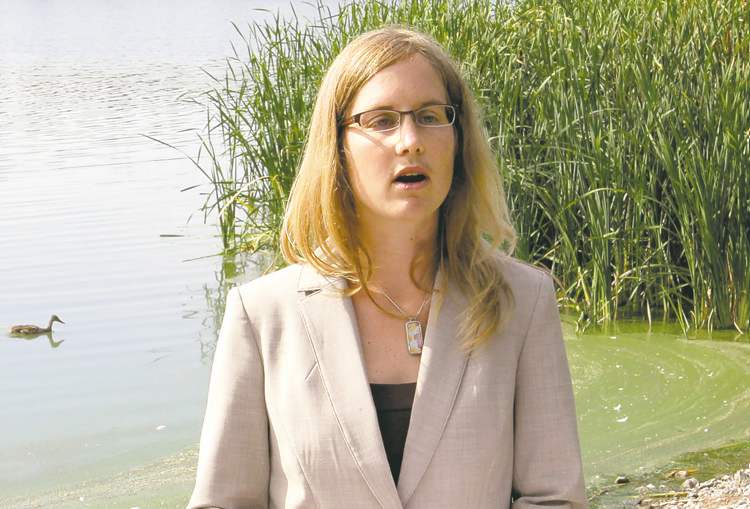
The study, published Tuesday, surveyed almost 250 lakes across Canada and found high concentrations of the toxin microcystin in every province. Microcystin can cause liver hemorrhaging and can be a carcinogen in high concentrations.
Lakes in southwestern Manitoba and central Alberta had the highest concentrations of microcystin. Killarney Lake, followed by Lake Winnipeg, had the highest toxin levels in Manitoba, Orihel said.
Microcystin is found in lakes heavily loaded with nutrients. Although it does naturally occur, agricultural runoff and sewage have drastically increased levels.
Across the country, nine per cent of lakes had levels of microcystin that surpassed Canadian guidelines for recreational water use. These levels fluctuate, Orihel says; lakes can have safe toxin levels one day and high concentrations the next.
She said cottagers and boaters should pay close attention to blue-green algae warnings issued by provincial governments. When those levels are high, microcystins are also likely to be high.
Although it’s been known for a long time that nutrient runoff cause water-quality problems, new technology has allowed scientists for the first time to isolate and quantify the presence of microcystin, Orihel said. The study found lakes with high levels of phosphorus but low nitrogen produce more of the toxin, but she said this still needs to be tested.
“This was the first paper to see if these are the broad brush strokes across the country,” she said.
Orihel said the Experimental Lakes Area in Ontario would be ideal for experiments to find how to address the study’s concerns. The ELA has been targeted by government budget cuts. Orihel and Manitoba Liberal Leader Jon Gerrard have pushed Ottawa to save the project.
“In order to find the cures to what ails us, we need to conduct the right experiments,” Orihel said.
The government is cutting its $2-million funding for the Environmental Lakes Area project, a unique open-air lab of 58 remote water bodies.
Environment Canada said Tuesday it needed more time to process the media request and respond to the study.
The Manitoba government said there are many measures to help regulate the toxins and warn the public about high toxin levels, which have been a concern for years.
“Certainly we’re very concerned about the number of toxins,” said Nicole Armstrong, a director with Manitoba Conservation and Water Stewardship, citing Killarney Lake and Pelican Lake as some of the worst affected.
The provincial government has been trying to reduce the level of nutrients through measures such as banning phosphates in dish soap and preserving wetlands, which filter out the excess nutrients, Armstrong said.
“Actions we take to reduce nutrient loading in Lake Winnipeg will reduce it in Pelican Lake and Killarney Lake,” she said.

Prime Minister Stephen Harper pledged $18 million on Aug. 9 to clean up Lake Winnipeg but wouldn’t throw the Experimental Lakes Area a lifeline.
Massive blooms of blue-green algae plague the lake every summer, Orihel said. Algal blooms kill fish, increase the cost of water treatment, devalue shoreline properties and pose health risks to children, pets and livestock.
— With files from Carol Sanders, The Canadian Press
jennifer.ford@freepress.mb.ca
Related Articles
Scientists, students protest cuts to Experimental Lakes
Advertisement Advertise With Us
Advertisement Advertise With Us