

Resist temptation to help baby animals
Advertisement
Read this article for free:
or
Already have an account? Log in here »
To continue reading, please subscribe:
Digital Subscription
One year of digital access for only $75*
- Enjoy unlimited reading on winnipegfreepress.com
- Read the E-Edition, our digital replica newspaper
- Access News Break, our award-winning app
- Play interactive puzzles
*Billed as $5.77 plus GST every four weeks. After 52 weeks, price increases to the regular rate of $19.95 plus GST every four weeks. Offer available to new and qualified returning subscribers only. Cancel any time.
Monthly Digital Subscription
$4.99/week*
- Enjoy unlimited reading on winnipegfreepress.com
- Read the E-Edition, our digital replica newspaper
- Access News Break, our award-winning app
- Play interactive puzzles
*Billed as $19.95 plus GST every four weeks. Cancel any time.
To continue reading, please subscribe:
Add Free Press access to your Brandon Sun subscription for only an additional
$1 for the first 4 weeks*
- Enjoy unlimited reading on winnipegfreepress.com
- Read the E-Edition, our digital replica newspaper
- Access News Break, our award-winning app
- Play interactive puzzles
*Your next Brandon Sun subscription payment will increase by $1.00 and you will be charged $17.95 plus GST for four weeks. After four weeks, your payment will increase to $24.95 plus GST every four weeks.
Read unlimited articles for free today:
or
Already have an account? Log in here »
Hey there, time traveller!
This article was published 07/04/2014 (4430 days ago), so information in it may no longer be current.
As surely as April showers bring May flowers, spring brings baby animals. Chicks are hatching, rabbits are digging dens and fawns are meandering through about, so chances are good that many of us will encounter young wildlife.
It can be difficult to resist the temptation to scoop up a vulnerable-looking fledgling bird or squirrel pup, but well-meaning people often hurt — rather than help — animals’ chances for survival by “rescuing” baby animals who are perfectly fine and whose parents are foraging for food nearby.
Baby birds often turn up in backyards. If you see a bird on the ground with a half-inch or more of tail feathers, the bird is a fledgling who is learning to fly, and his or her parents are likely keeping a watchful eye from nearby. Leave the fledgling alone, unless the bird is in a dangerous area or there is a cat or dog nearby — in which case, place the bird on the lowest branch of a tree or shrub.
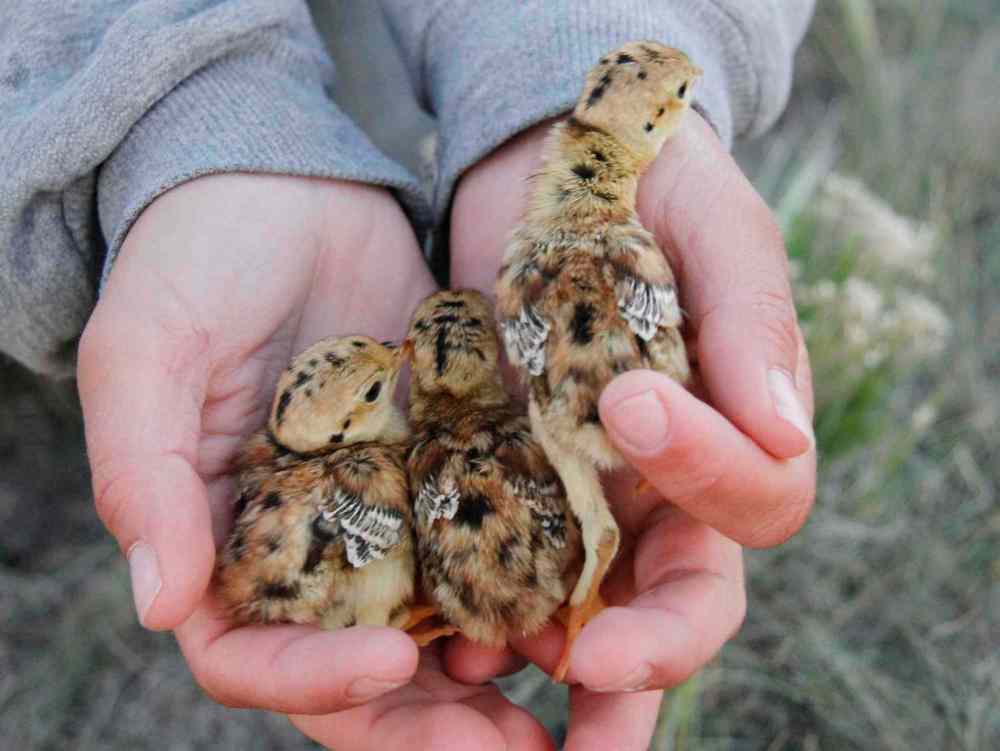
Featherless birds are nestlings and cannot fly. Place them back in the nest, if you can reach it, or make a new one from a berry basket or other small container with holes punched in the bottom and filled with shredded tissue. Hang it in a sheltered spot near the original nest, and watch for the parents to return. Don’t worry — parent birds will not reject their babies because a human has touched them. Birds have a poor sense of smell and are more likely to be bothered by human noises than human scents.
Young squirrels are often found after their nest has been blown down by a storm. The best way to reunite them with their mother is to place the babies in a box containing a hot-water bottle at the base of a tree. The mother will usually retrieve her young and move them to a safer location, but only if she feels safe — so be sure to stay away from the box and keep dogs, cats and children away, too.
People who see a solitary fawn or a nest of rabbits without their mother nearby often mistakenly assume that the animals have been orphaned. But mother deer nurse and attend to their young only a few times per day, and fawns spend most of their time alone — quiet and almost motionless — in open fields. Similarly, mother cottontail rabbits usually visit their nests to feed their young only twice a day, at dawn and dusk, because it decreases the chance of alerting predators to the nest’s location. If you don’t know whether the mother will come back, try placing a string over the nest. If the string has been moved by the following morning, the mother has returned.
If you find a baby animal who is clearly injured (e.g., has a broken wing or leg, is bleeding or is unconscious); has been caught by a cat, dog or other predator; is weak and shivering or emaciated; is in immediate danger; and/or is definitely orphaned and not being cared for, place the animal in a safe, warm, well-ventilated, newspaper-lined box and contact a licenced wildlife rehabilitator immediately. Never try to care for injured or orphaned wildlife yourself.

In most cases, it’s against the law to keep wild animals without the required permits, even if you plan to return them to nature. Attempting to raise wildlife yourself will likely result in frustration and sadness — baby animals require specialized care and do not fare well when raised by humans.
When it comes to baby animals — and wildlife in general — a hands-off approach is often the best one. Knowing when to take action and when not to interfere makes all the difference and can save a life.
Lindsay Pollard-Post is a senior writer for the PETA Foundation.
—McClatchy Tribune Services