Major changes to zoning bylaws allowed for side-by-side care homes in St. Vital
Advertisement
Read this article for free:
or
Already have an account? Log in here »
To continue reading, please subscribe:
Digital Subscription
One year of digital access for only $75*
- Enjoy unlimited reading on winnipegfreepress.com
- Read the E-Edition, our digital replica newspaper
- Access News Break, our award-winning app
- Play interactive puzzles
*Billed as $5.77 plus GST every four weeks. After 52 weeks, price increases to the regular rate of $19.95 plus GST every four weeks. Offer available to new and qualified returning subscribers only. Cancel any time.
Monthly Digital Subscription
$4.99/week*
- Enjoy unlimited reading on winnipegfreepress.com
- Read the E-Edition, our digital replica newspaper
- Access News Break, our award-winning app
- Play interactive puzzles
*Billed as $19.95 plus GST every four weeks. Cancel any time.
To continue reading, please subscribe:
Add Free Press access to your Brandon Sun subscription for only an additional
$1 for the first 4 weeks*
- Enjoy unlimited reading on winnipegfreepress.com
- Read the E-Edition, our digital replica newspaper
- Access News Break, our award-winning app
- Play interactive puzzles
*Your next Brandon Sun subscription payment will increase by $1.00 and you will be charged $17.95 plus GST for four weeks. After four weeks, your payment will increase to $24.95 plus GST every four weeks.
Read unlimited articles for free today:
or
Already have an account? Log in here »
Hey there, time traveller!
This article was published 30/08/2017 (3189 days ago), so information in it may no longer be current.
City hall’s commitment to community consultations is being questioned by a group of St. Vital residents who say they are surprised by the construction of two personal care homes, side by side, on their street.
The residents said they believed the construction of two personal care homes beside each other is a violation of the city’s zoning bylaw but that portion of the bylaw was changed in January – one of 76 zoning amendments approved on the same day by council, with no prior consultation with residence groups to explain to them why the change was being made or for homeowners to explain to city officials how the change might affect them.
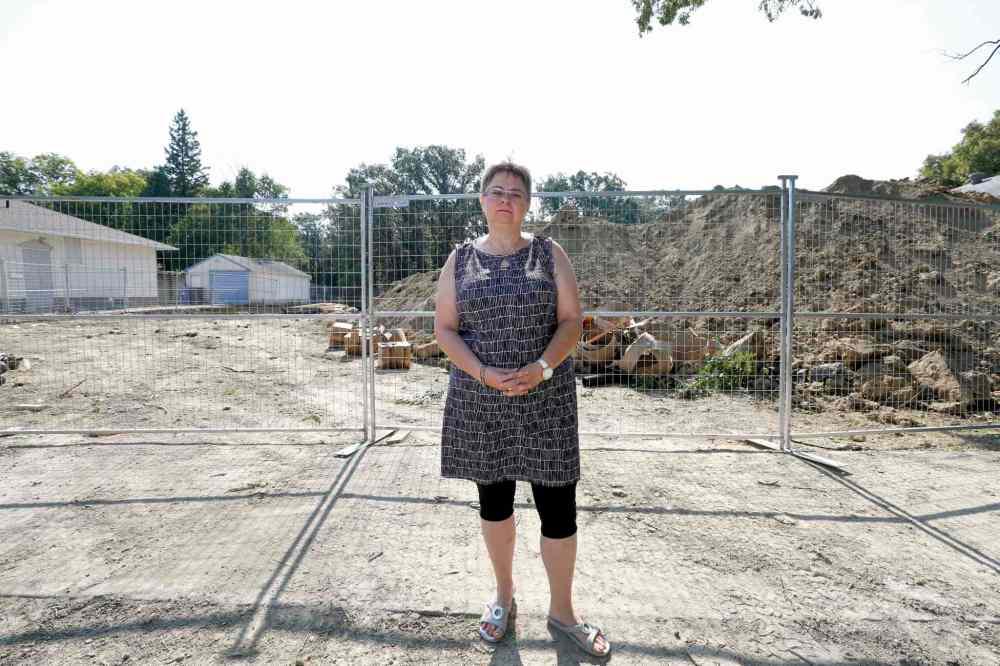
“Any neighbourhood in the entire city of Winnipeg could have this happen to them and the neighbours don’t need to know,” said Janice Klassen, whose family home on Hindley Avenue is across the street from the project.
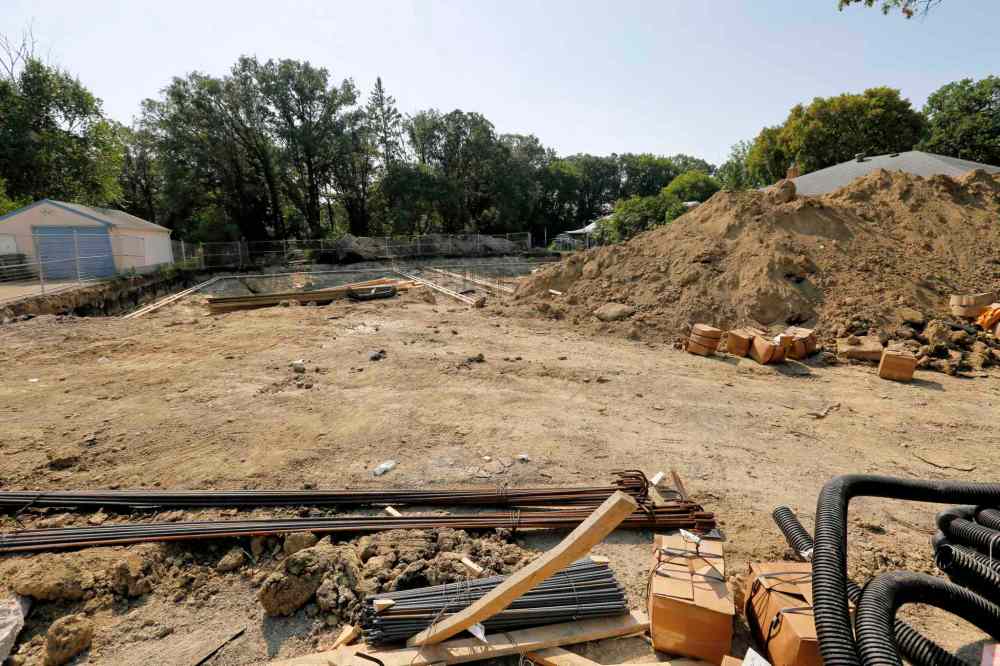
Two five-bed personal care homes are under construction at 228 and 230 Hindley Ave. where the street ends at the Seine River, east of St. Anne’s Road. Civic records show the care homes will be single-family bungalows, each with a front porch and adjoining carports. The builder told the Free Press the homes will be wheelchair accessible, with roof lines similar to their neighbours and recessed the same distance back from the street as the other homes on the street in an effort to better blend into the neighbourhood.
Prior to council’s approval to amend the zoning bylaw at its January meeting, the city had minimum distance separation requirements for personal care homes: homes with accommodations for up to six individuals could not be constructed within 330 feet of each other; a care home for more than six residents had to have a minimum separation of 990 feet from another care home or similar facility; and, the larger care home was only a conditional use, which required a public hearing before the board of adjustment, whose decision could be appealed to a committee of council.
But those conditions were removed in January, part of a package of 76 amendments to the Winnipeg Zoning bylaw that were approved by council in January. The changes mean an unlimited number of care homes and similar facilities can be constructed in the same neighbourhood, in all residential neighbourhoods across the city, as long at the design of the facilities do not alter the character of the neighbourhood.
An administrative report to council supporting the bylaw amendments identified what it called 11 “major” amendments and a further 65 “minor amendments.” While the report included the changes affecting the personal care homes among the major amendments, the focus of the report was on the changes that would facilitate the development of micro-breweries, distilleries and wineries.
Ward Coun. Brian Mayes said he recalled the attention devoted to the micro-brewery provisions but could not recall the amendments affecting care homes – even though he voted for them, twice: the first time at the Jan. 18 meeting of executive policy committee and again at the Jan. 25 meeting of council.
“I certainly didn’t catch (the removal of the minimum distance separation requirements) and I have no memory of discussing it,” Mayes said.
The administrative report said there was an extensive community consultation process carried out for all 76 amendments during the preceding summer and fall but the appendix of the document reveals that for the personal care home changes, the only stakeholders contacted were care home providers, who were unanimous in their support of the changes and wanted the city to make even more in their favour.
The administrative report shows no groups representing homeowners were part of the consultations on the care home changes.
The broader community consultations for all 76 amendments did include a neighbourhood group which was told of unrelated changes to parking regulations near the Health Sciences Centre but the report did not indicate that group had been told about the changes to the personal care home provisions.
Mayes said civic planning staff have since told him the personal care home changes were done at the request of the city’s legal staff as a result of court challenges, which struck down municipal provisions restricting the number of such facilities in the same neighbourhood, concluding those were discriminatory and violated federal human rights legislation.
However, the administrative report makes no mention of the court rulings.
Mayes said city staff should have made an effort to publicize the looming changes to the personal care home provisions, why they were made, and how it could affect all single-family neighbourhoods, during the consultation process.
“There should have been some publicity that that (minimum separation) provision is no longer in effect,” Mayes said.
Klassen said the city’s decision to allow an unlimited number of care homes into the same neighbourhood will dramatically alter the nature of that neighbourhood.
“Something of this magnitude, that affects every single homeowner in this city, should have been brought to our attention,” Klassen said.
Klassen said once city hall decided to remove the minimum separation provisions, the amendments should have provided requirements for the applicants or property owners to disclose what type of clients the homes are intended to serve, adding she and her neighbours don’t know if the two homes are being built for individuals with physical or intellectual challenges or the houses are transitional housing for incarcerated adults or teenagers.
Klassen said neighbours believe the two personal care homes are owned by a group of investors from Brandon. She said the builder told neighbours that the two homes will be used for Workers Compensation claimants but she doesn’t believe it.
A spokesman for the Manitoba Workers Compensation Board said it has no agreements with any agency or for-profit corporation to house claimants in a group home setting, adding that the WCB does provide rehabilitation services in a group setting.
Derek Thorsteinson, owner of Parkhill Homes which is constructing the two care homes, denied telling neighbours the two homes will be used for WCB clients exclusively, adding who would be living in the homes would be the decision of his clients.
Thorsteinson would not identify the owners.
aldo.santin@freepress.mb.ca