

Housing starts in much of southern Ontario down in first nine months of 2025: report
Advertisement
Read this article for free:
or
Already have an account? Log in here »
To continue reading, please subscribe:
Monthly Digital Subscription
$0 for the first 4 weeks*
- Enjoy unlimited reading on winnipegfreepress.com
- Read the E-Edition, our digital replica newspaper
- Access News Break, our award-winning app
- Play interactive puzzles
*No charge for 4 weeks then price increases to the regular rate of $19.00 plus GST every four weeks. Offer available to new and qualified returning subscribers only. Cancel any time.
Monthly Digital Subscription
$4.75/week*
- Enjoy unlimited reading on winnipegfreepress.com
- Read the E-Edition, our digital replica newspaper
- Access News Break, our award-winning app
- Play interactive puzzles
*Billed as $19 plus GST every four weeks. Cancel any time.
To continue reading, please subscribe:
Add Free Press access to your Brandon Sun subscription for only an additional
$1 for the first 4 weeks*
*Your next subscription payment will increase by $1.00 and you will be charged $16.99 plus GST for four weeks. After four weeks, your payment will increase to $23.99 plus GST every four weeks.
Read unlimited articles for free today:
or
Already have an account? Log in here »
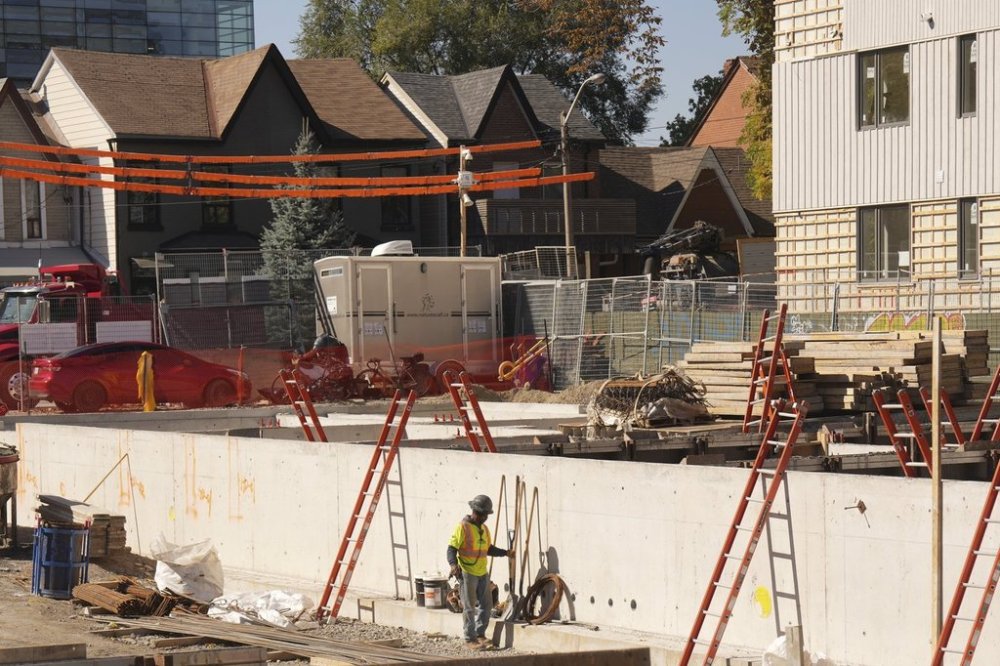
The Residential Construction Council of Ontario says housing starts in the Greater Toronto Area and broader Greater Golden Horseshoe region declined significantly in the first nine months of 2025 relative to recent years.
A report by the University of Ottawa’s Missing Middle Initiative, which was commissioned by the council, said housing starts were down by more than one-third in the 34 municipalities of the region over the first three quarters, compared with the same January-to-September periods of 2021 to 2024.
The study said there were 51 per cent fewer condo apartment starts in the first three quarters, along with 43 per cent fewer ground-oriented housing starts. However, purpose-built rentals were up 42 per cent compared with the previous four years.
Council president Richard Lyall said the data shows “we are staring into the abyss” when it comes to residential construction.
“The findings of this report are alarming but confirm what the residential construction industry and our builders have been experiencing and saying for some time now,” said Lyall in a press release.
“The new home market has tanked. It is a particularly dark time for those who work in residential construction. There have been significant job losses across the board. Projects are being shelved, and this will have a significant trickle-down effect on Ontario’s economy.”
The decline in housing starts comes as affordability remains a top issue holding back some potential buyers in the GTA housing market.
The average selling price of a home in the region was $1,054,372 in October, according to the most recently released data from the Toronto Regional Real Estate Board.
The University of Ottawa report was based on data obtained from Canada Mortgage and Housing Corp. and Altus Group. It also graded the municipalities across five categories related to housing starts and sales, with half receiving an F, nine scoring a D, and eight others a C or higher.
The study suggested the decline in housing starts is leading to significant job losses. Over the first nine months of the year, the report estimated that fewer housing starts have translated into 35,377 fewer person-years of employment, compared with the same period in the previous three years.
That’s based on an estimate that building a single-detached home requires 3.8 person-years of employment, while an apartment unit translates to 1.5 person-years of employment.
“The person-years of employment in the industry are down which shows the effect that the lack of housing starts and sales is having on the industry and the economy,” said economist and Missing Middle Initiative founder Mike Moffatt in a statement.
“The negative trend in employment has continued and there is significantly less work in the residential construction sector.”
It comes as the federal government aims to ramp up home construction, pledging in last month’s budget to spend $25 billion on housing over the next five years.
The federal budget called attention to CMHC’s current estimate that 430,000 to 480,000 new housing units are needed per year throughout the next decade in order to restore affordability to 2019 levels.

That would represent around double the current pace of home construction across the country.
Nationally, the annual pace of housing starts in October fell 17 per cent compared with September, the housing agency said last month. CMHC said the drop came as the number of starts in Ontario and British Columbia fell.
Actual housing starts in centres with a population of 10,000 or greater were down three per cent year-over-year.
However, the year-to-date total for centres with a population of 10,000 or greater was 197,207, up from 188,660 in the same period in 2024.
This report by The Canadian Press was first published Dec. 1, 2025.