

Plastic welfare over paper
Province wants cheque phase-out
Advertisement
Read this article for free:
or
Already have an account? Log in here »
To continue reading, please subscribe:
Digital Subscription
One year of digital access for only $75*
- Enjoy unlimited reading on winnipegfreepress.com
- Read the E-Edition, our digital replica newspaper
- Access News Break, our award-winning app
- Play interactive puzzles
*Billed as $5.77 plus GST every four weeks. After 52 weeks, price increases to the regular rate of $19.95 plus GST every four weeks. Offer available to new and qualified returning subscribers only. Cancel any time.
Monthly Digital Subscription
$4.99/week*
- Enjoy unlimited reading on winnipegfreepress.com
- Read the E-Edition, our digital replica newspaper
- Access News Break, our award-winning app
- Play interactive puzzles
*Billed as $19.95 plus GST every four weeks. Cancel any time.
To continue reading, please subscribe:
Add Free Press access to your Brandon Sun subscription for only an additional
$1 for the first 4 weeks*
- Enjoy unlimited reading on winnipegfreepress.com
- Read the E-Edition, our digital replica newspaper
- Access News Break, our award-winning app
- Play interactive puzzles
*Your next Brandon Sun subscription payment will increase by $1.00 and you will be charged $17.95 plus GST for four weeks. After four weeks, your payment will increase to $24.95 plus GST every four weeks.
Read unlimited articles for free today:
or
Already have an account? Log in here »
Hey there, time traveller!
This article was published 13/05/2010 (5855 days ago), so information in it may no longer be current.
The Selinger government wants to banish the welfare cheque.
Instead, it wants to introduce debit cards and boost the number of Employment and Income Assistance (EIA) recipients who are paid through direct deposit into their bank accounts.
Family Services and Consumer Affairs Minister Gord Mackintosh said Wednesday the province is seeking proposals from financial services companies to provide prepaid and reloadable debit cards for its EIA clients.
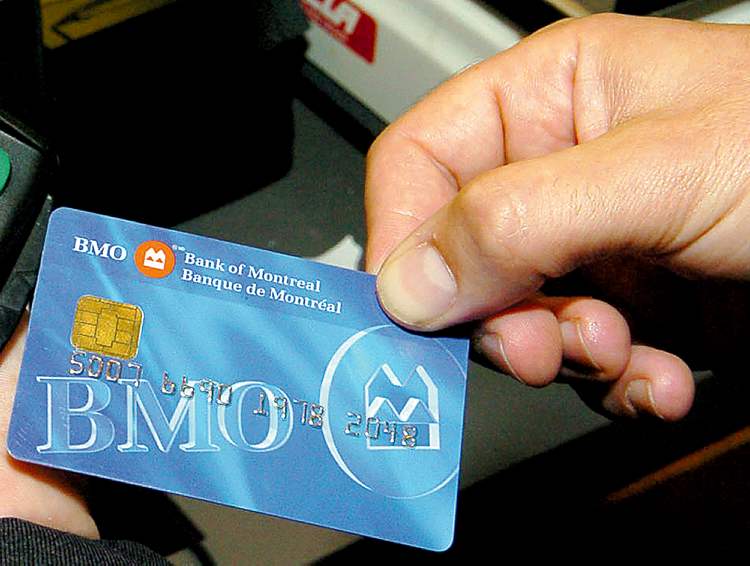
"We want to leave cheques as a method of payment in the past where it belongs," Mackintosh said.
He said debit cards and direct deposit are safer, more efficient payment methods and allow clients to avoid steep cheque-cashing fees.
Mackintosh said province recently put out a request for proposals for a debit-card supplier and has already received interest from one company, which he declined to name.
EIA recipients would be able to use the cards in the same way people use bank debit cards — to pay bills and withdraw cash from instant teller machines. No other province in Canada currently uses debit cards for social assistance payments, although Alberta did launch such a service until its supplier went out of business.
Wayne Helgason, executive director of the Social Planning Council of Winnipeg, welcomed the introduction of debit cards for EIA recipients.
"On the surface it sounds like a great idea," he said Wednesday. "We’ve been concerned about the absence of banking services, especially in the inner city."
In their place, cheque-cashing businesses have proliferated and are thriving, Helgason said. "They’re in the market and they’re doing well because somebody is paying for it, and it’s usually poor people."
Mackintosh said the province has also set a goal of increasing direct deposit payments among EIA recipients to 80 per cent by next year from the current 63 per cent.
The province will pay for recipients to obtain the necessary ID to open a bank or credit union account, and it will provide direct deposit forms at government offices when people apply for assistance.
Among the advantages of direct deposit, Mackintosh said, is people get their money a day earlier.

They also avoid payment delays when Canada Post experiences problems. Two Fridays ago, the province had to issue a news release warning 7,000 income assistance cheques were delayed in the mail. It opened up an office on Rorie Street in Winnipeg on a Saturday to provide emergency aid.
The province is also working with banks and credit unions on an indemnification agreement that would compensate them in cases where someone cashes a forged government cheque. That could pave the way for free cheque-cashing for EIA recipients at these institutions.
Meanwhile, the Public Utilities Board of Manitoba issued an order Wednesday that maintained the existing maximum fees for cashing cheques. With certain exceptions, that maximum rate is $3 plus two per cent of the cheque’s face value.
larry.kusch@freepress.mb.ca