

Diary of a soldier
Thousands of Canadians were killed at Vimy. Manitoba farm boy John Eadie was one of the lucky few who made it back home
Advertisement
Read this article for free:
or
Already have an account? Log in here »
To continue reading, please subscribe:
Digital Subscription
One year of digital access for only $75*
- Enjoy unlimited reading on winnipegfreepress.com
- Read the E-Edition, our digital replica newspaper
- Access News Break, our award-winning app
- Play interactive puzzles
*Billed as $5.77 plus GST every four weeks. After 52 weeks, price increases to the regular rate of $19.95 plus GST every four weeks. Offer available to new and qualified returning subscribers only. Cancel any time.
Monthly Digital Subscription
$4.99/week*
- Enjoy unlimited reading on winnipegfreepress.com
- Read the E-Edition, our digital replica newspaper
- Access News Break, our award-winning app
- Play interactive puzzles
*Billed as $19.95 plus GST every four weeks. Cancel any time.
To continue reading, please subscribe:
Add Free Press access to your Brandon Sun subscription for only an additional
$1 for the first 4 weeks*
- Enjoy unlimited reading on winnipegfreepress.com
- Read the E-Edition, our digital replica newspaper
- Access News Break, our award-winning app
- Play interactive puzzles
*Your next Brandon Sun subscription payment will increase by $1.00 and you will be charged $17.95 plus GST for four weeks. After four weeks, your payment will increase to $24.95 plus GST every four weeks.
Read unlimited articles for free today:
or
Already have an account? Log in here »
Hey there, time traveller!
This article was published 08/04/2017 (3333 days ago), so information in it may no longer be current.
It was Easter Monday, 1986. A group of people at a family get-together sat at the dining-room table playing a game of cards. It was a rather boisterous affair at times, quiet at others, the family members obviously enjoying the friendly competition.
Others visited in the living room, while the children played with toys or sat on the floor.
You know, 69 years ago 790 men went over the top, and only 190 came back, and I was one of them!
The people turned to the old man, mild surprise in their eyes. His body, wasted from 93 years, rocked slowly in his chair. His face was greyish, cheeks sunken and his thin lips had remained silent while the younger members of the family carried on their activity.
There was a lull and one or two made short remarks. They were used to him talking out of context, disjointedly, with his whispery voice about his childhood and the war. He was not articulate; his formal education extended to Grade 2. “I can’t talk much,” or “I didn’t go to school much,” he would always say. He had to learn to read and write on his own. Education wasn’t a priority at home, whereas running the farm and putting food on the table was.
The others in the room tried to look understanding but it was obvious their comprehension was minimal. How could they understand? The old man was from another generation, another era. It was as if he had lived his earlier years on another planet, for more change had taken place in the old man’s life span than all of previous history.
The old man didn’t respond to their comments as he seemed to retreat back into himself. His body was weak. Talking was an effort for him now in the downward swing of his health. In two years, his family, friends and comrades at arms would drape a flag over his coffin and say a last goodbye.
To other people in the room his face seemed inscrutable. Imperceptibly, the noise of family interaction resumed, gradually assuming its levity before the brief interruption. Inside, the old man was seeing a scene he had relived a thousand times before.
The chair rocked slowly back and forth…
● ● ●
He was in a trench, muddy and stinking, knee deep in water, inhabited only by rats, lice and helmeted soldiers carrying guns, bayonets and supplies. His name was Pte. John William Eadie, born Jan. 26, 1893, at Treherne. He was 23 years old, 5-foot-9, had brown hair, brown eyes, and a dark complexion. He was at a place called Vimy.
His extremities were cold, sluggish from inactivity. Waiting was the worst part. Tens of thousands of soldiers waited to go over the top to be slaughtered. Yesterday was the day of Resurrection, but today would be the day of death.
He wasn’t thinking in a prolonged logical sequence. Not being able to concentrate, his over-excited mind flitted from one thing to another. Subconsciously, his whole being and instincts were concerned with one thing, survival, and he wondered what would make a man climb out of a trench and put to extreme risk that most precious thing in the world — his life. He felt swallowed up in a hole, which was bottomless and from which it was impossible to extract himself, for there seemed a helpless inevitability about the circumstances that engulfed him. How he had been swept along with the masses into this cataclysmic event, he was not sure. It wasn’t at all like the farm back in Treherne.
It was nice in that little old log house on the river bank where I and my brothers and sisters used to carry the water up to the house in small pails and the water in the spring was so nice and fresh and tasted so good…
Them were days I well remember as we were old enough now to clean up the land and break up the soil… There was a lot of little things happened along the way with us kids. Bad things and good things, but we all done our part to stay together. In the winter time we helped Dad take out saw logs to make lumber. One winter we took out 600 logs… I got to go to school a couple of winters for three or four months each winter. It was not easy there — a big boy in a class with a lot of small kids… The next winter I stayed home and done the chores while (brother) Charlie got some schooling. About this time we got too old to go to school and there was so much work to be done at home.
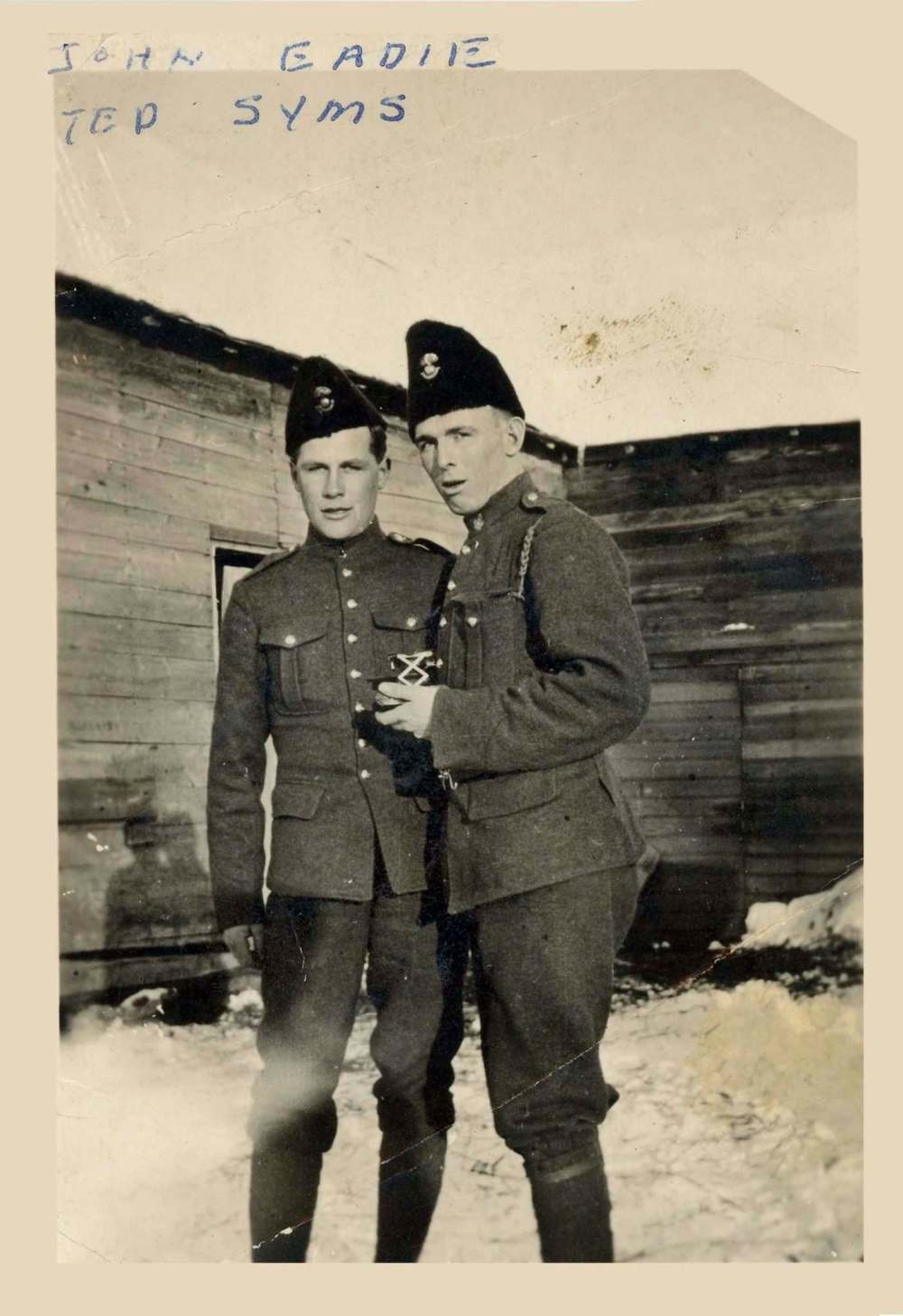
When I was 22 years old they were calling for men for the army, so I joined the army just before Christmas in Winnipeg with the 78th Battalion Winnipeg Grenadiers. It was not easy for me there for a while but when I got to know the fellows and knew how to get around things were better.
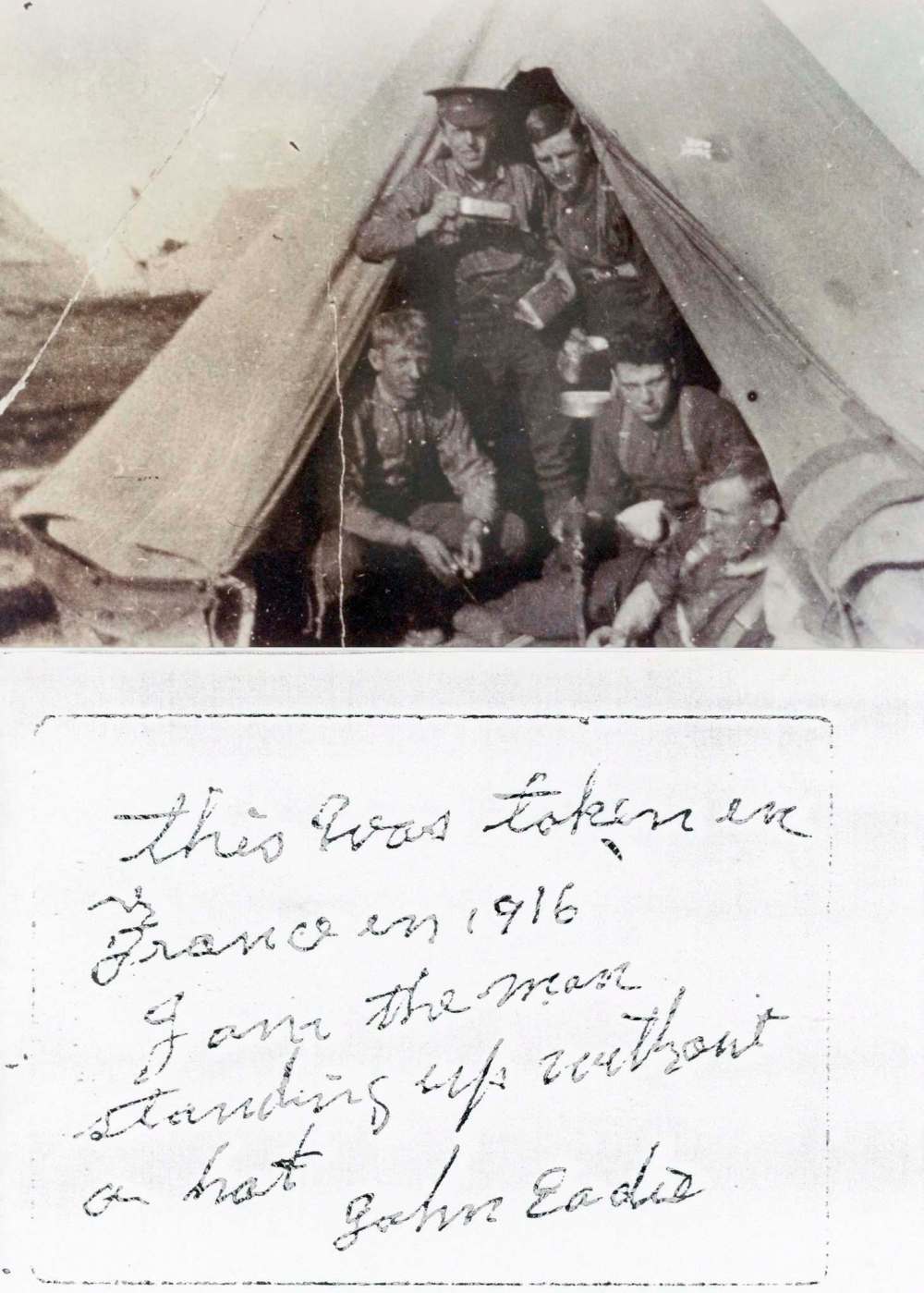
In 1916, in the spring that year we went overseas. I was a machine gunner. When we were on the ocean we were on watch with our guns looking for submarines, but we got across alright. And then riding in them little trains were something. 1916 in May was when we went overseas. We trained there (in) Bramshott ’till July then went to France and into the line right away. We first had an outfit of English troops to help us get started. The Germans knew we were new in the line and they gave everything they had. Then we moved to two or three places in the line.
I think it was September we moved up to the Somme front. That was a terrible place, but they didn’t get me. Then in December that year we moved again to Vimy Ridge. We were there all winter. At Christmas time we had a piece of Christmas cake or pudding one inch square. That was our Christmas dinner, along with our regular stuff. We were right in the front line about maybe 50 to 100 yards away from the German line.
He looked at his comrades in the trench. Icy sleet fell through the gloom, melted and ran off the edges of the soldiers’ helmets. He was deathly afraid, and so were the others, but it only showed in little ways. They joked nervously, others displayed false bravado, while some were still and silent.
Home was in the distant past. He thought that war had done something to him, but he wasn’t sure what. He thought he had been in this land for a long time, but it was only for a few short months at the Somme and then Vimy Ridge. Nevertheless, he instinctively knew he would never be the same, for no one could live under these conditions without life-moulding forces taking control. This was a war of incredible suffering and loss of life. He had witnessed the bodies of the dead and heard the pleadings of the wounded. Stories had been told to him of the French and British attempts to take this very ridge with losses in the hundreds of thousands. He had seen sticking out of the mud the bones of soldiers that died. Friends had died.
Death took on new meaning, although the prospect of death wasn’t any more pleasant. Life was cheap here. Back home, every effort was made to save one life that was threatened. In this war, if one could take a few hundred yards of land at the cost of 20,000 lives, not counting enemy losses, the price was considered cheap, the victory great.
There was 790 men (in the 78th Battalion) went over the top that morning April 9, 1917 and 190 were able to come back on their own six days later. What chance has a man when it comes to war…
Soldiers were not trained to think, to wonder or to analyze. But sometimes he wondered what all this was doing to his beliefs, morals and his attitude to life. He pondered this for the rest of his life and concluded that through it all, the seed of faith his mother had instilled in him was stronger than all the hellish suffering and pain nations could inflict on each other. It was more powerful than the darker side of people that so often comes to the surface in war. He was vaguely aware that this war was a visible representation of the spiritual battle going on inside every human on the face of the earth.
Just now I would like to say I am sure that mother’s prayers to the Lord brought me home from over there, and helped me to keep myself clean and fairly respectable.
He was used to the noise of battle, the eternal booming of the artillery, the terrifying shriek of enemy shells as they rapidly approached and exploded, sending red-hot shrapnel everywhere and creating huge craters. He became somewhat of an expert predicting from the sound what kind of shell was coming and the general area it would explode. Adding to the noise, rifles cracked and machine guns rattled. Sometimes, airplanes buzzed over top in reconnaissance missions or in dog-fights with enemy craft.
This morning, the guns were unusually silent as if in expectation of the battle to come. The trenches teemed with soldiers filling up as close to the enemy lines as possible. Huddling close to his machine-gun unit in the sleet and snow, he found it increasingly difficult to wait. He was No. 2 man in the unit. His job was to put new pans of ammunition on the gun as No. 1 operated it, and seven others carried ammunition.
“Fix bayonets!” the order came at last.
It was still dark, the inclement weather hiding the first rays of dawn. A few seconds later, he stood spellbound by one of the most awesome spectacles of history. The gloomy darkness was suddenly split by flashes from hundreds of pieces of artillery followed by an explosion of sound of incredible intensity, increased by the flaming burst of shells in front.
The first wave of soldiers crowded over the top. As the second wave took its position, enemy SOS rockets shot into the sky, creating fantastic effects reflecting through the clouds. Explosions shook the ground and burning oil lit up the battlefield like prolonged flashes of sheet lightning.
He did not know if this would be his last hour, but he was glad to be on the move. The shot of rum that had been passed down the lines began to warm his insides and make him all the more anxious to get on with it.
It is likely that never before had the world seen such an intense artillery barrage. The din together with the forcible impact of the scene on his visual senses and the resulting destruction produced a surrealistic atmosphere. When the time came, as if in a dream, he felt his legs and hands push his body, weighted down with his pack of supplies, rations, mills bombs, bayoneted rifle and ammunition up the side of the muddy trench. He followed No. 1 onto the battlefield as did the others.
Through the wet snow, his eyes looked unbelievingly at the scene before him. The already fouled earth was churned into a mass of rubble, barbed wire, bodies, wood, and sand bags and concrete. Shell holes — with slippery edges and containing water — gaped. Already the dead and wounded were everywhere. Up the slope, the blazing line of exploding artillery shells was stationery, beckoning, as if to say “Come on! We’re waiting for you!”
They struggled together through the muddy heaps, passing grotesquely deformed bodies and suffering wounded pleading for help. They laboured around the slippery craters, being careful not to fall in as had some of the dead and wounded, right into the bloody water. Their feet and legs and clothing were wet and muddy but he didn’t notice. Stretcher bearers struggled to reach the wounded and enemy prisoners straggled to the back. Bullets from machine guns whispered by and spattered into the mud.
In this unreal world of noise, explosions and flying steel, they walked, sometimes firing rifles and machine gun on the go.
They came to survivors of the first wave, trying to dig in and establish a new line. Only yards ahead, the creeping barrage of exploding shells and shrapnel began to move once again. They had been trained for months to walk at a certain speed behind the barrage until they reached their objective. They struggled to keep up. Men began to fall like dominoes as machine-gun fire intensified, showering tens of thousands of rounds upon the attackers.
He sensed something was wrong as withering fire came from not only in front but on their right flank. He noticed the barrage was continuing up the hill, but the men could not keep up. His division, the Fourth Canadian Division, had the most difficult terrain and the planners had miscalculated the strength and power of opposing fortifications. All he knew was that death and confusion were everywhere.
On April 9, we went over the top and took Vimy Ridge. On our gun crew we had nine men. No. 1 carried the gun and operated it. I was No. 2. I put new pans of ammunition on the gun. The others all carried ammunition. The two of us got too far in front of the others and were separated from us and were destroyed so we had nothing to work with.
The kiss of death was close. Bullets whipped by and splashed into the ground. Soldiers became disoriented, lost their bearing and found it impossible to advance any further.
He slid into a shell hole panting and sweating from stress and exertion with No. 1 in the mud beside him. They lay there for some time regaining their breath. For the time being, this hole, partly full of water, afforded some protection. The barrage continued up the slope and the hectic noise and rattle of guns and artillery continued. It was now light.
They waited for hours. The wave of exploding shells had disappeared, but machine guns and rifles rattled and cracked. Occasionally an enemy shell shrieked in and sent mud and debris flying. Hungry, they ate biscuits and bully beef from their ration packs. The wet snow finally stopped.
They knew something had to be done because they would get killed waiting here, either by a sniper, machine gun or exploding shell. No. 1 made a decision to reconnoiter to see where the rest of the battalion was. They encouraged each other and he watched as No. 1 crawled over the brim of the hole, leaving the machine gun behind.
He never saw him again.
I had a good friend and pardner I was with all the time until spring at the Vimy battle the 9th of April, 1917. We had our times through them four months. Then that was our big day and my friend was killed and also the others of our gun crew, but then I was left alone. I set in a large shell hole waiting for darkness so I could go back to where some of our outfit were making a line to hold.
Darkness came. He was in no-man’s land and he knew that to stay could well mean the end, especially if further artillery attack was mounted. No. 1 had not returned and he was losing hope that he would see him again, so at last he came to the decision that he must find his own side. Taking up the machine gun, he scrambled up the side of the crater and crawled and slid through the mud and water. Inactive muscles soon warmed up from the excitement and exertion. He struggled and stumbled past corpses and parts of bodies lying under the misty sky. Occasionally a flare would light up the battlefield and he would become just another body or piece of rubble protruding from the ground-up earth.
I set in a large shell hole waiting for darkness so I could go back to where some of our outfit were making a line to hold. I started back just when it started to get dark enough to see a little.
Peering through the misty darkness, he thought a sentry was close by. Was he Canadian? Or enemy? His heart pounded, for he knew a wrong move would be his last no matter whose side the sentry was on. The seconds seemed like an eternity…
“Who goes there?” came a voice through the mist in English.
“Friend!”
“Is that you John?”
He stood there as if stupefied and suddenly an intense feeling of joy and relief flooded his whole being. “My friends!” he thought, “men from my own platoon!” The words came stumbling out, “Yes! It’s me!”
He was the lone survivor from his machine-gun crew.
We were there in a little dugout for about two days. Then we found out where the line was being made and we went back to our companies on the sixth day — that would be the 15th day of April. The day we (took) Vimy was Easter Monday.
About three weeks later, he slogged back with his contingent from the front line for a few days rest. The line had once again become static. The Canadians firmly held Vimy Ridge and he had just spent seven days on the newly established line. He was No. 1 on a recently formed machine-gun crew.
It would be good to get a change of clothes, have a shower and get clean and relax a bit from the 24-hour-a day duty on the line. Methods of hygiene were rather primitive, nonetheless to a soldier living several days in holes in the earth infested with rats, lice and other vermin, almost anything was an improvement.
We were out then for a few days to rest and get cleaned up a bit. I had the gun to look after and keep clean… Then they gave me eight new men and sent us back in the line, which was way over further than Vimy. I had one man that had some experience with the gun. I and one man stayed with the gun on guard all the time while the other seven went on a working party. The shelling was terrible there and I did not like it.
The other fellow with me shot himself in the foot so he could get out. I sent him down to a first aid place to be looked after as he could still walk. It was not long till they sent a man up to take my place so I could go down and give them the cause of the state of this man. Then I wanted to stay and have a little rest, but I had to go right back to my gun and take over. I was alone then for a couple of days. At this time the working party came back and we had to get ready to get out of the line or back a ways.
We started out after dark or when it was a little dark. There was quite some shells coming over and I heard one coming over that was coming too close, so I ducked, but it got me in the hand when it flew to pieces and knocked the gun out of my hand. I was excited and ran around a large shell hole, came back and picked up my gun. Then the others saw what happened. They took the gun and sent me down to be fixed up. Somebody, maybe a first aid man took me and one other man down to the dressing station and then on to an outpost hospital.
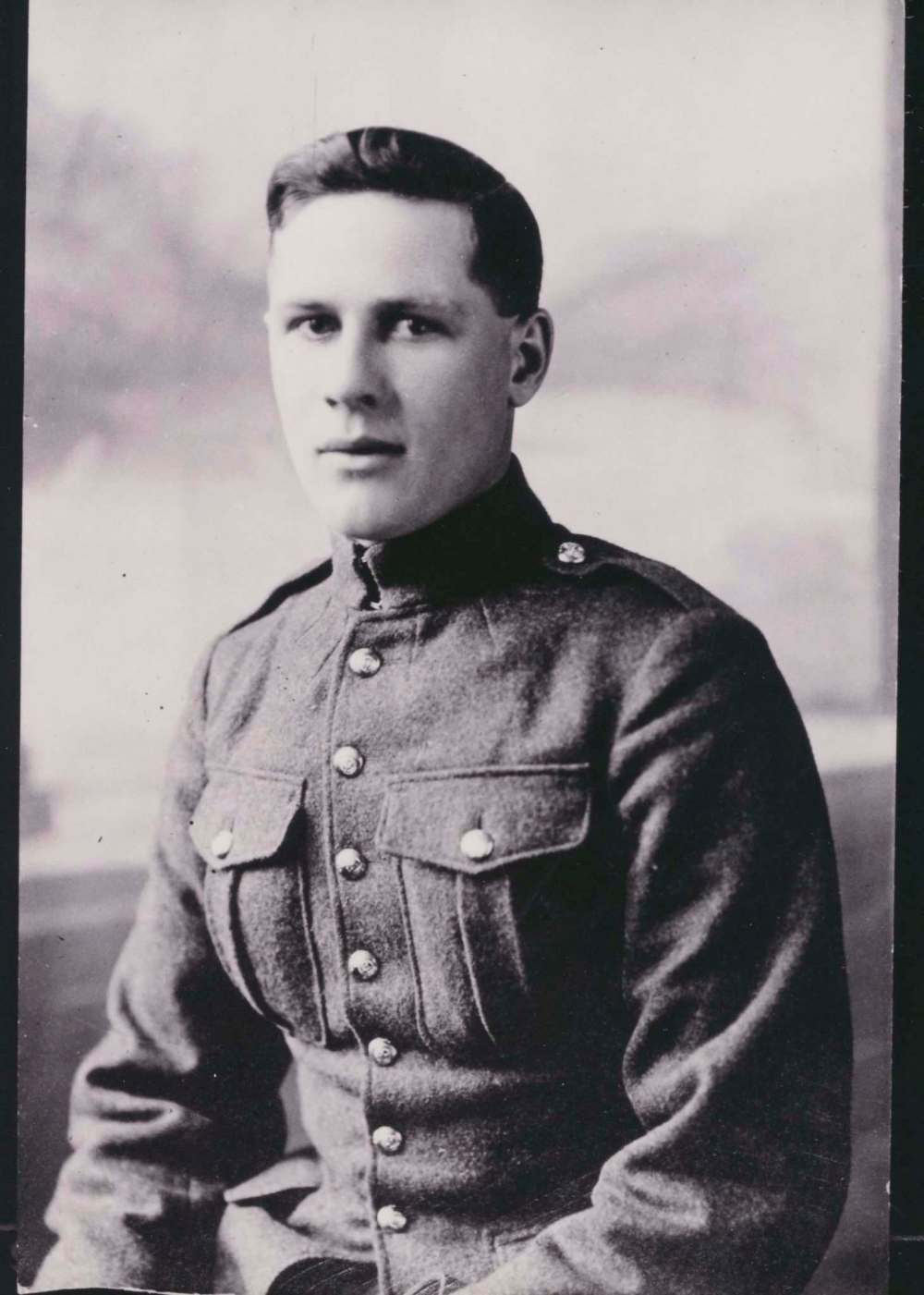
They sent me to a London hospital… It was rough coming across. Was I glad to be back from that terrible place… It felt so good to be free but I left my best friend back there forever.
It was like being raised from the dead. He had been given a new lease on life. He had gone through the valley of death, but for some reason the Creator had not said it was time for him as He said for thousands of others. Throughout his life this was a marvel to him, a mystery he never understood — so many went over the top and died, but he was one of the few to emerge alive. Millions of bullets were fired, but none of them were for him. Tens of thousands of shells exploded, but only one small fragment hit his hand. Easter always had a special significance to him.
Army life was quite different in England. When he was sufficiently recovered they sent him to an army camp near Dover sometime before he was discharged as being “medically unfit.”
I was surprised to have them tell me to get ready to go back to Canada and was sent… to wait for a ship. We came over on the “Olympic” ship and had a nice trip except we went all the way down to New York. There was a big shot with us and we had to take him to New York… and stayed there two days on the ship and then back to St Johns to take the train. We were six days on the train. Two of them days we were stuck in the snow somewhere in Ontario. Then we had one day in Winnipeg, or overnight. When I got to Treherne there was a few there to welcome me. At last at home and was I glad. The people at Matchetville had a couple of parties for me, which was nice. I got home late February, 1918.
Sixty-eight years later he held the phone to his ear. “Mr. Eadie,” the nurse said, “The doctor asked me to let you know your hand shouldn’t bother you too much. The X-rays show you have a piece of metal in your hand. If the pain gets worse, let the doctor know.”
“All these years,” he thought, “and I didn’t know it was there!”
● ● ●
A small grandson looked over at the old man. He wasn’t rocking any more. His chest, covered by loosely fit clothing, moved slightly from the slow breathing of gentle sleep. His white, wispy hair was somewhat disheveled as the old man’s head nodded to one side. Both hands rested on the arms of the chair. On the back of his right hand there was a barely observable depression in the wrinkled skin.
The grandson, fascinated by the face of many years, went nearer to take a closer look. Time seemed to stand still as one generation gazed motionlessly at another generation, another world.
A small hand went out hesitantly and softly touched the old man’s hand. He stood there for a moment, silent, peering, trying to comprehend, understand. Then it was lost in time. The hand slowly withdrew as he said in a barely audible voice to no one in particular, “Poor old Grandpa, he’s so tired he went to sleep.”

John William Eadie was a member of the machine-gun section of the 78th battalion, Winnipeg Grenadiers. He was born and raised in the southern Manitoba town of Treherne. At the age of 22, he joined the Canadian army in December 1915 and went overseas the following spring.
Using Eadie’s diary and oral descriptions, military records and other historical documents, his son Wallace Eadie recreated his father’s time at the Battle of Vimy.
Related Articles
Vimy Ridge a reminder of war's futility
Advertisement Advertise With Us
Advertisement Advertise With Us