

Sanctions against Venezuela hurt ordinary citizens most
Advertisement
Read this article for free:
or
Already have an account? Log in here »
To continue reading, please subscribe:
Digital Subscription
One year of digital access for only $75*
- Enjoy unlimited reading on winnipegfreepress.com
- Read the E-Edition, our digital replica newspaper
- Access News Break, our award-winning app
- Play interactive puzzles
*Billed as $5.77 plus GST every four weeks. After 52 weeks, price increases to the regular rate of $19.95 plus GST every four weeks. Offer available to new and qualified returning subscribers only. Cancel any time.
Monthly Digital Subscription
$4.99/week*
- Enjoy unlimited reading on winnipegfreepress.com
- Read the E-Edition, our digital replica newspaper
- Access News Break, our award-winning app
- Play interactive puzzles
*Billed as $19.95 plus GST every four weeks. Cancel any time.
To continue reading, please subscribe:
Add Free Press access to your Brandon Sun subscription for only an additional
$1 for the first 4 weeks*
- Enjoy unlimited reading on winnipegfreepress.com
- Read the E-Edition, our digital replica newspaper
- Access News Break, our award-winning app
- Play interactive puzzles
*Your next Brandon Sun subscription payment will increase by $1.00 and you will be charged $17.95 plus GST for four weeks. After four weeks, your payment will increase to $24.95 plus GST every four weeks.
Read unlimited articles for free today:
or
Already have an account? Log in here »
Hey there, time traveller!
This article was published 07/08/2019 (2482 days ago), so information in it may no longer be current.
No matter what you believe in or who you believe, there is no denying that what Venezuelans are currently facing is horrific and morally unacceptable.
Mainstream media reports and analyses suggest that the path to stability in Venezuela should be based on a strong moral approach. They believe that Hugo Chávez and Nicolás Maduro’s policies have caused significant economic mismanagement and poor governance.
They often suggest these polices are the source of the current economic and humanitarian crises. Therefore, they urge the international community to promote a change in political leadership in Venezuela or a transformation in the country’s political system.
But those economic, humanitarian and geopolitical analyses are either incomplete or wrong. Such reports typically ignore the devastating costs of external sanctions. The analysis also focuses solely on the actions of the Chávez and Maduro regimes, and misinterpret the legal basis for international intervention.
We need greater balance when discussing the causes of Venezuela’s economic crisis and should question the legitimacy of external interventions.
Economic costs caused by outsiders
The link between the current crisis and Venezuela’s national economic and governance policies and mechanisms is misplaced. The economic costs associated with international economic crises since 2004, along with economic sanctions levied against Venezuela, have been significantly more dramatic.
In the last six years, the Venezuelan economy has experienced significant losses estimated at more than US$114 billion. That’s only US$15 billion less than the country’s entire economic production in 2015. Of this amount, US$21.45 billion is due to the actions of the United States, and US$92.85 billion is due to the secondary effect on the economy of those actions.
Even the United Nations Special Rapporteurs noted that U.S. economic sanctions against Venezuela in 2017 and 2019 are having a serious, harmful impact on the life and health of Venezuelans, causing widespread hunger and other hardships for Venezuelans. They described the impact of these sanctions as a “collective punishment of the civilian population.”
The Special Rapporteur’s August 2018 report links the ongoing health crisis to the actions of the United States, Canada and the European Union. It notes that these actions have “directly and indirectly aggravated the shortages in medicines such as insulin and anti-viral drugs.”
Unauthorized sanctions
These economic measures haven’t been authorized by the UN Security Council. Without the cover of the Charter of the United Nations, the legal basis of these actions is questionable, and they likely constitute an “international wrongful act.”
As well, because these actions obstruct food and medicine imports, they violate international humanitarian and human rights laws.
Applying sanctions on Venezuela is also an infringement upon the country’s sovereignty. This is especially the case since there is no internal legitimate and legal request to do so.
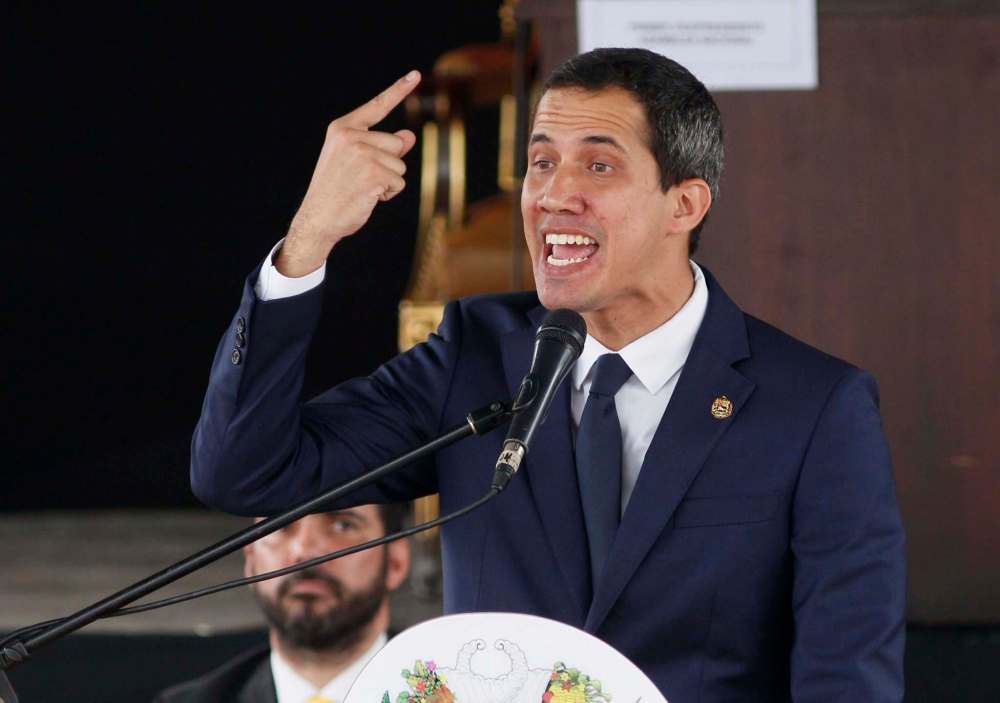
Juan Guaidó has not been recognized as the legitimate leader of the country by the majority of Venezuelans, despite his recognition as interim president by the United States, Canada, several Latin American countries and a number of European nations. Nor does Guaidó hold the national legal political authority as required by the country’s constitution.
Responsibility to protect
The international community’s supposed desire to protect Venezuelans is at the heart of most arguments in favour of international intervention. However, any such intervention is illegal unless it’s supported by or grounded in international law.
Even the Responsibility to Protect, a UN global political commitment to avoid failures in responses to massacres and genocides, cannot override the requirements in the UN Charter related to the use of force. Therefore, any coercive actions under its guise, including those related to sanctions and military actions, require authorization by the UN Security Council.
Serious concerns about human rights abuses or our moral outrage at their occurrence might compel the international community to act. However, how the international community chooses to act must still be legal under international law.
In short, the Responsibility to Protect cannot justify forced political change, regardless of the merits of the leader in question. In fact, it was never intended to do so.
Flawed Canadian policy

Canada has articulated its support for political change and the establishment of democracy in Venezuela. While fighting for democracy is a noble cause, Canada’s attempt to determine the fate of the Venezuelan people is not. And, if history is any guide, the impact of such external meddling is often negative, sometimes catastrophically so.
We need to encourage dialogue among Venezuelans that is aimed at developing an internal solution, even when we disagree with decisions made by the majority of Venezuelans. We also need to abide by the principles of international law in a non-selective manner.
Doing anything less undermines these principles and establishes a less than moral relationship with Venezuela. It also allows Canada to illegally meddle in the country’s internal affairs.
Ruby Dagher is a part-time professor at the school of international development and global studies at the University of Ottawa and the school of public policy and administration at Carleton University. Peggy Mason, president of the Rideau Institute, and Roy Culpeper, chair of the Group of 78, co-authored this piece. They are co-signatories to a Civil Society Statement of Concern on the Crisis in Venezuela.
This article was first published at The Conversation Canada: theconversation.com/ca.