

Research on census wanting
Advertisement
Read this article for free:
or
Already have an account? Log in here »
To continue reading, please subscribe:
Digital Subscription
One year of digital access for only $1.44 a week*
- Enjoy unlimited reading on winnipegfreepress.com
- Read the E-Edition, our digital replica newspaper
- Access News Break, our award-winning app
- Play interactive puzzles
*Billed as $5.77 plus GST every four weeks. After 52 weeks, price increases to the regular rate of $19.95 plus GST every four weeks. Offer available to new and qualified returning subscribers only. Cancel any time.
To continue reading, please subscribe:
Add Free Press access to your Brandon Sun subscription for only an additional
$1 for the first 4 weeks*
- Enjoy unlimited reading on winnipegfreepress.com
- Read the E-Edition, our digital replica newspaper
- Access News Break, our award-winning app
- Play interactive puzzles
*Your next Brandon Sun subscription payment will increase by $1.00 and you will be charged $17.95 plus GST for four weeks. After four weeks, your payment will increase to $24.95 plus GST every four weeks.
Read unlimited articles for free today:
or
Already have an account? Log in here »
Hey there, time traveller!
This article was published 23/07/2010 (5800 days ago), so information in it may no longer be current.
Industry Minister Tony Clement says he is pleased with the support he has got from Canadians on his government’s decision to scrap the mandatory long-form census survey. His Twitter tweets have been surprisingly pleasant, Mr. Clement told the Globe and Mail.
That’s hardly a representative, reliable and random sample of opinion, but the minister is likely seeking any solace offered these days. The decision to allow voluntary response to the long-form survey, the bedrock of Statistics Canada data mined by a broad spectrum of groups interested in understanding the country and framing the public policy that serves it, has unleashed a storm of criticism. On Wednesday, StatsCan chief statistician Munir Sheikh resigned, telling his staff he could not put his name to the reliability of the information from the new survey.
That was a huge blow to the credibility of Mr. Clement, who justified the government’s decision to shift to a voluntary survey with what he said were suggestions of Mr. Sheikh’s to protect the quality of the data.
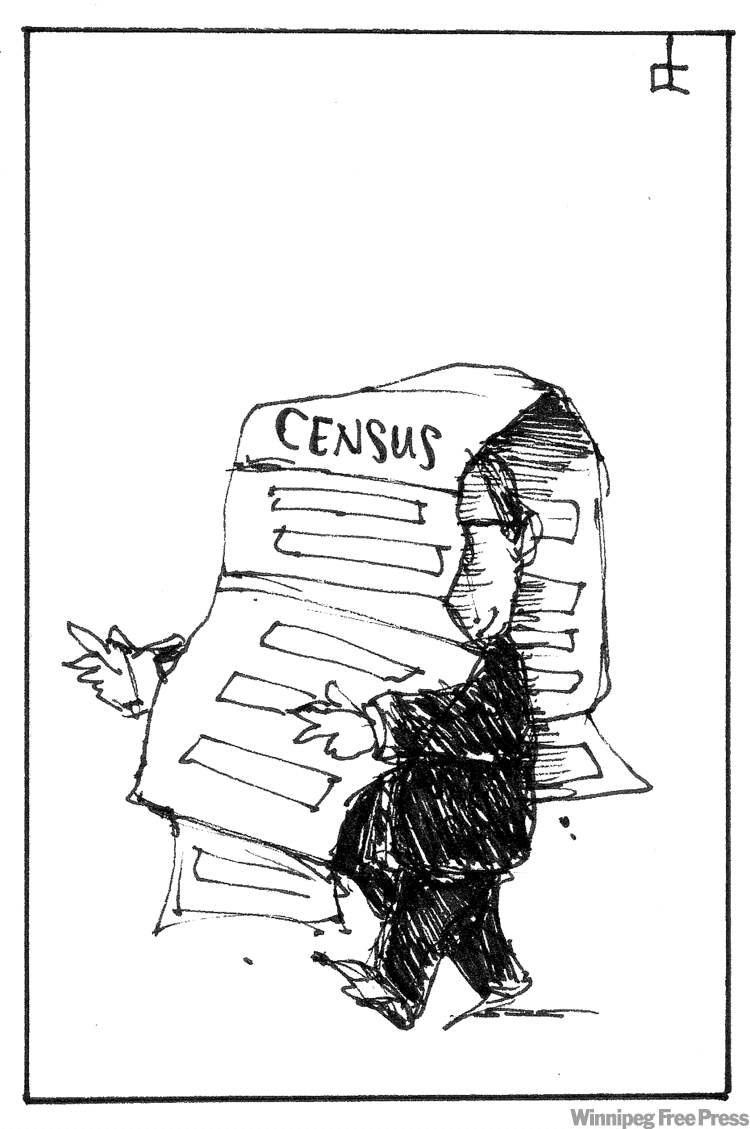
The government has been weathering blistering abuse from a variety of academics, researchers, policy analysts, municipalities, business groups and most of the provinces. All are concerned that a voluntary survey will erode the reliability of a wealth of detail gleaned from the 30-minute survey — disability, educational status, ethnicity, the number of bathrooms and bedrooms in a house. Pockets of people, among them the poor, immigrants and aboriginal Canadians, are less likely to fill in the survey.
And that would imperil necessary details of their lives. All governments agree that raising deplorably low graduation rates among First Nations people is key to improving their incomes. The higher the incomes, the higher the health status. And, ironically, those living in poverty are sicker, but make less use of health services. This is the kind of insight gleaned from the StatsCan long-form survey.

The Fraser Institute (see page opposite) argues that asking people about broken floor tiles — an indicator of housing conditions — is irrelevant, and that researchers should get their data by conducting their own surveys, as does the think-tank. That is a poor alternative, fraught with risk, to a survey that has reliably tracked Canada’s shifting economic and social landscape for almost half a century.
It is not too late for Mr. Clement to change his mind, to restore the mandatory survey in next year’s census. He should consult widely with those who rely on the census, sort through questions he believes are unjustified “intrusions,” and prepare a long-form survey that serves Canadians.
Related Articles
StatsCan's reputation in question
Advertisement Advertise With Us
Advertisement Advertise With Us