


A tale of two rapid transit systems
Advertisement
Hey there, time traveller!
This article was published 20/05/2020 (2195 days ago), so information in it may no longer be current.
Phase 2 of Winnipeg’s bus rapid transit system recently opened for business.
Although derided for neglecting Pembina Highway and taking a somewhat meandering route, it will nevertheless serve the University of Manitoba where an estimated 30,000 people make a daily commute.
Unlike other cities, we in Winnipeg don’t seem to embrace the concept of rapid transit.
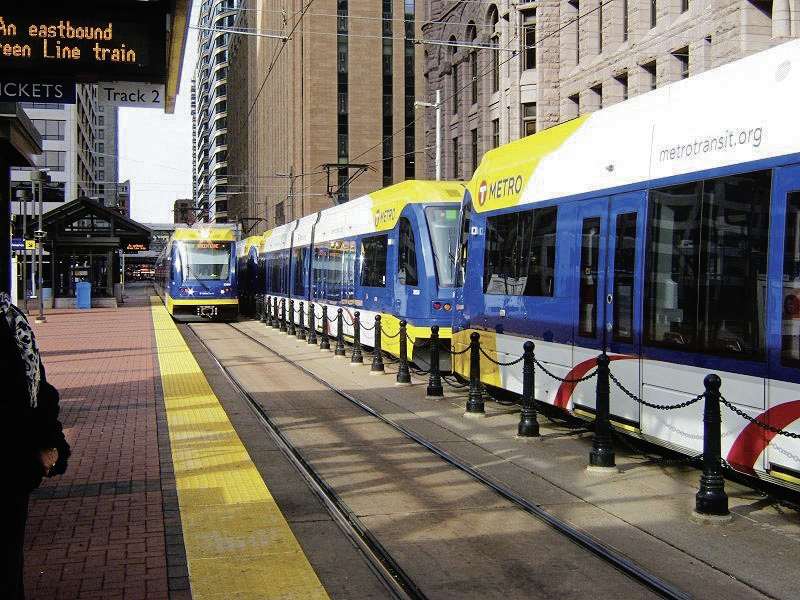
Like many Canadians, I make an annual cross-border shopping trip. We usually head for Minneapolis on the Remembrance Day weekend. It’s within a day’s drive and we ordinarily stay downtown. Once there, we stash the car away in the hotel parking garage and spend the next few days travelling around on foot or using rapid transit.
Minneapolis-St. Paul has an excellent light rail transit system. It’s preferable to use this than pull out the car and drive around in unfamiliar territory where we may be scrambling for a parking spot.
For tourists, the light rail is a godsend.
It’s made me wonder why there’s so much resistance to our system here while in Minneapolis-St. Paul it appears to have thrived.
The Twin Cities system opened in 2004 with one line. The Hiawatha Blue Line is 19 km long and cost $715 million for trains powered by overhead electrical lines.
It links the Mall of America at one end with downtown at the other, stopping at the airport along the way.
They’ve since opened a second line. The Green Line is 18 km long and cost $957 million. It connects the downtown hubs of both Minneapolis and St. Paul, passing through the University of Minnesota on the way.
Current ridership is 33,500 per day on trains that cruise at 60 km/h but can travel at speeds up to 90 km/h.
Fares are cheap, currently $2 for a ticket valid for transfers within 2.5 hours. Automatic ticket dispensers offer service in four languages and the whole system is easily accessed by those with disabilities.
Locals seem to both love and embrace it, whether commuting to the office or hauling their bikes onboard and clipping them into special stowage racks.
What then is the difference ?
For one thing, it’s a light rail system. Although bus rapid transit may be cheaper to build there’s something sexier about travelling on a train.
Cost was not the main issue, as most of their system was federally funded.
Local business owners were upset with the loss of car parking for their premises; some thought the distance between stations was too great, and others were opposed to what they perceived would be gentrification of their neighbourhoods, while others lobbied for different routes.
The Minneapolis system had been in the planning stages since 1975, shortly after the city eliminated its streetcars. At about the same time, former Winnipeg mayor Steve Juba was musing about a monorail for us.
In Winnipeg, our chief concerns seem to have been cost and disappearing wetlands.
Trevor Smith is a community correspondent for River Heights. You can contact him via email at smitht@mymts.net