

Tampa Bay Rays say new St. Pete stadium is unlikely to be ready for 2028 season, if at all
Advertisement
Read this article for free:
or
Already have an account? Log in here »
To continue reading, please subscribe:
Monthly Digital Subscription
$0 for the first 4 weeks*
- Enjoy unlimited reading on winnipegfreepress.com
- Read the E-Edition, our digital replica newspaper
- Access News Break, our award-winning app
- Play interactive puzzles
*No charge for 4 weeks then price increases to the regular rate of $19.00 plus GST every four weeks. Offer available to new and qualified returning subscribers only. Cancel any time.
Monthly Digital Subscription
$4.75/week*
- Enjoy unlimited reading on winnipegfreepress.com
- Read the E-Edition, our digital replica newspaper
- Access News Break, our award-winning app
- Play interactive puzzles
*Billed as $19 plus GST every four weeks. Cancel any time.
To continue reading, please subscribe:
Add Free Press access to your Brandon Sun subscription for only an additional
$1 for the first 4 weeks*
*Your next subscription payment will increase by $1.00 and you will be charged $16.99 plus GST for four weeks. After four weeks, your payment will increase to $23.99 plus GST every four weeks.
Read unlimited articles for free today:
or
Already have an account? Log in here »
Hey there, time traveller!
This article was published 19/11/2024 (385 days ago), so information in it may no longer be current.
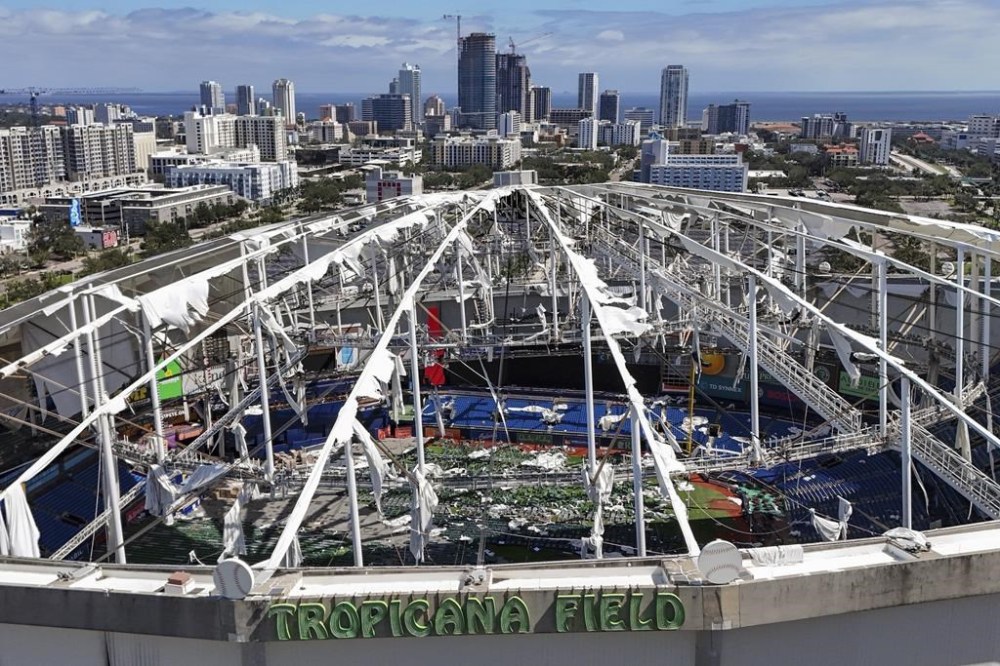
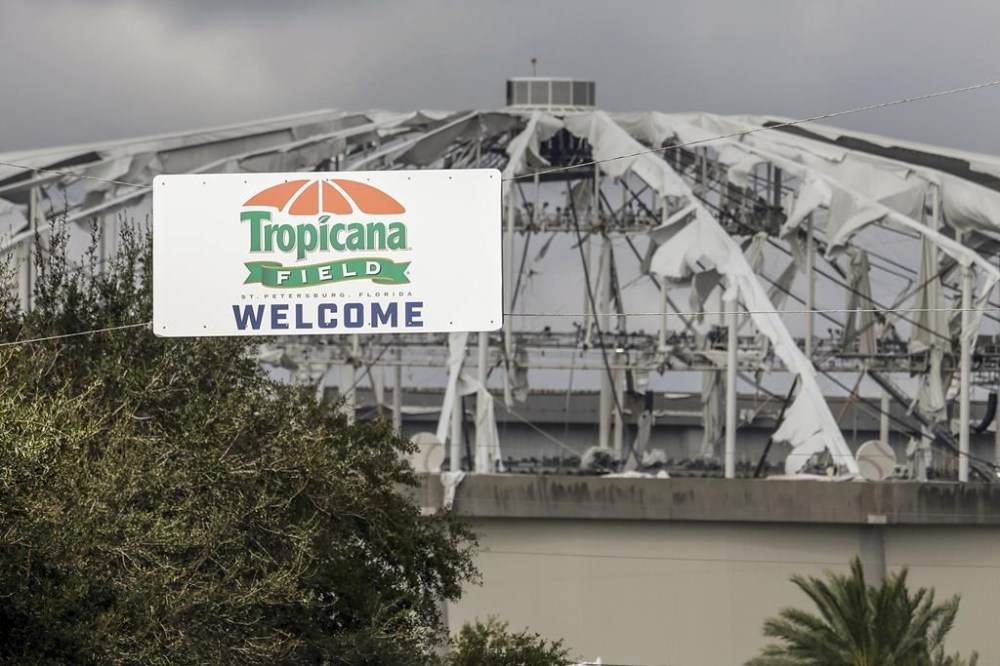
ST. PETERSBURG, Fla. (AP) — A combination of severe hurricane damage to Tropicana Field and political delays on financing means it is highly unlikely the Tampa Bay Rays’ planned new stadium will be ready for the 2028 season, if at all, the team said Tuesday.
Rays top executives said in a letter to the Pinellas County Commission that the team has already spent $50 million for early work on the new $1.3 billion ballpark and cannot proceed further because of delays in approval of bonds for the public share of the costs.
“The Rays organization is saddened and stunned by this unfortunate turn of events” said the letter, signed by co-presidents Brian Auld and Matt Silverman, who noted that the overall project was previously approved by the County Commission and the City of St. Petersburg.
“As we have made clear at every step of this process, a 2029 ballpark delivery would result in significantly higher costs that we are not able to absorb alone,” the letter added.
The tumultuous series of events came after Hurricane Milton ripped the roof off Tropicana Field on Oct. 9, forcing the Rays to play the 2025 season at the spring training home of the New York Yankees, 11,000-seat Steinbrenner Field in Tampa. Then, the Pinellas County Commission postponed a planned Oct. 29 vote on the bond issue that the Rays said has thrown the new 30,000-seat ballpark timeline off.
The commission, which now includes two newly elected members, voted Tuesday to delay consideration of the financing bonds until its Dec. 17 meeting.
“This is a big deal. I’m not an anti-stadium person. I just want to make sure we’re getting the deal done and it’s fair,” said Commissioner Dave Eggers.
That leaves the Rays’ future in St. Petersburg in limbo.
“We know we’re going to be in Steinbrenner in 2025 and we don’t know much beyond that,” Auld said in an interview.
Asked if Major League Baseball can survive long term in the Tampa Bay area, Rays Principal Owner Stuart Sternberg said the outlook is “less rosy than it was three weeks ago. We’re going to do all that we can, as we’ve tried for 20 years, to keep the Rays here for generations to come.”
The team’s contract with the city of St. Petersburg requires that the Rays play three more seasons at Tropicana Field assuming it is repaired. The cost of fixing the ballpark in time for the 2026 season is pegged at more than $55 million for a building scheduled to be torn down when the new facility is ready.

Under the original plan, Pinellas County would spend about $312.5 million for the new ballpark and the city of St. Petersburg around $417 million including infrastructure improvements. The Rays and their partner, the Hines development company, would cover the remaining costs including any overruns.
It isn’t just baseball that is affected. The new Rays ballpark is part of a larger urban renovation project known as the Historic Gas Plant District, which refers to a predominantly Black neighborhood that was forced out by construction of Tropicana Field and an interstate highway spur.
The broader $6.5 billion project would transform an 86-acre (34-hectare) tract in the city’s downtown, with plans in the coming years for a Black history museum, affordable housing, a hotel, green space, entertainment venues, and office and retail space. There’s the promise of thousands of jobs as well.
___
AP MLB: https://apnews.com/MLB
Related Articles
Chris Sale and Tarik Skubal take Cy Young Awards after both were pitching triple crown winners






Advertisement Advertise With Us
Advertisement Advertise With Us