

Ontario wrote off $1.4 billion of personal protective equipment, auditor finds
Advertisement
Read this article for free:
or
Already have an account? Log in here »
To continue reading, please subscribe:
Monthly Digital Subscription
$0 for the first 4 weeks*
- Enjoy unlimited reading on winnipegfreepress.com
- Read the E-Edition, our digital replica newspaper
- Access News Break, our award-winning app
- Play interactive puzzles
*No charge for 4 weeks then price increases to the regular rate of $19.00 plus GST every four weeks. Offer available to new and qualified returning subscribers only. Cancel any time.
Monthly Digital Subscription
$4.75/week*
- Enjoy unlimited reading on winnipegfreepress.com
- Read the E-Edition, our digital replica newspaper
- Access News Break, our award-winning app
- Play interactive puzzles
*Billed as $19 plus GST every four weeks. Cancel any time.
To continue reading, please subscribe:
Add Free Press access to your Brandon Sun subscription for only an additional
$1 for the first 4 weeks*
*Your next subscription payment will increase by $1.00 and you will be charged $16.99 plus GST for four weeks. After four weeks, your payment will increase to $23.99 plus GST every four weeks.
Read unlimited articles for free today:
or
Already have an account? Log in here »
TORONTO – Ontario wrote off more than one billion items of personal protective equipment at a cost of $1.4 billion since 2021 and is now burning expired products, the province’s auditor general found.
But the minister responsible for procurement said he has “no regrets” about how the government acted.
Auditor general Shelley Spence said the province continues to purchase masks, gowns and other protective gear at the same levels as the height of the COVID-19 pandemic in 2020 and 2021, despite significantly declining demand.
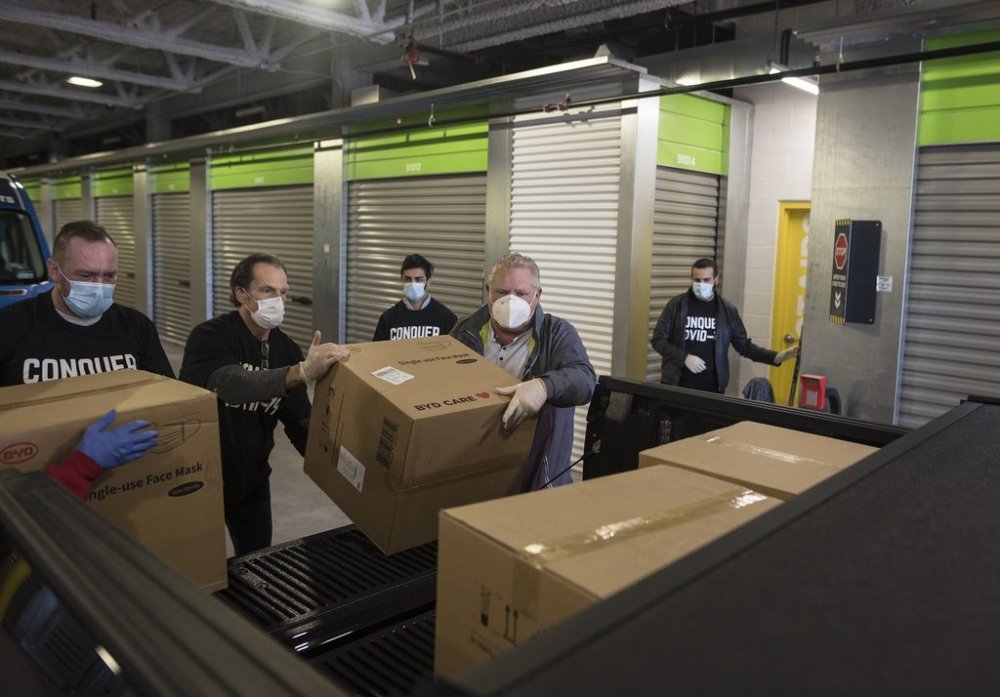
“We found that expired products began to accumulate in the provincial stockpile as some of the products purchased during the pandemic fell short of desired quality standards and were not used,” Spence wrote in her annual report.
Ontario had a critical shortage of protective gear during the pandemic, especially in the early days when much of the province’s inventory of PPE had already expired.
The province created Supply Ontario in late 2020 to manage the stockpile but Spence found it cannot properly track the gear.
“Supply Ontario does not have an effective inventory management system in place to report costs on a timely basis and instead relies on inefficient manual process to report yearly,” Spence wrote.
Supply Ontario now incinerates expired PPE – it has burned 780 million pieces so far – and converts it to heat energy rather than recycling it like British Columbia does, Spence found.
The province signed long-term contracts for PPE between October 2020 and April 2021 that locked it into buying 188 million surgical masks annually. Yet it only distributed 39 million of those masks last year, or 21 per cent.
The auditor also found Supply Ontario bought 25 million N95 masks in 2024/25, but it distributed only 5.5 million, or 22 per cent.
“Assuming usage levels are unchanged, we estimate that approximately 376 million surgical masks and 96 million N95 masks, worth approximately $126 million of taxpayers’ money, will expire between 2025/26 and 2030/31,” Spence wrote.
“If purchase commitments must be maintained to satisfy the policies of protecting public health and supporting local production, and Supply Ontario does not increase its distribution of PPE, waste will likely continue to occur.”
Spence, however, doesn’t blame the government for the waste, saying it was like the “Hunger Games” to buy protective gear.
“I can’t in hindsight really blame the government for having some of it go to waste, but I think it’s important for Ontarians to know that that’s the value of what was disposed of,” she said.
Minister of Public and Business Service Delivery Stephen Crawford blamed the previous government for “substandard” foreign-made protective equipment.
“It was a run to get PPE as quick as possible and we did that,” Crawford said. “So we have no regrets in terms of what we were able to do. And subsequently, we have invested heavily into manufacturing that product right here in Ontario, for good jobs and having a safe supply.”
When asked if he also had no regrets about burning 80 per cent of unused PPE that his government procured, Crawford said: “Would you like substandard PPE to be used with your children?”
Despite the vast amount of PPE stockpiled, Spence found only a “disproportionately low” two per cent of the items go to hospitals, which say the province cannot meet their needs.
Spence recommended Supply Ontario create a system to integrate and consolidate inventory records from a variety of sources and to better use that data to mange and report on PPE levels. She also recommended the province conduct a value-for-money analysis to make better policy decisions on purchasing commitments.
She also suggested the province develop and implement a plan to increase usage of PPE, particularly to hospitals.
Supply Ontario, which is run by Premier Doug Ford’s former chief of staff, Jamie Wallace, has agreed with all six of Spence’s recommendations.
It said it is currently consolidating inventory and records into a “single vendor warehouse management system” that will then be integrated into a single system to “enable timely financial reporting.”
The agency also agreed to provide an analysis to the government and will establish a working group with hospitals to better distribute the stockpiled products.
It also agreed to develop metrics to monitor and analyze protective equipment purchases.
New Democrat Leader Marit Stiles called the auditor’s findings “absolutely bonkers.”
“This is an agency that is run by the premier’s former chief of staff who is overseeing a contract that is literally setting hundreds of millions of dollars on fire,” she said.
This report by The Canadian Press was first published Dec. 2, 2025.