



No quick fix for pothole problem
Advertisement
Hey there, time traveller!
This article was published 25/03/2010 (5854 days ago), so information in it may no longer be current.
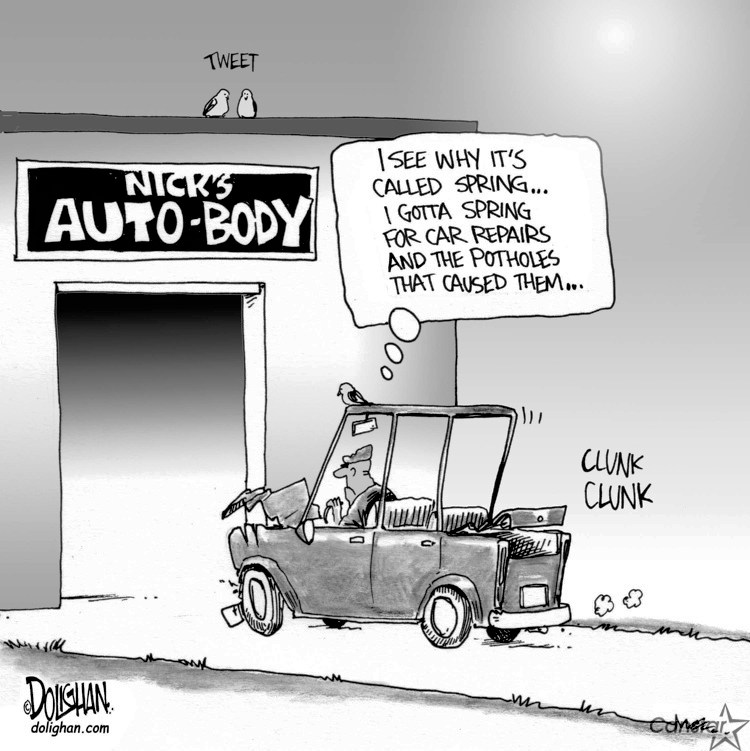
The appearance of potholes on Winnipeg streets is an unmistakable sign of spring, as perennially reliable as the sight of tulips and overly optimistic citizens in shorts and flip-flops.
For drivers, hitting one is a rite of passage — one that can even be parlayed into momentary fame, provided you’re one of the so-called lucky ones whose car is damaged enough to warrant a photo in the newspaper.
Complaining may be the unofficial pastime of all Winnipeggers, but it is nothing short of a time-honoured local tradition. And so, with the arrival of tumultuous spring weather comes the emergence of a new crop of potholes and the annual debate about how best to deal with them — a debate that, this year, has been fueled by news out of city hall.
It seems Winnipeg has given up on a plan to have its public works department assess current pothole-repair practices, explore alternatives and report back to the mayor’s executive policy committee.
Instead, media reports suggest Mayor Sam Katz is now interested in finding a long-term solution to the problem — something that, if it can be done at all, can only be accomplished with massive new investments in Winnipeg’s existing road-repair budget.
Finding money to spend on significant infrastructure renewal will not be easy. The city seems unwilling to raise property taxes, while the province has so far refused to change its funding formula to allow Winnipeg to receive a share of the PST or other growth revenues.
Complicating matters further is the fact that Winnipeg continues to expand outward. Urban sprawl creates more streets, and more streets mean more potholes to deal with. If Winnipeg is struggling to cover the costs of road repairs now, what will happen when large-scale suburban developments are completed?
Barring the discovery of a magical money pot, there is simply no easy solution to Winnipeg’s pothole woes. However, in the short-term, there is at least some good news.
According to a city spokesperson, the number of calls requesting pothole repairs is down 50% from this time last year — when extreme weather took an unusually harsh toll on our roads and pushed the cost of filling potholes $1 million over the allotted $1.5 million annual budget. Also, pothole-patching crews are currently experimenting with a new type of filler compound; if this pilot project successful, it could be expanded city-wide, a move that would help prolong the life of such Band-Aid fixes.
In the long-term, however, Winnipeggers need to accept a few facts. Our city is built on clay. The climate we experience is severe and therefore, will continue to present unique challenges with respect to infrastructure maintenance. And unfortunately, there is no magical money pot. As such, potholes will continue to be a perennial problem over which we have minimal control at best.
Besides, if they disappeared for good, whatever would we complain about?