



Learning to love the potentilla
Advertisement
Hey there, time traveller!
This article was published 30/06/2014 (4326 days ago), so information in it may no longer be current.
I don’t know about you, but I can’t stand those over-used over-the-top flaming gold potentillas.
Until recently, that is. Turns out they have some extremely redeeming qualities — and alternative colours.
Our climate has not been gentle on our plants in the last few years. The all-summer rain of a few years ago, last year’s summer-long drought — knocks the wind out of us and even moreso from the plants trying to get on with the business of surviving.
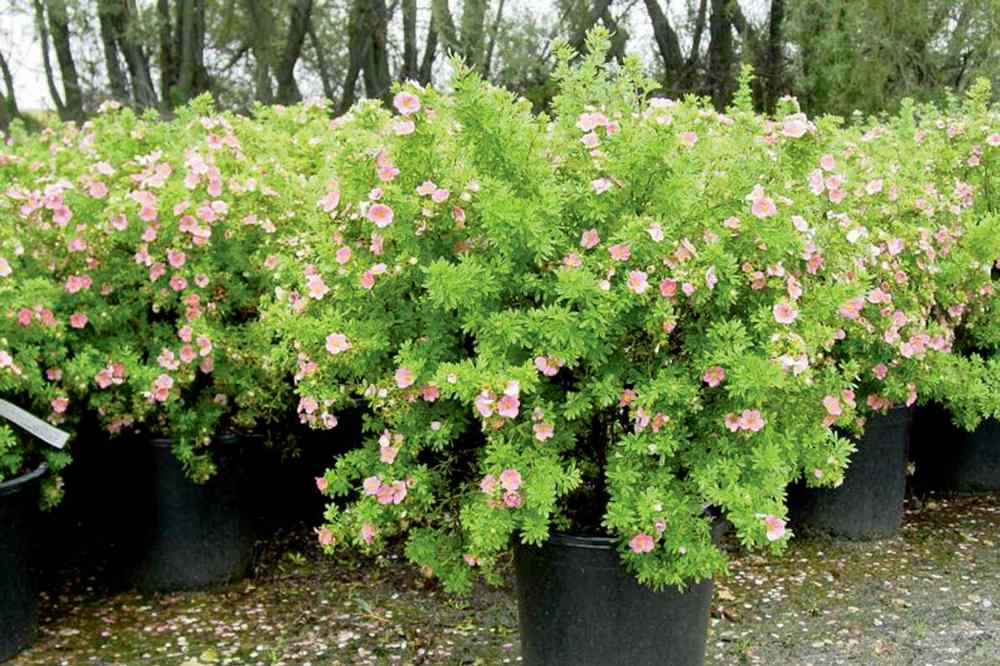
I snubbed the potentilla before last summer’s long dry spell. There were so many other flowering shrubs, and all in better colours, to offer my clients. But with “low maintenance” topping most of my clients’ wish lists, and last summer’s dry period being one of many in the past few years, a pattern of climate extremes we’ve been told to expect, potentilla nudged into my consciousness.
Hot, dry, still in flower — that is how potentilla is spelled. Wind? Not a problem, their narrow leaves and small flowers let it slip on by with minimal damage. They are in fact the ideal prairie plant. But that gold?
Turns they come in other colours — white, orange, pink, red, and a lovely not-gold yellow. Both the white and the yellow come with that robust get-down-and-get-on-with-it attitude.
“McKay’s White” has been around for a while, and has a good track record, while “Morden Snow” is new this season, and has double white flowers.
“Yellowbird,” “Yellow Gem” and “Katherine Dykes” all lean more to yellow than gold.
The pink, red, and orange cultivars will do fine in hot dry growing conditions. “Pink Beauty,” “Red Roblin” and “Orangeade” are all good choices. Their colours may fade in extreme heat but will return in cooler temperatures later in the season. If the colour is important to you, provide some midday shade. Karl Foerster Reed Grass is a natural pairing and tall enough to provide a bit of shade.
While potentilla don’t require much tending, if you’re going to embrace them, might as well keep them looking their best. Prune out any dead branches just as they green up every spring.
If letting it go for a few years is more your style, they can be cut right back to the ground if it gets outright unruly. That’s the kind of plants they are. What’s not to like?
Carla Keast has a master’s degree in landscape architecture and is a Winnipeg-based freelance landscape designer. She can be reached at contact@carlakeast.com.