


History comes to life at Fortress of Louisbourg

Advertisement
Hey there, time traveller!
This article was published 22/07/2014 (4427 days ago), so information in it may no longer be current.
Imagine standing atop a lengthy stone wall, gazing across a foggy harbour.
From the distance, a ship sails towards you. You’re not sure who is approaching, nor if they’re friends or foes, so muskets and cannons are ready just in case. As the ship gets closer, you realize they’re not a threat. The massive gate swings open to welcome them into your town, and out comes the rum to toast the arrival of guests from afar.
Welcome to the Fortress of Louisbourg, circa early 18th century. Founded by France in 1713, Louisbourg is on the eastern coast of what is presently known as Cape Breton Island. It was established as a fishing haven, trade port, and military base, and grew into a settlement town and colonial capital. By the 1740s, 2,000 people lived inside the fortress walls, with another 1,000 beyond the walls, and hundreds more who came and went each summer.
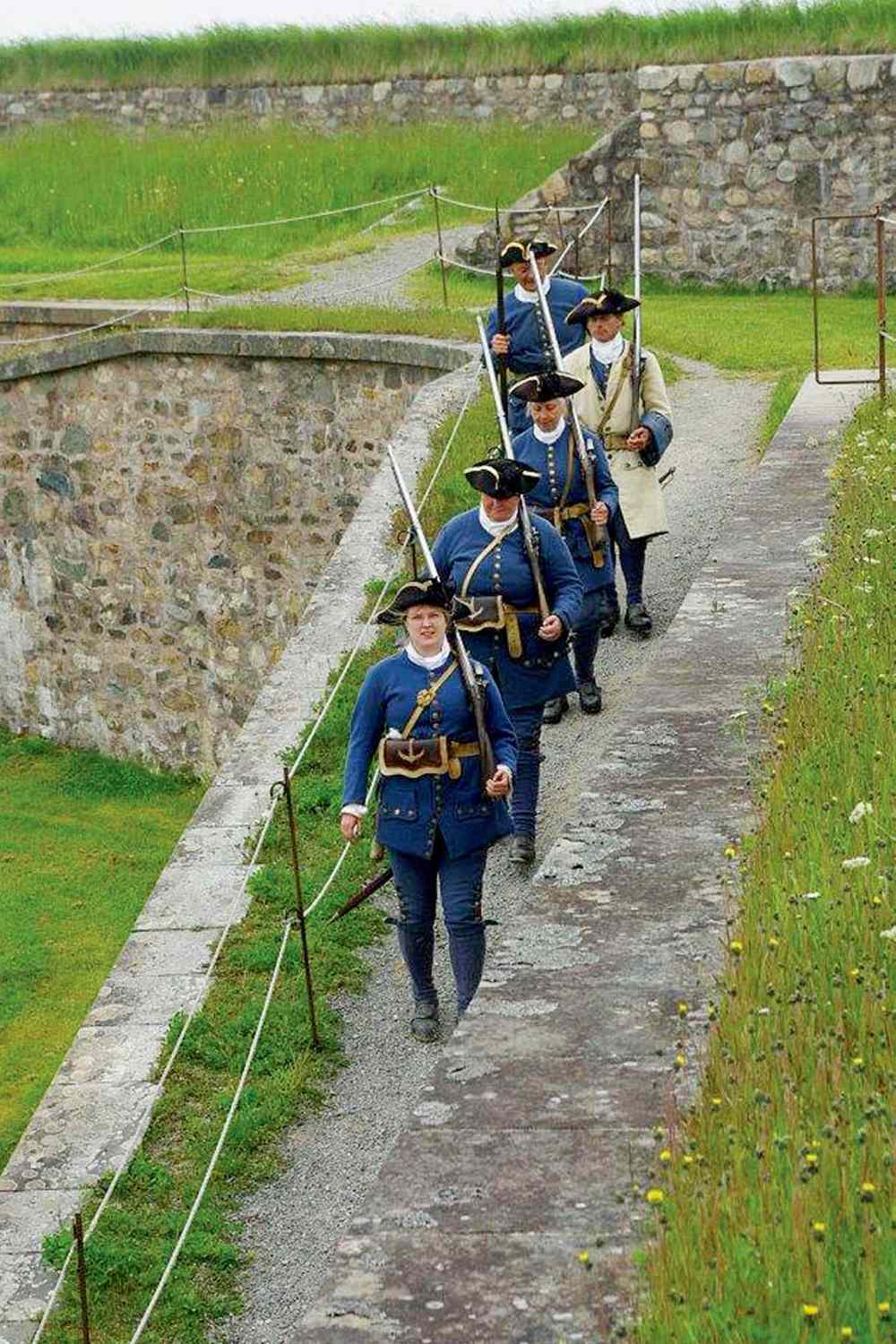
Things were going well for Louisbourg until 1744, when France and Britain went to war. Over the next several years, French and English rule alternated, before a final attack in 1758 saw residents exiled, and the fortress demolished. For the next two centuries, the rubble lay abandoned on the desolate ocean shore. Louisbourg, the only major colonial North American town not to have had a modern city built on top of it, was quietly forgotten.
Jump ahead to the 1960s. With growing unemployment among miners, a reconstruction of the site began as a “make work” project, becoming the largest reconstruction project ever undertaken in North America. Today, the National Historic Site is a living history museum brought to life through hundreds of interpreters in period costumes, going about their daily lives as they would have been.
Specialty tours and programs from Victoria Day until Thanksgiving allow guests to step back in time with daily demonstrations and hands-on activities like firing a cannon, experiencing “upper class” and “lower class” dining, and overnight historic camping.
During its heyday, Louisbourg was the third-busiest North American harbour, with only Boston and Philadelphia busier. Each year 140 ships passed through, travelling from colony to colony, transporting chocolate, coffee, cinnamon, nutmeg, and sugarcane. The latter was used for making rum, which was the cheapest and strongest alcohol on the market. You can still have a taste of it today — straight up like labourers used to drink, or in punch enjoyed by the prominent, made of rum, water, sugar, citrus and spice.
Alas, history is not all rosy. Louisbourg was involved in the slave trade, with 300 residing in the town. One of the most compelling stories is that of Marie Marguerite Rose, a young woman captured in Africa and taken as a slave at the age of 19. She spent 20 years working in a household before being granted freedom. She then married a Mi’kmaq man, and opened and operated an inn until she died in 1757.
If you like history, visiting the Fortress of Louisbourg is a must. And if you don’t, well, there’s always rum for the tasting.
RoseAnna Schick is an avid traveller and music lover who seeks inspiration wherever
she goes. Email her at rascreative@yahoo.ca
RoseAnna Schick
Travelations
RoseAnna Schick is an avid traveller and music lover who seeks inspiration wherever she goes. Email her at rasinspired@gmail.com
Our newsroom depends on a growing audience of readers to power our journalism. If you are not a paid reader, please consider becoming a subscriber.
Our newsroom depends on its audience of readers to power our journalism. Thank you for your support.
RoseAnna Schick
Travelations
RoseAnna Schick is an avid traveller and music lover who seeks inspiration wherever she goes. Email her at rasinspired@gmail.com
Our newsroom depends on a growing audience of readers to power our journalism. If you are not a paid reader, please consider becoming a subscriber.
Our newsroom depends on its audience of readers to power our journalism. Thank you for your support.
Advertisement Advertise With Us