



Aging well with fitness
Advertisement
Hey there, time traveller!
This article was published 28/07/2015 (3893 days ago), so information in it may no longer be current.
A large part of our population is now in their 60s, and this creates a great opportunity for the fitness industry.
We need to learn about which training methods work for our aging population. Many older adults can do the same types of exercise as their younger counterparts, but that doesn’t mean that they don’t have different needs.
I’ve worked with many clients in their 60s and 70s and many of them tell me their doctors have instructed them to do nothing but walk and take their medicine. This is unfortunate because they are missing out on the most important part of fitness: relearning to move well, which also happens to be the most fun part of fitness. This approach will do more than extend life, it will dramatically improve the quality of life. My training strategy for older populations includes three essential principles: reducing pain; improving mobility and keeping the mind sharp.
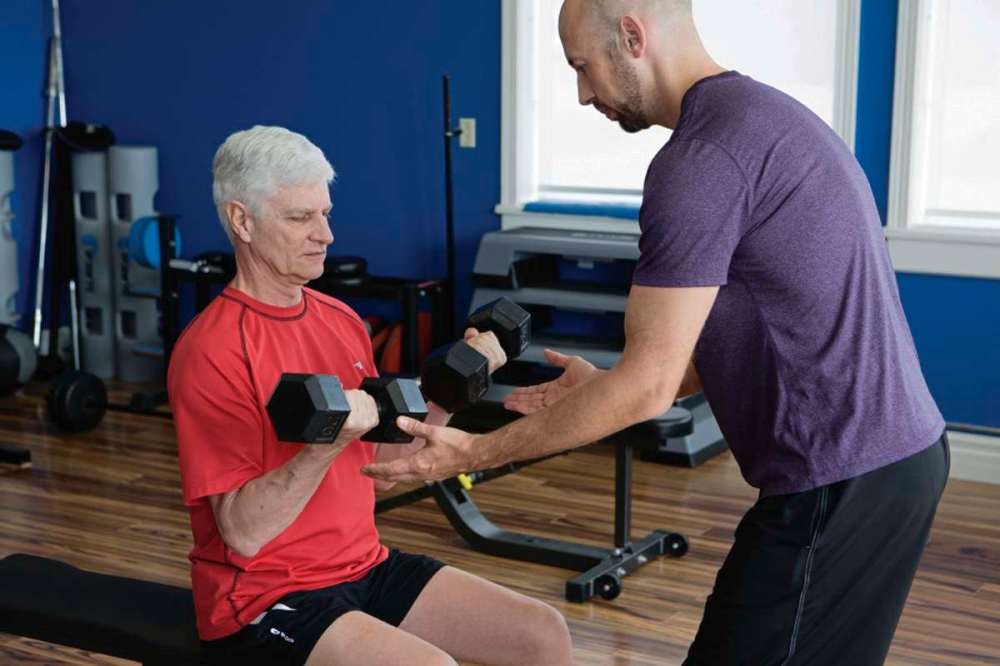
To reduce pain and the incidence of injury, we choose exercises that have less impact on the joints but that use the entire body, building muscle mass and bone density. Many older adults have health conditions that cause them to shy away from strength training. We lose a tremendous amount of muscle mass as we age and it is this muscle mass that prevents us from withering away. Many people avoid training with weights due to pain, but ironically getting stronger usually reduces pain and inflammation in the long run. The other key to managing pain is to understand the hormonal effects of exercise, in order to create workouts with the correct amount of reps, sets and rest to ward off pain and strengthen bones and muscles.
It is also important for the program to include exercises that enhance the ability to get from one place to another independently as we get older. We call this mobility work, and it might include balance drills, body weight exercises, stretching, and most importantly, joint mobility.
Joint mobility exercises keep our joints well lubricated and ready to handle the day-to-day stress and the wear and tear of moving around. When we have good balance, we are less likely to fall, and when our hips, knees and ankles work correctly, we are less likely to break limbs or hips if we do happen to fall.
The last component is using fitness to stay sharp. I like teaching older clients movements that make them think rather than boring repetitive exercise. We choose movements that challenge the senses; agility drills, single arm or single leg movements for balance, and complex full body movements that require co-ordination. To keep the mind sharp it’s important to eat well and sleep well, so this should be part of any fitness program for older adults. So instead of blaming aches and pains on age, do something about it. Instead of investing in hair dye and wrinkle cream, learn to use exercise to look better and live longer.
Tania Tetrault Vrga is owner and head trainer at CrossFit Winnipeg. Send questions to her at www.crossfitwinnipeg.com.