


More to be done on end-of-life care: Chochinov
Tuxedo local Harvey Max Chochinov invested to Order of Canada
Advertisement
Hey there, time traveller!
This article was published 07/12/2015 (3923 days ago), so information in it may no longer be current.
It’s one thing that connects every person on the globe and one fact of life that can’t easily be overlooked.
Death can come in many shapes and forms and the ways in which people prepare for life’s end are just as diverse.
Local researcher, doctor and professor Harvey Max Chochinov has dedicated more than two decades of his life to understanding how people experience dying and finding ways to make end-of-life care more comprehensive.
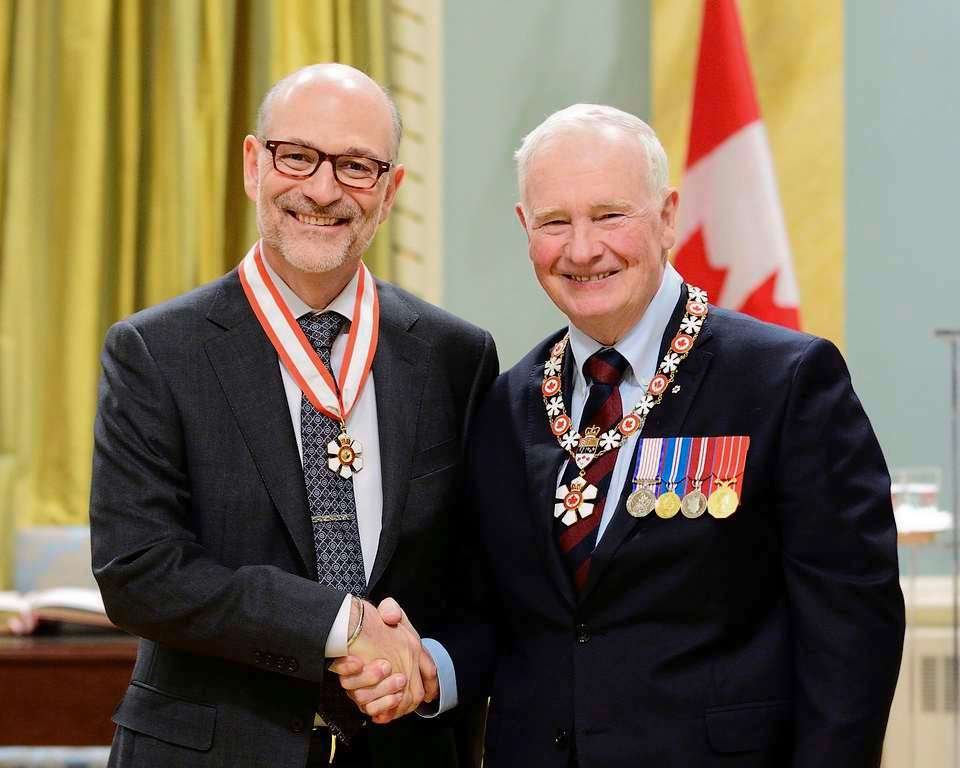
Chochinov, 57, is a distinguished professor of psychiatry at the University of Manitoba and director of the Manitoba Palliative Care Research Unit at CancerCare Manitoba. He also holds the only Canada Research Chair in palliative care and is a member of the Governing Council of the Canadian Institutes of Health Research.
Chochinov was invested into the Order of Canada as an officer on Nov. 18 for his many years of work in palliative care research and his ongoing contributions to the fields of psychiatry and oncology. The appointment is the latest in a long list of awards and accolades recognizing his work.
“It’s been a very humbling experience. The people who were inducted along with me are really an extraordinary group of Canadians,” Chochinov said over the phone from his home in Tuxedo.
“Although we tend to be a death-denying society, I think over the last decade or two there’s increasing attention being turned towards how we understand chronic illness and how we understand life-limiting illness,” he said.
“I feel gratified that the work was recognized and perhaps it indicates that there is an appreciation that palliative care and end-of-life care issues are important.”
Chochinov studied psychiatry at the U of M and it was during this time that he recognized an important connection between psychiatry and oncology. Wanting to learn more about the connection between spiritual and existential matters and death, he took a fellowship at the Memorial Sloan Kettering Cancer Center in New York City, and then came back to Manitoba in 1990 to work at the Manitoba Cancer Research Foundation, now CancerCare Manitoba.
“It was pretty evident that there were lots of psychosocial issues that weren’t being well attended to, weren’t really necessarily examined very carefully, and that patients oftentimes could experience stress on the basis of psychological, spiritual, existential issues that weren’t necessarily being looked at in the conventional course of them receiving treatment,” Chochinov said.
His work with CancerCare Manitoba over the past 25 years has resulted in a number of advancements on the spectrum of palliative care including new approaches for patients and families managing chronic illness, and the creation of the Canadian Virtual Hospice, which is projected to have a million users looking for assistance and insight on the website this year.
“Although we tend to be a death-denying society, I think over the last decade or two there’s increasing attention being turned towards how we understand chronic illness”
Still there is more work to do, Chochinov said, including providing more Canadians access to palliative care and educating more health care providers in effective palliation.
“There’s so much more that needs to be done to make sure that people towards the end of life are receiving the quality of care that each and everyone deserves,” he said. “My primary goals and objectives are to advance the field by providing further insights and knowledge that will improve care.”
Throughout his career, Chochinov has travelled the world lecturing and teaching others about advances in palliative care, and he said across the countries he’s visited and the people he’s met, he’s gained some important and interesting insight into human nature.
“In terms of our shared humanity there is more that people in different parts of the world have in common when it comes to grappling with our mortality, grappling with our vulnerability, than things that set us apart.”