


The beauty of travelling in Belgium

Advertisement
Hey there, time traveller!
This article was published 03/08/2016 (3663 days ago), so information in it may no longer be current.
Driving through Belgium’s idyllic countryside, you wouldn’t have any idea it’s one of the most densely populated countries in the world.
That could be because it’s also the most urbanized country in Europe, with an estimated 98 per cent of Belgians tucked away in urban areas.
Maybe it’s because Belgium has more castles per kilometre than any place, anywhere — converging with the natural landscape of forests, grottoes and rivers, and giving off the impression you’ve gone back to a time when there were less people around.
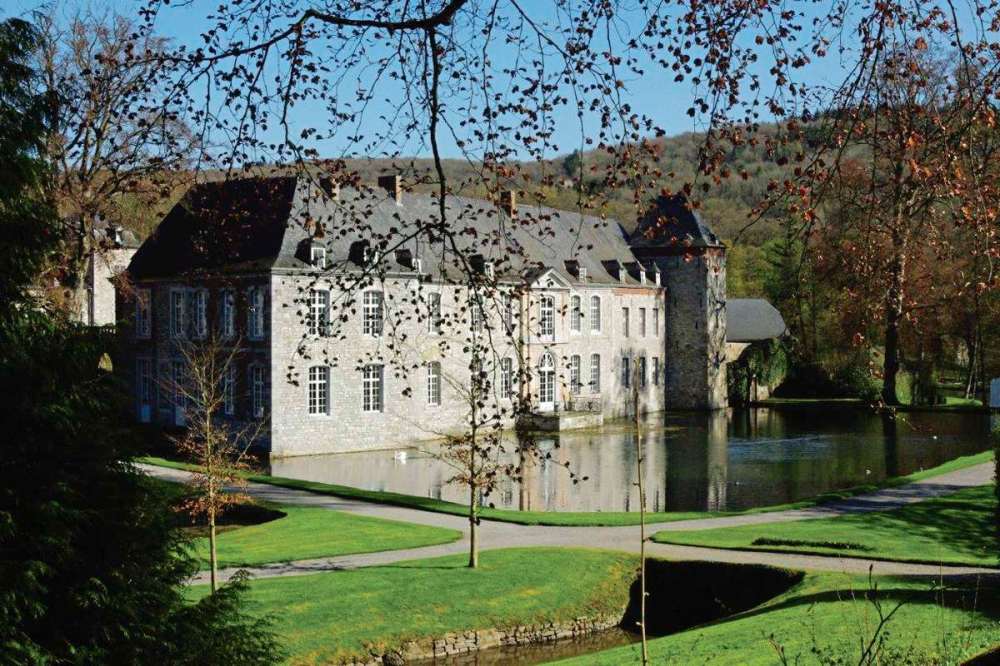
Or perhaps because Belgium’s southern French-speaking region of Wallonia is teeming with magnificent treasures like the Gardens of Annevoie, a sprawling 17th century estate adorned with fountains, streams, ponds, and statues, blending classical charm with ultimate tranquility.
Another major heritage site of Wallonia is in its capital city. The Citadel of Namur — also known as the Castle of Namur — is located at the confluence of the Sambre and Meuse rivers. It has held a strategic defence position in the heart of Europe since the Middle Ages, with origins dating back to the year 937. It was one of the largest fortresses on the continent, with its size reflecting its importance in helping shape European history.
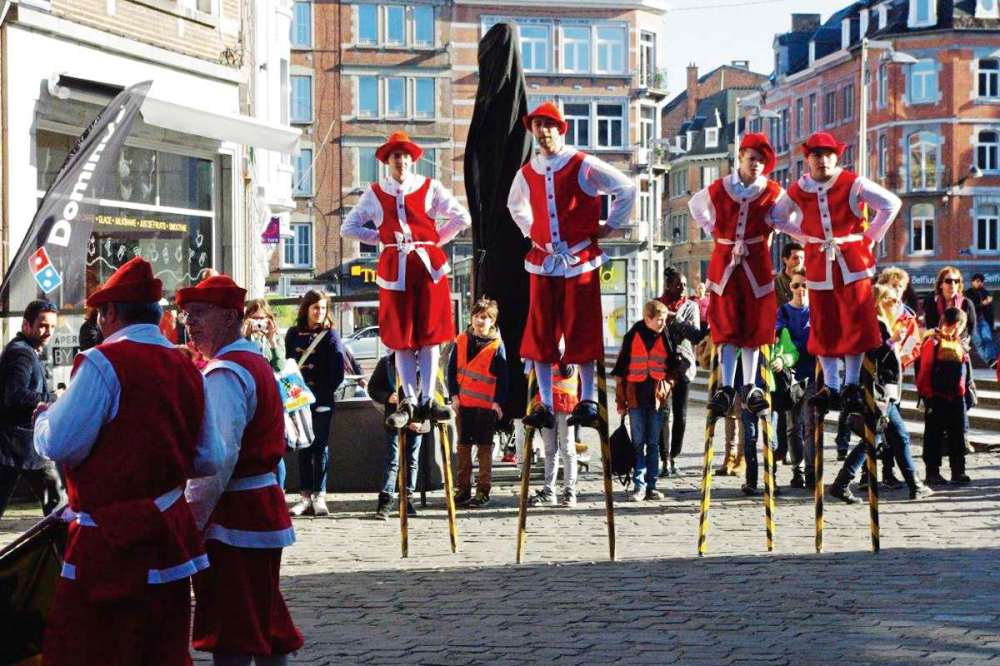
Namur has been home to many different kinds of battles over the centuries, and today, you can witness one of the longest-running — and most quirky. The Stilt Walkers of Namur have carried on the tradition of “stilt jousting” for over 600 years. This involves two teams on ‘combat stilts’, trying to knock each other off their stilts, until only one man is left standing (84 centimetres off the ground).
Since 1411, they’ve been doing their thing in front of emperors and kings. They now perform around the world at carnivals, festivals and parades, in addition to being one of the most popular attractions in Namur. If you get a chance to watch them, stick around until the very end, when they invite audience members to get up on the stilts and try jousting. Or walking. Or just standing, really, which is hard enough to do without someone holding those stilts still.
For battles of the military kind, the Bastogne War Museum brings the Second World War in Belgium to life using intricate displays, multi-sensory exhibits, and three-dimensional scenes that offer glimpses of what it must have been like. In one theatre-like setting, you’re a soldier immersed in a fox hole in the forest as fighting rages around you. In the next, you’re a civilian hiding out in a dark and overcrowded cellar while enemy troops pass through your town.
While there were many famous battles during the Second World War, one not so well-known is the Battle of the Bulge, named as such to describe the way the Allied front line bulged when depicted on wartime news maps. The battle lasted nearly six weeks, spanning Christmas of 1944. The Allies put up fierce resistance, severely depleting Germany’s armoured forces on the western front, and inflicting heavy German losses.
The battle was so significant because it was seen as Germany’s last major offensive in the war, marking the beginning of the end. But it came with high cost to the Allies. US forces bore the brunt of the attack, suffering their highest casualties in any Second World War operation. To honour the nearly 80,000 American soldiers killed or wounded, The Mardasson Memorial was erected in 1950 — a very moving and massive monument in the shape of a five-pointed American star that ensures this hard-fought battle, and the lives it took, will never be forgotten.
RoseAnna Schick is an avid traveller who seeks inspiration wherever she goes. Email her at rascreative@yahoo.ca
RoseAnna Schick
Travelations
RoseAnna Schick is an avid traveller and music lover who seeks inspiration wherever she goes. Email her at rasinspired@gmail.com
Our newsroom depends on a growing audience of readers to power our journalism. If you are not a paid reader, please consider becoming a subscriber.
Our newsroom depends on its audience of readers to power our journalism. Thank you for your support.
RoseAnna Schick
Travelations
RoseAnna Schick is an avid traveller and music lover who seeks inspiration wherever she goes. Email her at rasinspired@gmail.com
Our newsroom depends on a growing audience of readers to power our journalism. If you are not a paid reader, please consider becoming a subscriber.
Our newsroom depends on its audience of readers to power our journalism. Thank you for your support.
Advertisement Advertise With Us
Advertisement Advertise With Us