


Colic: A horse owner’s worst nightmare
Advertisement
Hey there, time traveller!
This article was published 06/09/2016 (3603 days ago), so information in it may no longer be current.
Colic is a dreaded five-letter word for any horseperson but what is it all about?
Colic is a general term used for when a horse has abdominal pain. There are many different types of colic that can occur. Some are minor and some require major interventions, including surgery of the abdomen to correct the problem.
When horses develop abdominal pain, they tend to show some characteristic signs — pawing, excessive yawning, curling the upper lip repeatedly, restlessness, laying down, rolling and in the worst cases, thrashing violently.
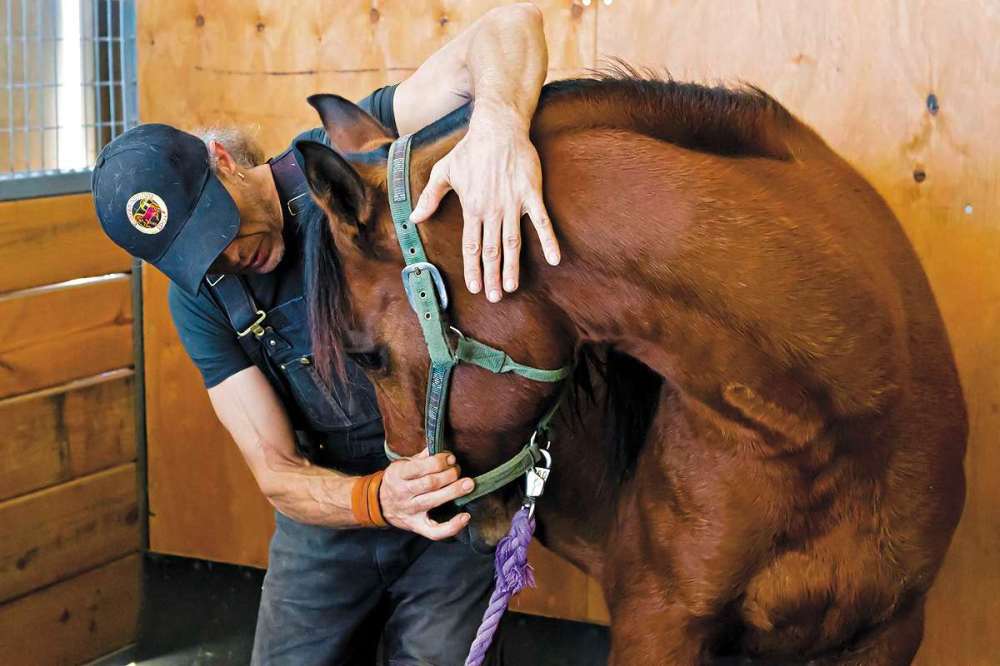
The subtle signs, such as yawning or curling the upper lip ,are often missed or misinterpreted but can be an important early indication of colic.
Colic can be due to a number of issues, including and not limited to spasms of the intestines; gastric or hind gut ulcers; changes in barometric pressures leading to changes in the gas buildup within the large colon; impaction of feed or straw often associated with dehydration or lack of access to water; displacements of the intestines, particularly the large colon; twisting of the small or large intestine; inflammation of the small intestine due to bacterial infection; and build-up of sand or hard concretions called enteroliths within the large intestine; to name a few.
Some of these are easy to treat and manage, while some require surgery.
Most colics involve the large colon and most resolve on their own or with minimal intervention. When your horse begins showing signs of colic, it is important to call your veterinarian and discuss the situation.
In many cases, your veterinarian will need to do a full exam of the body including the heart rate, hydration, a rectal exam and passing a nasogastric tube, if needed.
Some specially trained veterinarians will be able to perform additional tests such as abdominal ultrasound to look at the anatomy of the intestines during the colic.
Once the exam is complete, the veterinarian will determine what treatment may be necessary.
This usually consists of administration of an anti-inflammatory/pain relief medication and possibly passing a nasogastric tube to administer water, mineral oil, electrolytes and other medications to help clear the colic.
Never give any medication to your colicking horse without first talking to a veterinarian as some medication will mask a surgical colic and delay critical treatment.
Colic doesn’t have to be a scary word but knowing what is going on and having a plan to deal with it is very important.
Chris Bell is an equine veterinarian and surgical specialist who operates Elders Equine Veterinary Service, with clinics in Cartier and Winnipeg. See www.eldersequineclinic.com