


Finding the real Cuba

Advertisement
Hey there, time traveller!
This article was published 20/12/2016 (3456 days ago), so information in it may no longer be current.
Cuba is the largest island nation in the Caribbean, and a country that carries a lot of charm and mystique in today’s modern-day world.
In many ways, it has stayed a snapshot of what life was like back in the 1950s, captivating visitors with a slowed-down existence reminiscent of simpler times.
No matter where you go in Cuba, it’s not uncommon to see horses pulling loaded-up carts, donkeys carrying packs, people riding around on refurbished bicycles, rickety pick-up trucks transporting the masses, and classic cars doubling as taxis, all sharing the same weathered and worn-out roads. The casual pace of commuting is just one part of what makes Cuba appear so laid-back. It’s the kind of place where you still see groups of kids playing outside, families gathered around front stoops, and musicians coming together for impromptu street performances.
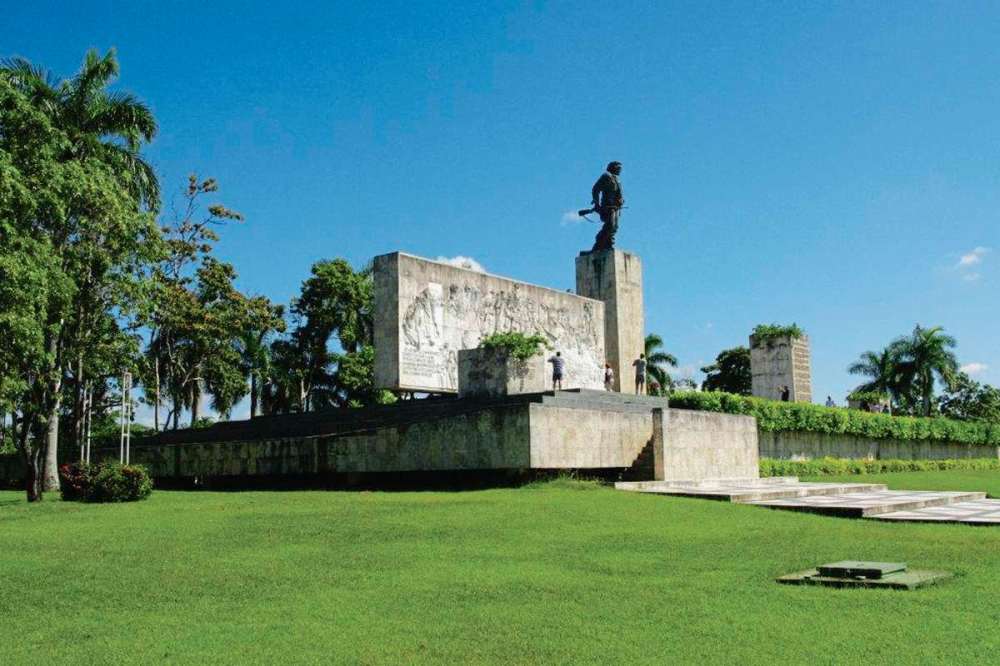
But take a look below the surface, past the colourful architecture and the cultural pride, and you’ll find a complex Cuba that is as diverse as it is dynamic, only just beginning to connect itself to the digital world, and figuring out how to define itself in the global scheme of things.
I will admit to knowing very little about Cuba before travelling there, but began learning about its revolutionary history the moment I stepped off the plane. Mired in political corruption and instability during the first half of the 20th century, Cuba’s dictatorship was overthrown during the 1953-1959 Cuban Revolution, in a military coup led by Fidel Castro and guerilla leader Che Guevara. Since then, Cuba has been governed as a socialist state led by the Communist Party of Cuba, and economically “cut off” by the United States — forcing them to become a resilient, resourceful and self-sustaining nation where just about everything you find in Cuba is actually made in Cuba.
The military presence is significant, and reminders of military history are exposed to tourists at every turn. Meter-high murals of legendary heroes loom on buildings and billboards, and meticulously-groomed monuments pay testament to great revolutionary battles. While the feelings carried by locals today about politics vary greatly from person to person, one overwhelming belief is shared: the revolution brought many good things to the people of Cuba, like literacy, education, and health care, especially for those residing in remote locales.
Throughout Cuba you’ll meet people who are fiercely proud of their past and sense of community. Cuba’s landscape remains largely untamed, broken up by stretches of farmland dotted with tiny villages, and interspersed with towns and cities — the largest being Havana, with a population of just over two million. The island’s terrain morphs from rolling plains to rugged hills and jungle-covered mountain ranges, framed by a coastline that boasts some of the most magnificent beaches in the world.
Tourism is the number one industry in Cuba today, with most visitors traveling there exclusively for the sand and sunshine. However, there is so much more to Cuba than the coastal resorts, and if you dare to venture beyond the beaches, there are great adventures and discoveries to be had everywhere you go.
More to come: My next Travelations will share some of the most interesting things that I discovered about Cuba, in the second of a two-part series that takes you beyond the beaches and right into the heart and soul of the real Cuba.
RoseAnna Schick is an avid traveller who seeks inspiration wherever she goes. Email her at rascreative@yahoo.ca
RoseAnna Schick
Travelations
RoseAnna Schick is an avid traveller and music lover who seeks inspiration wherever she goes. Email her at rasinspired@gmail.com
Our newsroom depends on a growing audience of readers to power our journalism. If you are not a paid reader, please consider becoming a subscriber.
Our newsroom depends on its audience of readers to power our journalism. Thank you for your support.
RoseAnna Schick
Travelations
RoseAnna Schick is an avid traveller and music lover who seeks inspiration wherever she goes. Email her at rasinspired@gmail.com
Our newsroom depends on a growing audience of readers to power our journalism. If you are not a paid reader, please consider becoming a subscriber.
Our newsroom depends on its audience of readers to power our journalism. Thank you for your support.
Advertisement Advertise With Us
Advertisement Advertise With Us