



Plasma flowing at Prometic
For-profit plasma centre building paid donor program
Advertisement
Hey there, time traveller!
This article was published 29/05/2017 (3199 days ago), so information in it may no longer be current.
A wave of coolness pulsing through Denis Bourgeois’ veins signals the end to a twice-weekly routine that has helped dozens of children across Canada.
The 64-year-old has been selling his plasma to Prometic Plasma Resources, a biopharmaceutical and plasma centre located on the University of Manitoba campus, for more than 10 years. A saline drip to replace lost blood volume is the last step of an hour-long plasma donation at Prometic and, according to Bourgeois, causes the most discomfort during the extraction.
“It’s more than a chill — it’s cold!” Bourgeois joked.
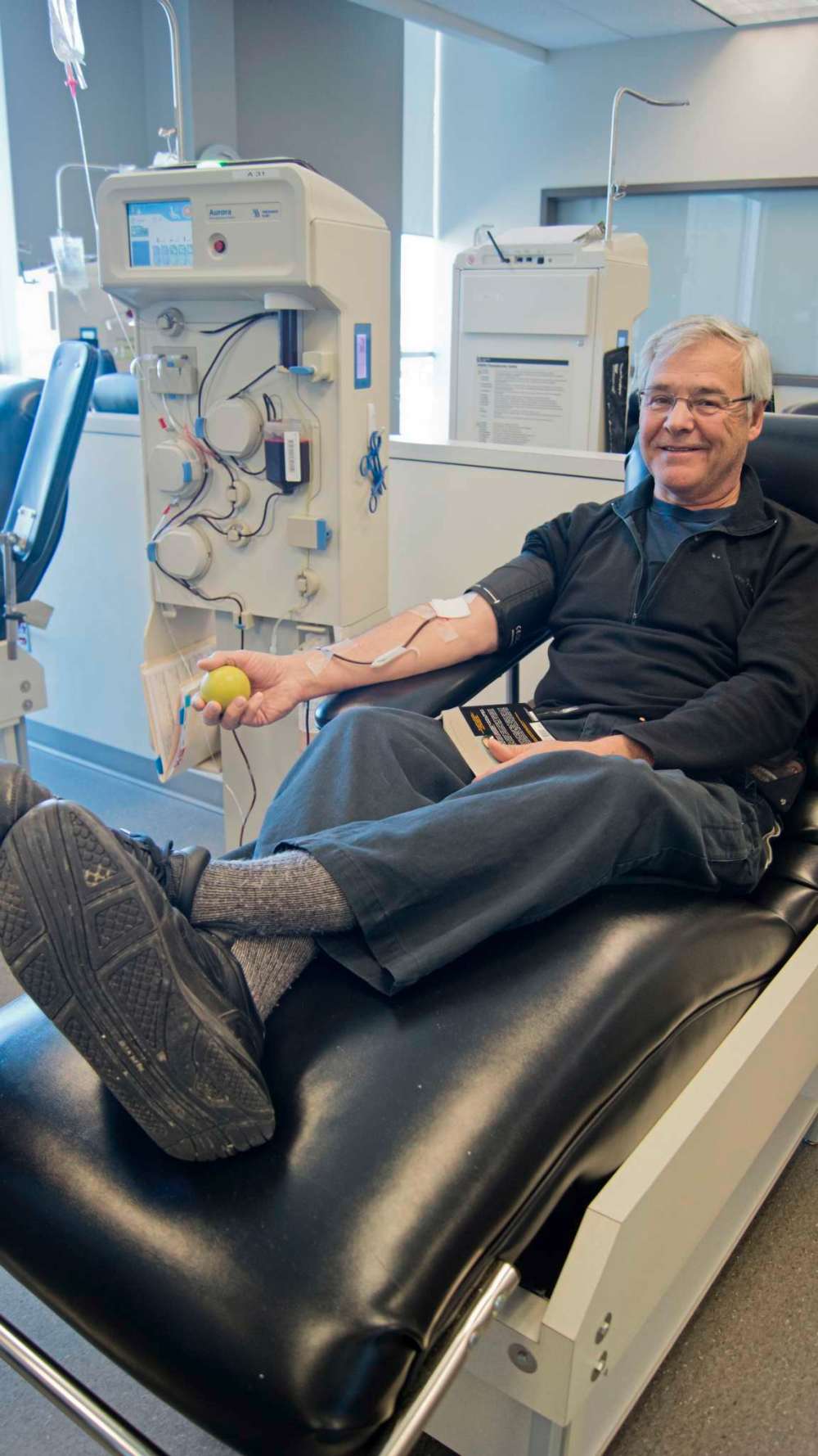
Bourgeois is one of dozens of specialty plasma donors that come through Prometic’s doors each month.
Years ago, he was immunized with Rh+ blood cells to stimulate an antibody in his plasma used to produce Anti-D immunoglobulins, a treatment for Rhesus disease. The disease affects pregnant women whose blood is incompatible with their child, often causing miscarriage or stillbirth.
Bourgeois signed on to be a donor after being introduced to the company by a nurse.
“I thought it was a good program,” he said.
Prometic is looking to scale up its operations in Winnipeg, Bill Bees, vice-president of plasma technologies with Prometic, said.
When the centre at 137 Innovation Dr. opened in 2015, there were just six stations for donating. Two years later, the centre handles about 60 donors daily and over the course of a month, the centre takes in about 1,000 units of plasma.
At Prometic, specialty plasma donors are given $70 per visit and normal source plasma donors are given $25 for their time. The speciality units are sold to Emergent BioSolutions next door at 155 Innovation Dr.
Paid plasma donation has been a controversial subject for a number of years with Quebec and Ontario banning private clinics that pay donors for plasma. In March, the Alberta provincial government also passed legislation banning payment for plasma donations.
According to Canadian Blood Services (CBS), the amount of plasma collected by the agency only meets about 25 per cent of the needed intravenous immunoglobulin (IVIG) and the other 75 per cent is purchased from paid donors in the United States. CBS is working to increase the amount of plasma they collect from unpaid donors in Canada from 200,000 litres a year to 500,000.
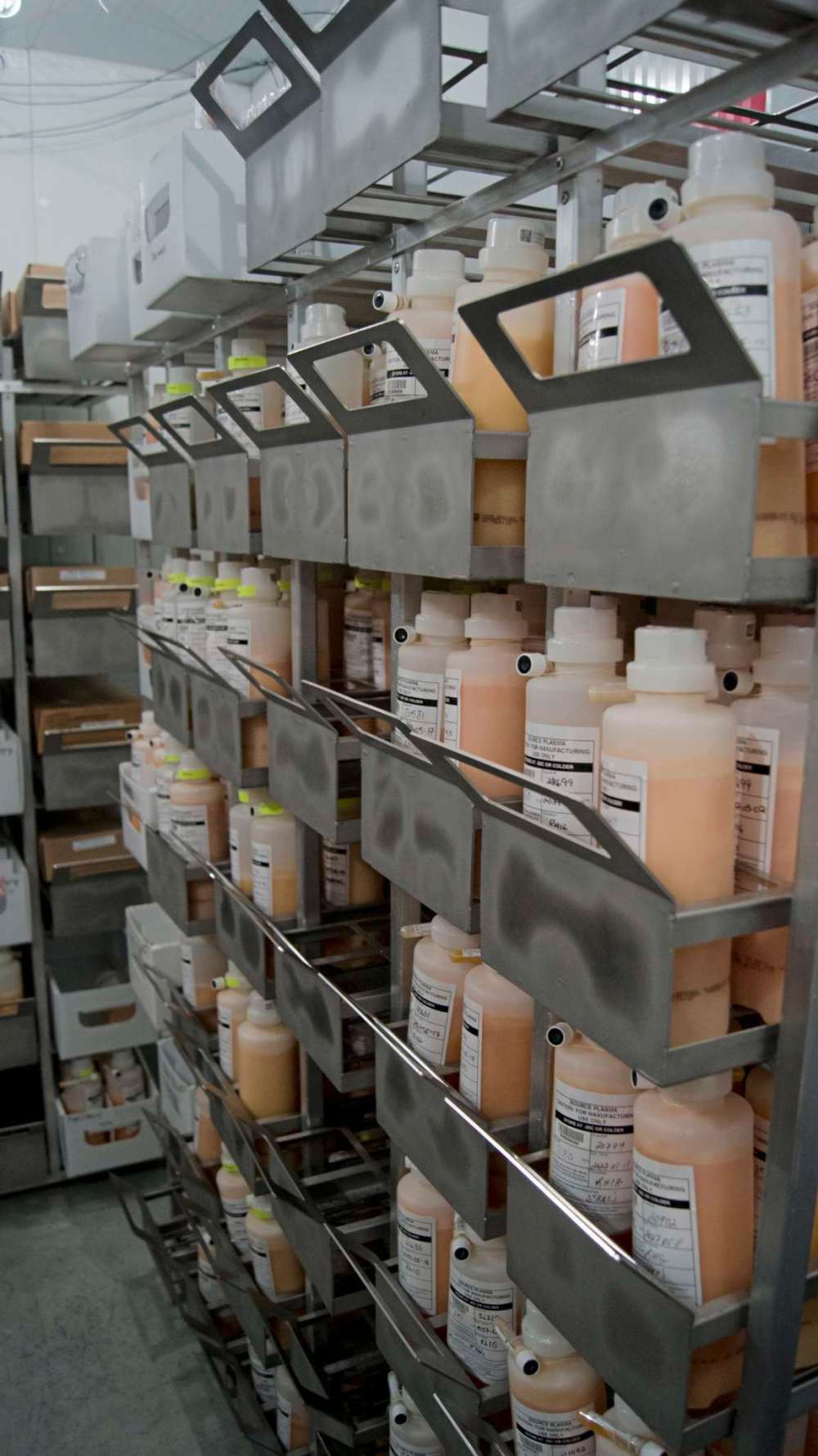
“From an ethical point of view I’m certainly comfortable with the idea of paid donation,” Bees said. “We’re looking out for (the donor’s) welfare, as well, their product is going out for the welfare of patients.”
Prometic, which also has research offices in Europe and the U.S., is wrapping up a clinical trial for its latest product, Plasminogen, used to treat a blood deficiency that causes excessive clotting throughout the body, and hopes to have the treatment licensed shortly.
In order to keep up with the manufacture of Plasminogen and the development of Prometic’s own IVIG, the company is planning to increase the number of beds at the Winnipeg donation centre to 30 by the end of the year.
“The plasma we collect can go into things like IVIG and we can make that product available to Canadians, so it could be Canadians donating for Canadian patients,” Bees said.
“There’s always the opportunity to do other programs and one of the things we’re looking at doing is some additional programs where we could use specialized antibodies against different viruses or bacteria and put those into clinical studies, but we’re still in the planning stages of that,” Bees said.