


Visit old jailhouse during Doors Open
Advertisement
Hey there, time traveller!
This article was published 05/06/2017 (3259 days ago), so information in it may no longer be current.
Since 2004, during Doors Open, on the last weekend in May, Heritage Winnipeg has invited people to come out and explore the city’s historic buildings.
Along with 12 walking tours and events, 77 buildings were open to the public on May 27 and 28 this year.
The Vaughan Street Jail at 444 York Ave. is always a big attraction and the line and wait are long to gain access to the mysteries behind the austere brick building’s exterior that many people drive by on their daily commute to work. Designed in 1881, by architect Charles Osborne Wickensen, it is the province’s oldest building located in the city. Some of the significant local historical figures connected to this building were Margaret Scott, a nurse and community activist. She was born in Ontario in 1855, married lawyer and MLA William Hepburn Scott, and when he died, leaving her a young widow, she moved to Winnipeg where she worked in a law office as a stenographer.
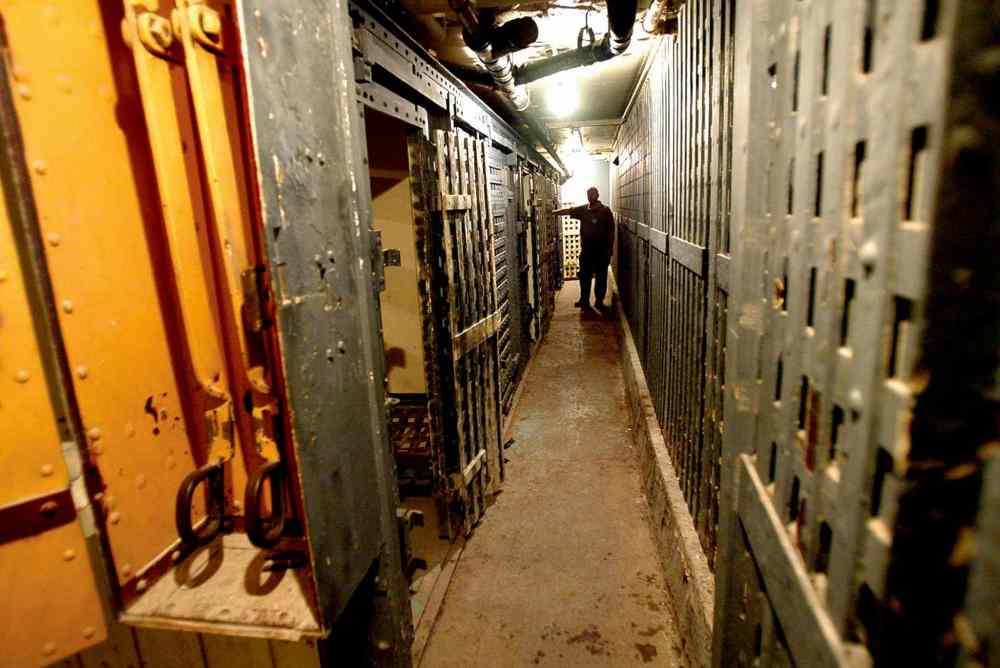
Scott eventually left her position at the law office to become an urban missionary. She provided medical care for poor women and children, assisted the unemployed, and visited the female prisoners at the Vaughan Street jail. In the late 1800s and early 1900s women could be jailed for crimes like arguing with their husband, and children could be incarcerated for things like stealing food.
Sir Hugh John Macdonald, former premier of Manitoba and son of first Prime Minister John A. Macdonald, lived at 61 Carlton, now the Dalnavert Museum.
Instead of seeing children go to jail for petty crimes like stealing food to provide for hungry family members, Sir Hugh John Macdonald temporarily provided housing for children in his basement until they were released and sent home.
Another character associated with the Vaughan Street jail was the notorious serial killer Earle Nelson, who was executed by hanging in the Winnipeg Gallows, which is now a parking lot just behind the Vaughan Street Jail.
The basement of the jail contains small solitary confinement cells, where obstreperous prisoners were punished, including prisoners with disabilities. Prisoners were chained to walls or floors unable to move and sometimes crumbs scattered near them to attract rats.
In 1930 the jail became a youth detention centre and in 1984 closed its doors, only to reopen yearly for Doors Open to educate people about Winnipeg’s history.
Helen Lepp Friesen is a community correspondent for Fort Garry. You can contact her at helenfriesen@hotmail.com