


Honour for astronomer out of this world
International Astronomical Union names asteroid after Stan Runge
Advertisement
Hey there, time traveller!
This article was published 08/08/2017 (3219 days ago), so information in it may no longer be current.
One Winnipeg stargazer’s contributions to the field of amateur astronomy have been immortalized in outer space.
A 3.4-kilometre wide asteroid was recently named after longtime amateur astronomer and treasurer of the Royal Astronomical Society of Canada’s Winnipeg Centre, Stanley Runge.
Runge, 60, has been a member with the national society and the Winnipeg Centre for about 35 years, serving on the local board in all positions except librarian.
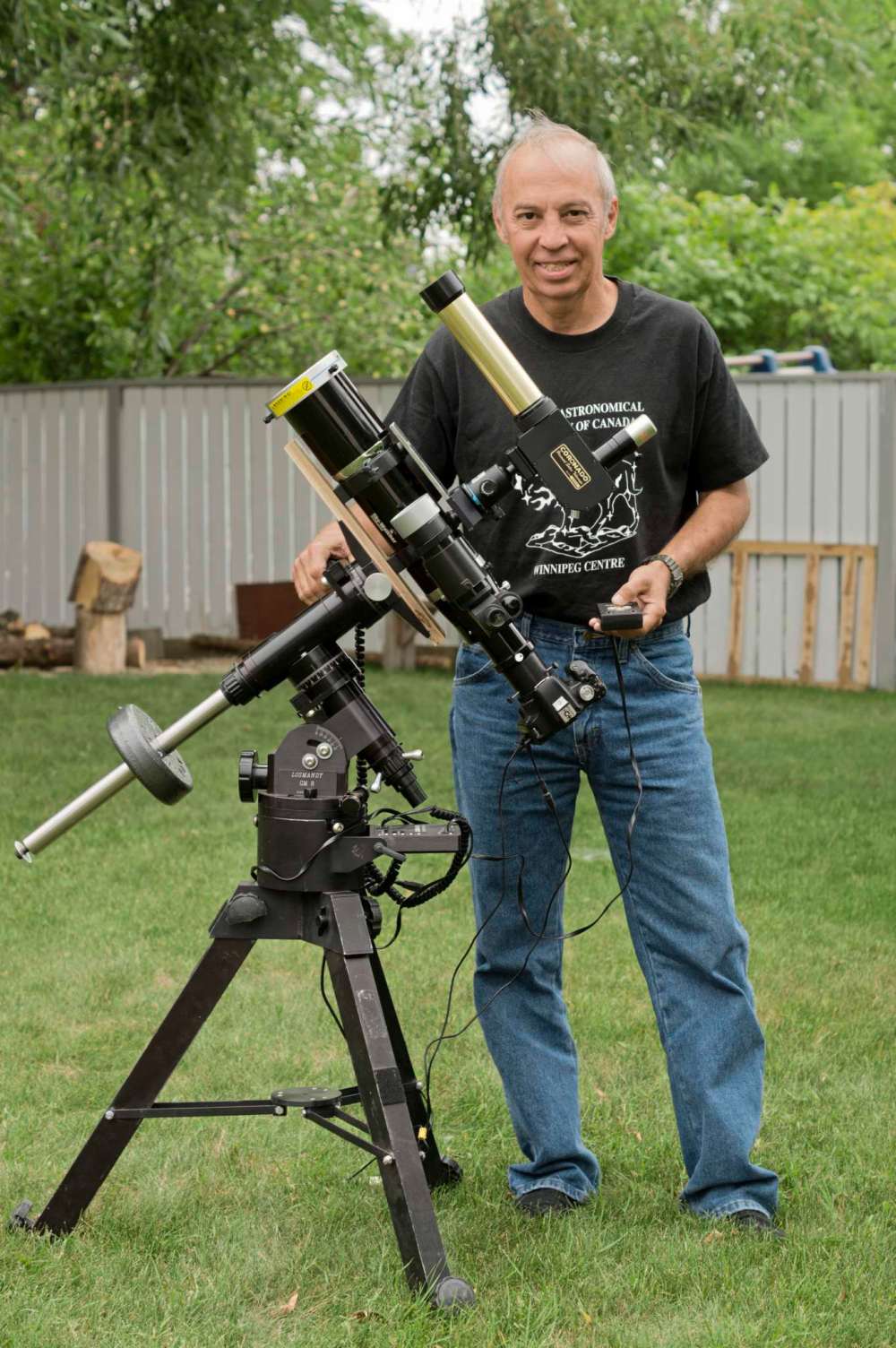
The International Astronomical Union announced the honorary naming on July 11.
“It was totally unexpected,” Runge, told The Sou’wester in his Richmond West home, surrounded by framed photographs of celestial bodies and astronomy journals.
“I don’t volunteer for accolades so I was mostly in shock and quite humbled that I’m selected,” he said. “Not a lot of people within the national centre get these. It’s quite the honour, let’s put it that way.”
Asteroid 22475 Stanrunge was first discovered in 1997 by researchers with Spacewatch at Kitt Peak National Observatory in Tucson, Ariz.
The asteroid takes about 25 years to orbit the sun and is located in the asteroid belt between Mars and Jupiter. Its relative smallness and dark surface makes the rock difficult to spot in the night sky without a fairly strong telescope, Runge said.
“There’s nothing special about it — it’s just another one of the rocks out there,” he said with a grin. “It’s just the one that will have my name put on it.”
Runge’s name was put forward for consideration by Peter Jedicke, a retired professor from Fanshawe College and member of the Royal Astronomical Society of Canada’s London Centre.
Jedicke said the two have known each other for about three decades and have developed a friendship due to their mutual interest in astronomy.
“Stan is a legacy among the astronomers in RASC Winnipeg Centre and he has earned the respect of leaders in the astronomy community across Canada,” Jedicke said. “His sense of humour is rated tops in the solar system, and his heart as warm as sunshine.”
Runge’s interest in astronomy was piqued at an early age. He was in Grade 7 in 1969 when Apollo 11 landed on the moon — what he described as the big scientific event of the time — and when Comet West passed through the inner solar system in 1976, his curiosity in the cosmos was solidified.
“It was one of those major, almost a comet-of-the-century type of comet that came around and it was really wonderful to see,” he said. “I’ve been doing that ever since — going out to dark skies to observe.
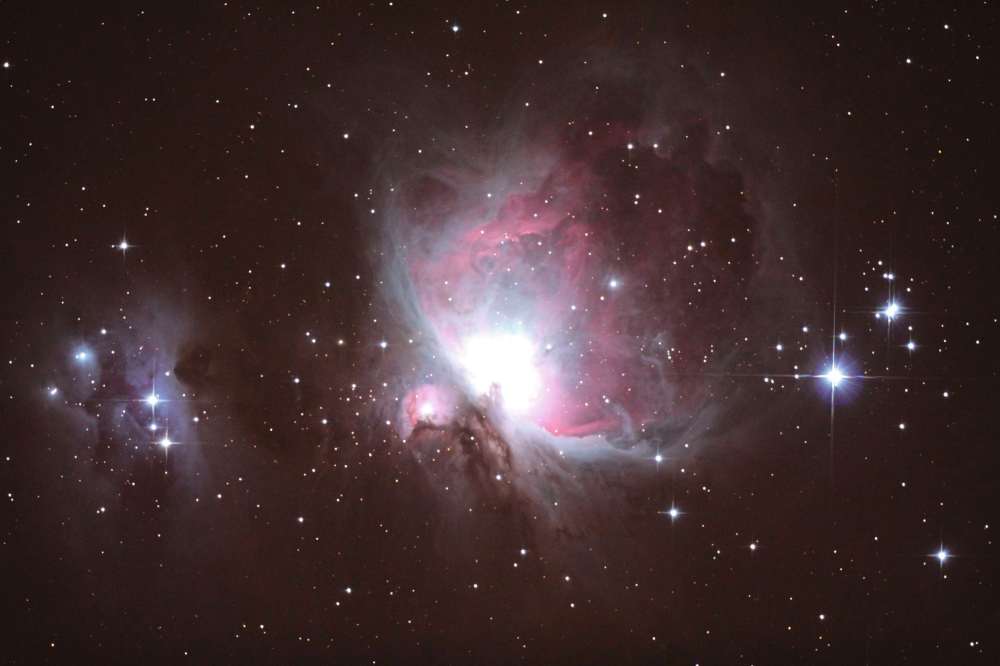
“To this day I still chase and go look at comets when they’re available to see.”
Runge said his passion for astronomy hasn’t dimmed due to the ever changing nature of the hobby and the multidimensional program the Winnipeg Centre offers.
“It’s such a wide range of topics can be done, everything from the latest space crafts to the upcoming eclipse,” he said.
“There’s so many questions and it’s evolved — it’s definitely changed. To me it’s a fascinating hobby in a sense that we’re constantly discovering new things and learning more and more about what’s happening out there.”
Runge will be heading south to Nebraska to photograph the upcoming solar eclipse on Aug. 21. The path of totality — where the sun will be completely eclipsed by the moon — crosses Nebraska, while here in Winnipeg the eclipse will be about 76 per cent. The Winnipeg Centre will be hosting a viewing area at the University of Manitoba on the third floor patio of University Centre beginning at 11:30 a.m.
It’s not a moment to be missed, Runge said.
“It truly is an awesome experience. The first time I had a chance to see a total solar eclipse was in 1979 — the one that came across Winnipeg,” he said. “The sky goes dark, the sun gets blocked out, the animals react in interesting manners; you never feel more in touch with the cosmos as when an event like this is happening.”