



Tips on caring for your elderly horses
Advertisement
Hey there, time traveller!
This article was published 19/01/2018 (3003 days ago), so information in it may no longer be current.
Is your horse getting long in the tooth?
It’s an old saying that relates to the principle that when horses age their incisor teeth become longer. It is also a real sign that you will need to consider your horses’ aging process.
The typical life span for a horse is between 32 and 38 years. Of course, some live much longer. Old Billy, a British barge horse, lived to 62 years old. Given a horse’s condensed lifespan, compared to that of a human, the changes they undergo occur much faster than we expect.
As horses age, they require increased dental care. Horses’ teeth erupt throughout their lives and continue to grow until all the crown is gone and the tooth falls out. This is important to recognize, as a horse will require changes in its diet to compensate for the changes in its dentition.
Some horses begin losing their first molars at around age 25 to 30. Watching for your horse dropping feed and losing weight are important indicators of a dental-related issue which should be investigated with your vet.
Aging horses also start having difficulty maintaining muscle tone and strength. A 30-year-old horse will not have the stamina of a teenaged horse and various age-related conditions, such as heart value problems, liver and metabolic problem, as well as orthopedic issues such as arthritis, will limit the amount of exercise and vigour you can expect from your horse.
Retirement is often considered in horses nearing the age of 30.
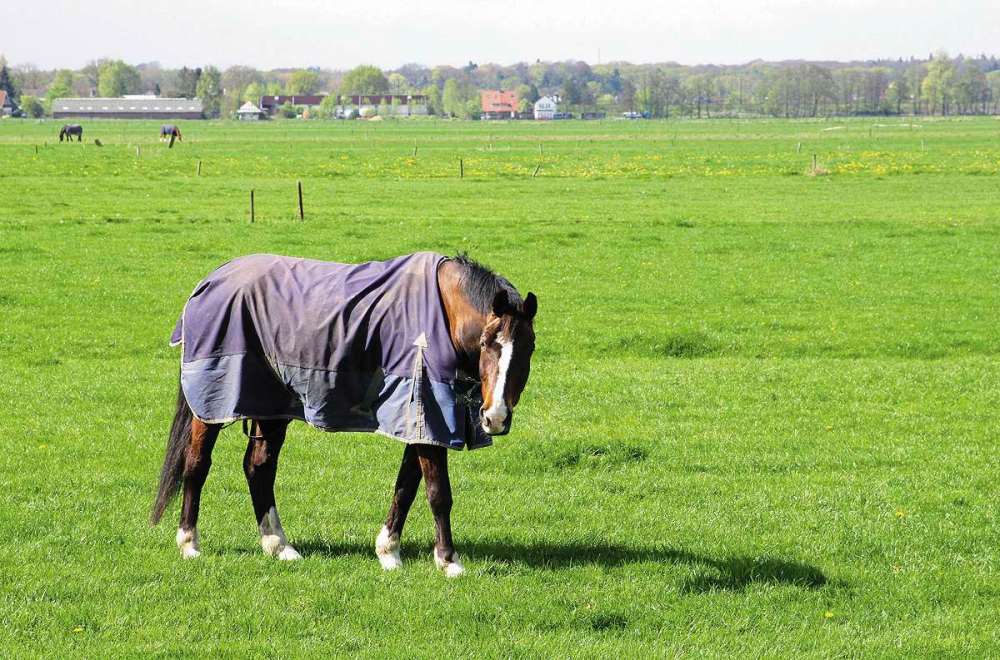
With the loss of muscle mass and activity comes the loss of heat generation. Older horses should be more closely monitored for exhaustion and cold-related issues in the bitterly cold days of winter. Blankets and warm, sheltered areas can help older horses maintain themselves through the winter months.
Having a yearly physical exam is important. You will want to check the teeth and ensure the nutrition you are giving your horse is getting used well. Blood work to look for metabolic issues is highly recommended, and monitoring your horse for comfort is important.
When it does come time to say farewell, be prepared for a very emotional time. It is one of the toughest decisions to make, yet it can be the best decision you can make for your horse’s comfort and quality of life. Some horses pass of their own accord and some will pass with the help of a veterinarian.
It is often not easily prepared for and your veterinarian can help you in discussing the options, if you need.
Chris Bell is an equine veterinarian and surgical specialist who operates Elders Equine Veterinary Service, with clinics in Cartier and Winnipeg. See www.eldersequineclinic.com.