



Textile recycling beginning in Cartier
Municipality is first in rural Manitoba to join in Diabetes Canada program

Advertisement
Hey there, time traveller!
This article was published 17/12/2018 (2552 days ago), so information in it may no longer be current.
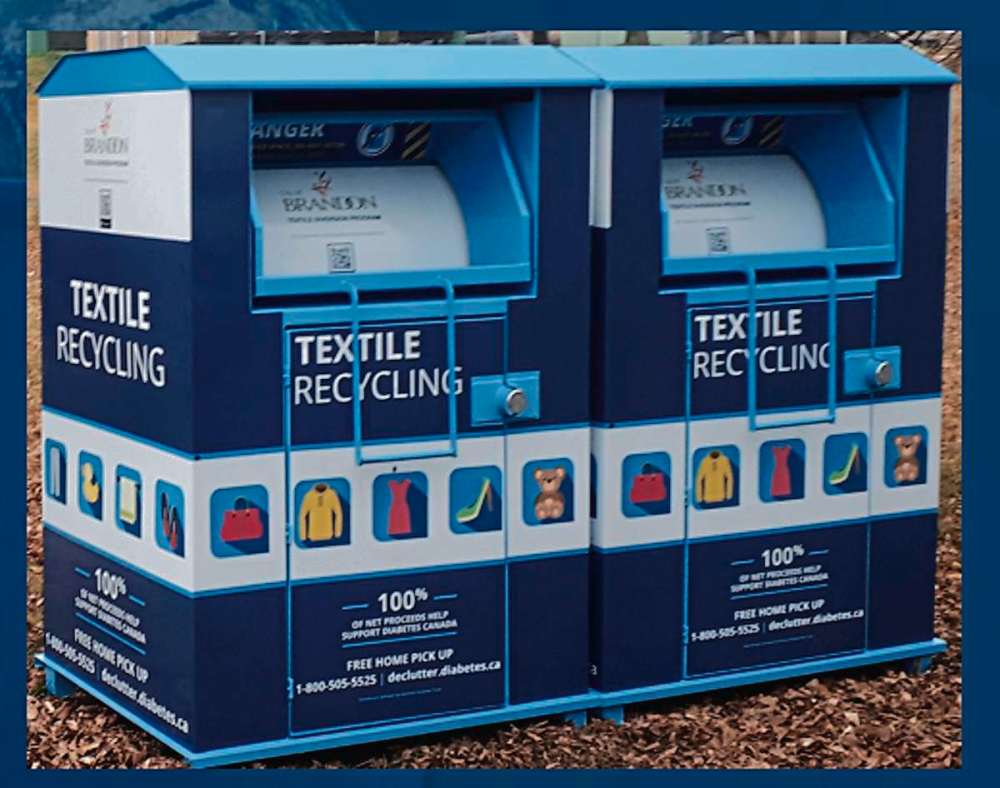
Cartier residents will soon be able to drop off unwanted clothing items at Diabetes Canada textile collection bins in their neighbourhoods.
The RM of Cartier council recently agreed to join a Diabetes Canada and York University program aimed at diverting textile waste from landfill sites. Metal collection bins will be placed at the Elie recycling depot and Community Club; St. Eustache recycling depot; Springstein kiosk; Lido Plage recycling depot; and Cartier landfill site this month or in January.
York University will be gathering data on the quantities of textiles that are generated and recovered as local residents recycle their textiles for Canada’s first national study to identify the economic, environmental and social impacts of textile diversion for municipalities.
“We’re really grateful; that Cartier is partnering with us,” said Diabetes Canada’s national manager for government and strategic partnerships Simon Langer.
Diabetes Canada reports that an estimated annual 45 million kilograms of textiles are disposed of in Canada. The textile recycling program accepts all adult’s and children’s clothing, accessories and footwear, bedding, towels, pillows, sleeping bags, fabric, stuffed toys, mats and curtains. All items must be clean and free of any hazardous or medical liquids.
Langer said Diabetes Canada is partnering with over 200 municipalities across Canada to recycle textiles with approximately 25 per cent being sold through Value Village locations, 30 per cent sold outside Canada, 25 per cent turned into other textile products such as bags, 15 per cent turned into other products such as insulation, and the remaining five per cent sent to landfill sites.
Money raised from the sale of used clothing items in Canada is directed toward diabetes research and support programs such as diabetes camp for children with the disease.

Cartier is the third municipality and the first rural municipality in Manitoba to join the Diabetes Canada program with the others being the Cities of Winnipeg and Brandon.
“The program is certainly a positive step for all involved,” said Cartier reeve Dale Fossay, in an email. “The RM of Cartier would have items directed away from landfill. Although it might only total a small amount of physical material, every bit helps.”
“For the person donating the used textile material, it’s a way to support a worthy charity in a non-monetary way. For Diabetes Canada, it’s a way to contact local community, reuse textiles normally discarded. And increase awareness of the support they give the community at large,” Fossay said.
Diabetes Canada staff will empty the collection bins on a regular basis. “There is no cost to the municipality,” Langer said. Data on the waste diverted from Cartier landfill sites will be provided to the municipality.
For more information on the Cartier program, see http://www.rm-cartier.mb.ca
Andrea Geary
St. Vital community correspondent
Andrea Geary was a community correspondent for St. Vital and was once the community journalist for The Headliner.
Our newsroom depends on a growing audience of readers to power our journalism. If you are not a paid reader, please consider becoming a subscriber.
Our newsroom depends on its audience of readers to power our journalism. Thank you for your support.
Andrea Geary
St. Vital community correspondent
Andrea Geary was a community correspondent for St. Vital and was once the community journalist for The Headliner.
Our newsroom depends on a growing audience of readers to power our journalism. If you are not a paid reader, please consider becoming a subscriber.
Our newsroom depends on its audience of readers to power our journalism. Thank you for your support.
Advertisement Advertise With Us
Advertisement Advertise With Us