



Basic first aid tips for your horses
Advertisement
Hey there, time traveller!
This article was published 15/02/2019 (2548 days ago), so information in it may no longer be current.
Horses are notorious for getting themselves into a mess and cuts on the legs, body and head are all too frequent.
Most of the time this is from running through brush, into a fence or into the hoof of another horse. If you are there to see it or if you come upon your injured horse, there are some basic techniques and skills you can apply to help your horse while you determine if and when your vet will need to come and see it.
In humans, we are taught to think about ABCD — airway, breathing, circulation, dangerous bleeding.
Luckily, most of the time our horses don’t cause damage to their chests or airways and they don’t eat a lot of fast-food meals so coronary artery and cardiovascular disease is less common in horses than in people.
Dangerous bleeding, though, can be a concern. The horse has large vessels in the neck, such as the jugular vein and carotid artery ,which course along the groove in the lower part of their necks, on either side.
Laceration of these vessels can be fatal in short order. If you encounter this situation, calm the horse (take it to a quiet area if possible) and apply direct and firm pressure to the wound — and then call your vet as soon as possible.
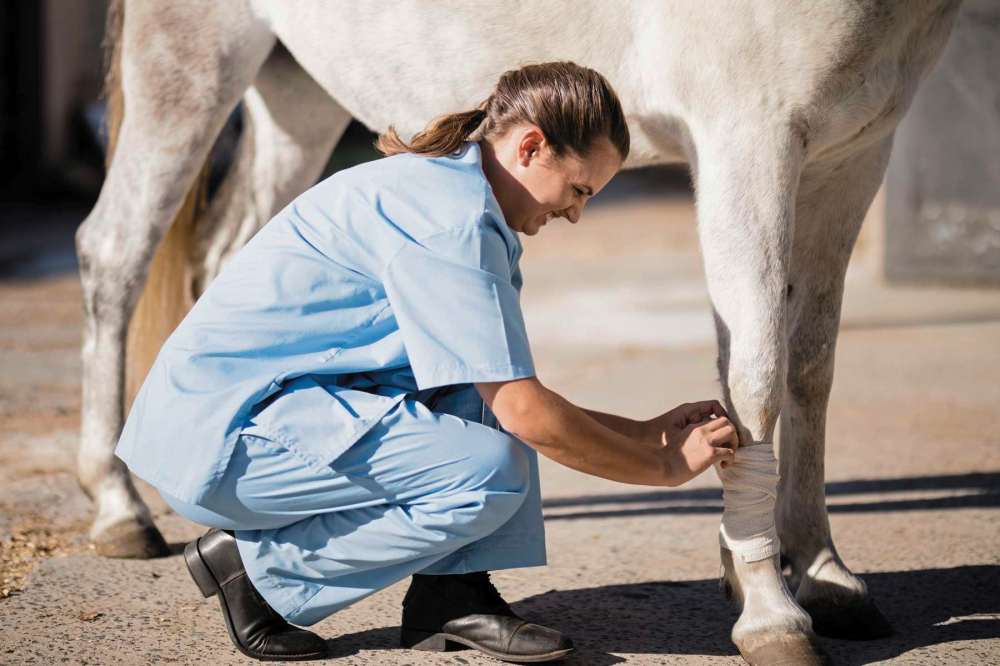
That’s the nightmare scenario. Most often, horses cut their legs. Limb wounds need to be assessed and if there is active bleeding, take the horse to a calm, clean area, apply firm pressure or a layered bandage with pressure over the site until the bleeding stops.
If blood is pumping out of a wound, this indicates an artery has been cut or severed — do not remove the bandage or pressure until the vet gets there.
If the bleeding is seeping but can be stopped with moderate pressure, you may be able to remove the bandage to assess the depth of the wound and clean it with fresh, cold water, which will also help stop the bleeding.
Assessing how close the wound is to the joint is important as well. Joints are covered by a thin protection of skin and infection of the joint is a devastating condition so ensuring that a joint is not involved is also very important. Your veterinarian can assess this for you.
Learning to apply a good pressure bandage and remaining calm so you can think effectively during the initial management of a severe wound is very important.
Remember, horses can lose up to 10 per cent of their blood volume and still be fine — that’s five litres.
Control bleeding early in the process and call your vet whenever you are in doubt.
Chris Bell is an equine veterinarian and surgical specialist who operates Elders Equine Veterinary Service, with clinics in Cartier and Winnipeg. See www.eldersequineclinic.com.