



Visiting a city once divided

Advertisement
Hey there, time traveller!
This article was published 23/09/2019 (2298 days ago), so information in it may no longer be current.
Berlin has a long history of being a renowned city.
In the early 1800s, entrepreneurs here became early pioneers in the use of steam engines, and experts in textiles and manufacturing. When the German Empire was founded in 1871, Berlin became its capital, and its population grew exponentially in years to follow. At the turn of the century, Berlin had earned a worldwide reputation as a leader in science, the humanities, music, and education, among other things.
During the Second World War, Berlin was virtually destroyed by bombing and artillery raids, as Allied forces fought to gain hold of the city. In 1945, the Battle of Berlin resulted in the surrender of the German army and the end of the Second World War, and the city was divided into four sectors by the American, British, French and Soviet allies.
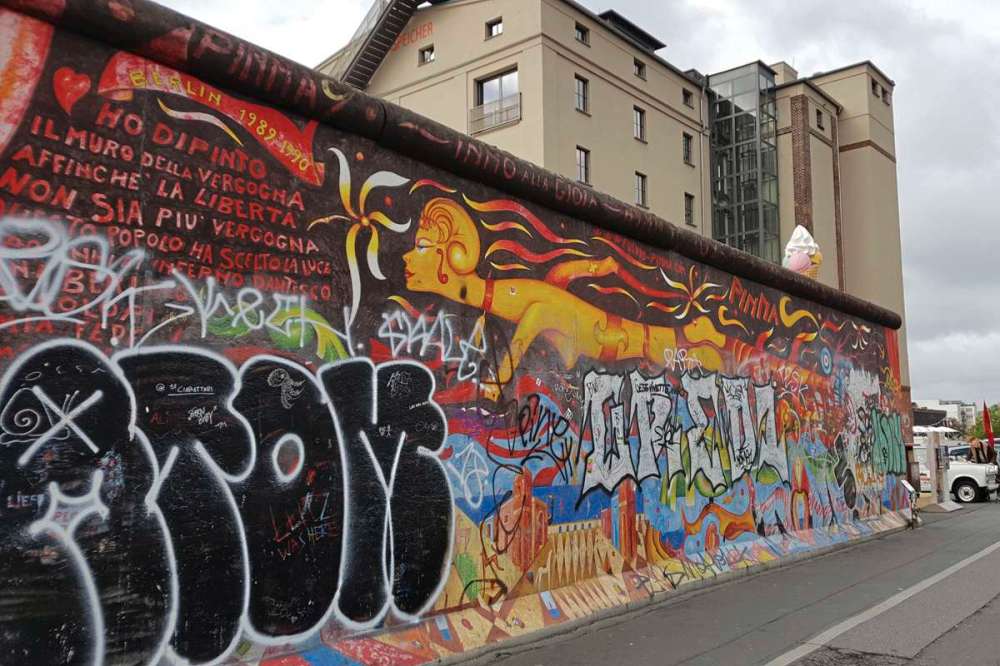
As east-west relations deteriorated in the years following the war, Soviet occupation of Berlin continued. In 1961, the communist East German government began to build a wall to physically stop the exodus of East Berlin citizens to West Berlin. Stretching for over 155 kilometres, the wall was built overnight, with no warning, separating neighbourhoods and families and essentially cutting East Berlin off from the western world for almost three decades.
Nov. 9, 1989 marked the end of the Berlin Wall, and remnants of it still remain throughout the city today. The open-air East Side Gallery near city-centre is the longest surviving section. In 1990, more than 100 artists from 20 countries decorated the 1.3 kilometre stretch with art painted directly onto the wall. Its free and easy accessibility make it the most popular attraction in Berlin.
The Berlin Wall’s history can be explored on bike, with a guided tour tracing six kilometres of the route, passing still-standing remnants, former border watchtowers, and post-war memorials. The 150-kilometre version traverses the entire former wall along what was once the border patrol road. The road is now paved with asphalt and makes for excellent cycling conditions. Signs placed along the route at the height of 3.6 metres — the exact height of the wall — are constant reminders of how looming it used to be.
There are documented cases of thousands of people who escaped from East Berlin – many of whom burrowed under the wall. The Berliner Unterwelten-Museum takes you on an underground tour beneath city streets, revealing bunkers, tunnel systems, and secret passages. Above ground, Checkpoint Charlie, the former border crossing, is an iconic symbol of the division of Germany, and one of the most important landmarks in Berlin.

In November 2019, Berlin will commemorate 30 years since the fall of the Berlin Wall, with numerous special events and exhibitions taking place in celebration of a city reunited.
RoseAnna Schick is an avid traveller who seeks inspiration wherever she goes. If you’d like her to visit and write about your Manitoba event, email her at rascreative@yahoo.ca
RoseAnna Schick
Travelations
RoseAnna Schick is an avid traveller and music lover who seeks inspiration wherever she goes. Email her at rasinspired@gmail.com
Our newsroom depends on a growing audience of readers to power our journalism. If you are not a paid reader, please consider becoming a subscriber.
Our newsroom depends on its audience of readers to power our journalism. Thank you for your support.
RoseAnna Schick
Travelations
RoseAnna Schick is an avid traveller and music lover who seeks inspiration wherever she goes. Email her at rasinspired@gmail.com
Our newsroom depends on a growing audience of readers to power our journalism. If you are not a paid reader, please consider becoming a subscriber.
Our newsroom depends on its audience of readers to power our journalism. Thank you for your support.
Advertisement Advertise With Us
Advertisement Advertise With Us