



A museum all about the beautiful game

Advertisement
Hey there, time traveller!
This article was published 21/10/2019 (2292 days ago), so information in it may no longer be current.
Football — more commonly known as soccer in North America — is the most played sport on the planet.
There’s no doubt football-loving fans around the world are crazy about the game, with FIFA (Fédération Internationale de Football Association) sanctioning 211 national associations and six regional confederations. And it’s no surprise, then, to see a world-class attraction dedicated to the sport.
The FIFA World Football Museum in Zürich, Switzerland, opened its doors in 2016, and celebrates the rich heritage of football. It showcases how the sport grew from humble beginnings to a global culture, and features the game’s ability to connect and inspire the world. The bright, modern interior space is futuristic in feel, and as you journey through you can follow the evolution of the sport and its gear, compare jerseys and memorabilia from every team, learn about current superstar players, and take your picture with the most coveted sporting prize – the World Cup Trophy.
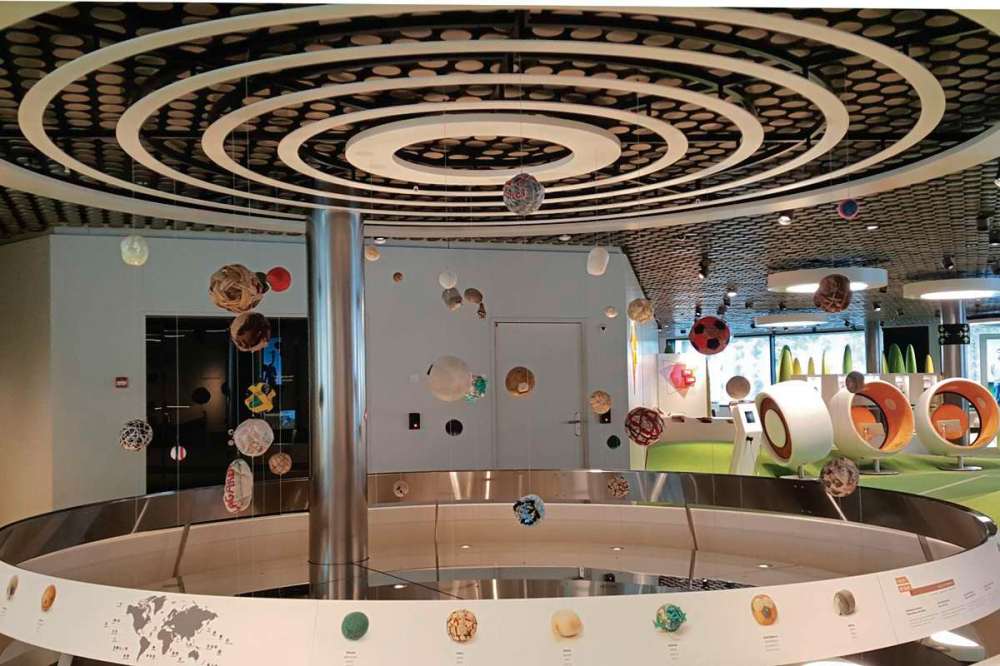
The display that moved me the most was the “Galaxy of Footballs.” Out of sheer love for the game, children around the globe make their own handmade balls out of fabric, rubber bands, rope, plastic bags, and even banana leaves. It’s fascinating to see how inventive and passionate kids can be. It also goes to show that anyone, anywhere, can play the sport, if they have enough drive and imagination to make a ball. The only requirement is that it be round.
In addition to the permanent displays, the museum opened this summer with a special exhibit to coincide with the FIFA Women’s World Cup in neighbouring France. Heroes: Centuries of Women’s Football is a curated selection of personal stories, media reports, and candid memories, exploring the written (and unwritten) history that shaped women’s football from its origins right up to present day.
From the very beginning, women have watched, supported, and played football at both the grassroots and professional levels — and mostly against the odds. The first games are traced back to the end of the 19th century, when women’s football clubs began to form in England. The most popular players used their fame to talk about the role of women in society, but for the most part, women football players weren’t taken seriously, and their games weren’t celebrated with nearly the same fanfare as their male counterparts.
During the First World War, when the majority of men were consumed with military duty, women in Britain played for the extremely popular factory teams. It was during this era that the popularity of female athletes grew. However, in the decades to follow, through the ’60s and ’70s, women’s football was heavily affected by bans. In response, Mexico hosted an unofficial “World Cup” in 1971 that was so successful that it forced football associations to revisit their views on the women’s game.
In 1988, a “test tournament” by FIFA confirmed that a Women’s World Cup was indeed viable, and since then, they have grown more and more successful. The eighth edition was held in France this summer, with 52 tournament matches played by women from around the world.
You’ve come a long way, baby. Indeed.
RoseAnna Schick is an avid traveller who seeks inspiration wherever she goes. Email her at rascreative@yahoo.ca
RoseAnna Schick
Travelations
RoseAnna Schick is an avid traveller and music lover who seeks inspiration wherever she goes. Email her at rasinspired@gmail.com
Our newsroom depends on a growing audience of readers to power our journalism. If you are not a paid reader, please consider becoming a subscriber.
Our newsroom depends on its audience of readers to power our journalism. Thank you for your support.
RoseAnna Schick
Travelations
RoseAnna Schick is an avid traveller and music lover who seeks inspiration wherever she goes. Email her at rasinspired@gmail.com
Our newsroom depends on a growing audience of readers to power our journalism. If you are not a paid reader, please consider becoming a subscriber.
Our newsroom depends on its audience of readers to power our journalism. Thank you for your support.
Advertisement Advertise With Us
Advertisement Advertise With Us