


A century of culture, sport, and friendship
Rady JCC celebrates 100 years of service to community
Advertisement
Hey there, time traveller!
This article was published 12/11/2019 (2517 days ago), so information in it may no longer be current.
At least three times a week, Allan Chisvin can be found sat at a table in Schmoozer’s Cafe. The small kosher restaurant in the Rady Jewish Community Centre is one of the retired accountant’s favourite haunts; a spot to meet with friends and neighbours and a place where he can watch the face of a community he’s been part of for 75 years change with each passing patron.
“It’s a whole mixture of every colour and every race, which I love. That’s the way it should be,” said Chisvin.
Chisvin has been a fixture of the Rady JCC, and its predecessor, the Young Men’s Hebrew Association, for three-quarters of its existence.
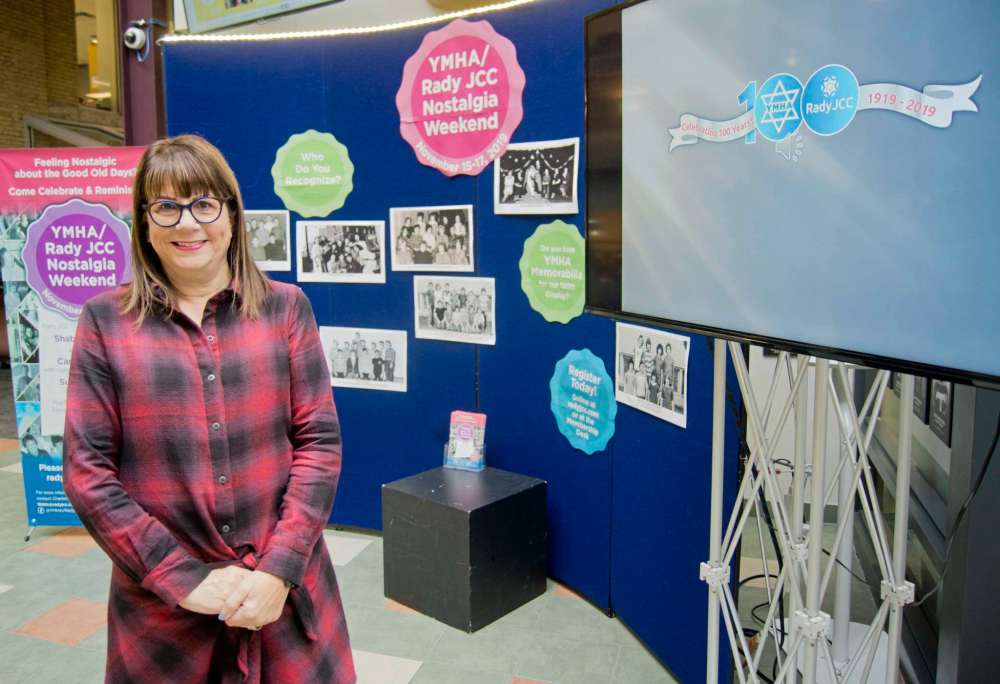
As early as 1890, Jewish-led sports programming was being offered in the community by a “hodge podge” group of Jewish professionals, parents, businessmen, and individuals, explained Stan Carbone, director of programs and exhibits with the Jewish Heritage Centre of Western Canada.
“The real motivation was to make sure that youth were kept busy and it was really an institution that was designed to make sure that youth had something to do in their off time,” Carbone said. “They wanted to make sure to instil sound Jewish values, but also to introduce the whole concept of Canadianization, to make sure that young people would become good Jews, but also good Canadians.”
The group endeavoured to bring the YMHA, which was first founded in and gained popularity in New York City, to Winnipeg, and in 1919 it received its official charter.
The Albert Street years
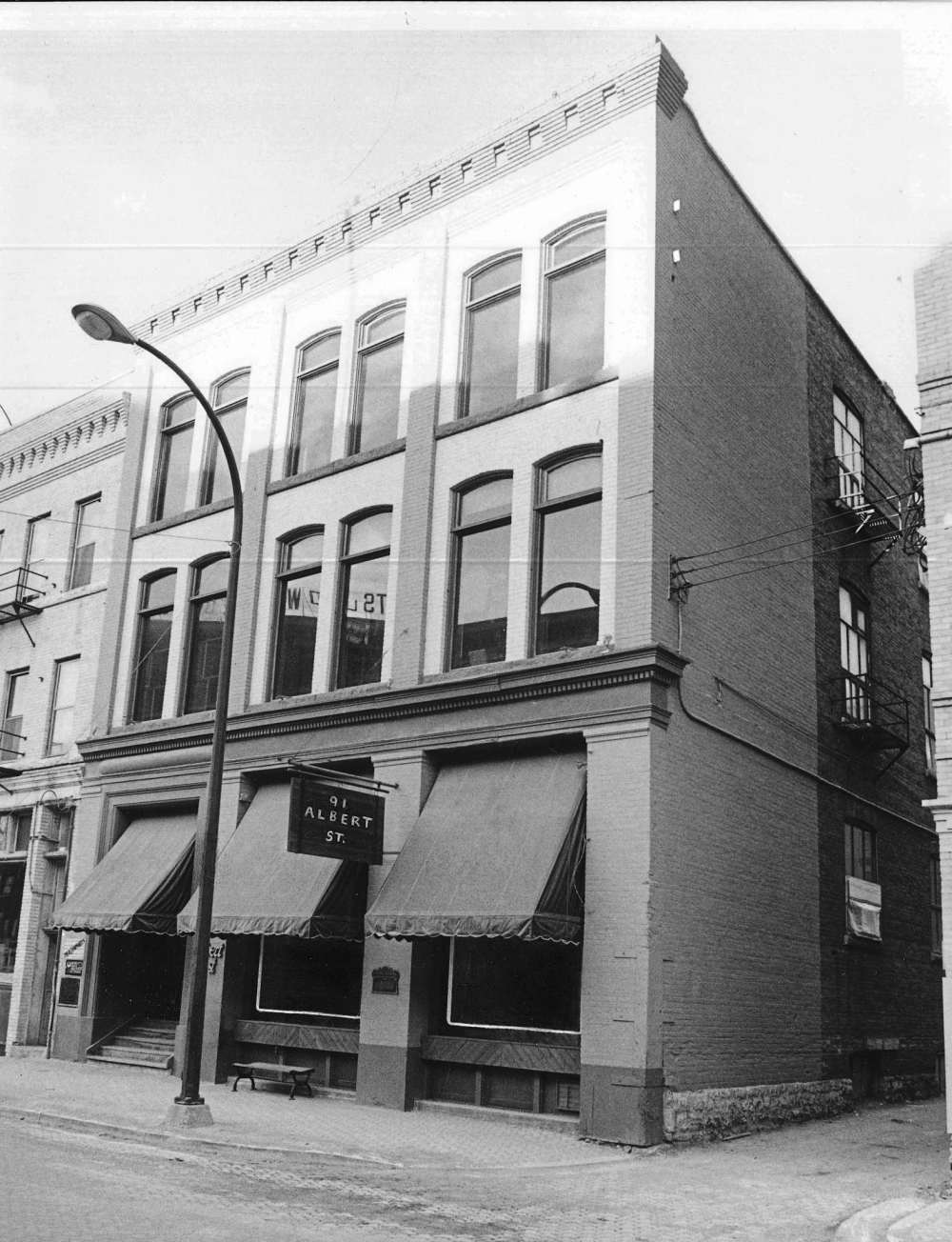
Chisvin was 13 when he began attending the YMHA in 1943 at its first formal location in downtown Winnipeg, at 91 Albert St.
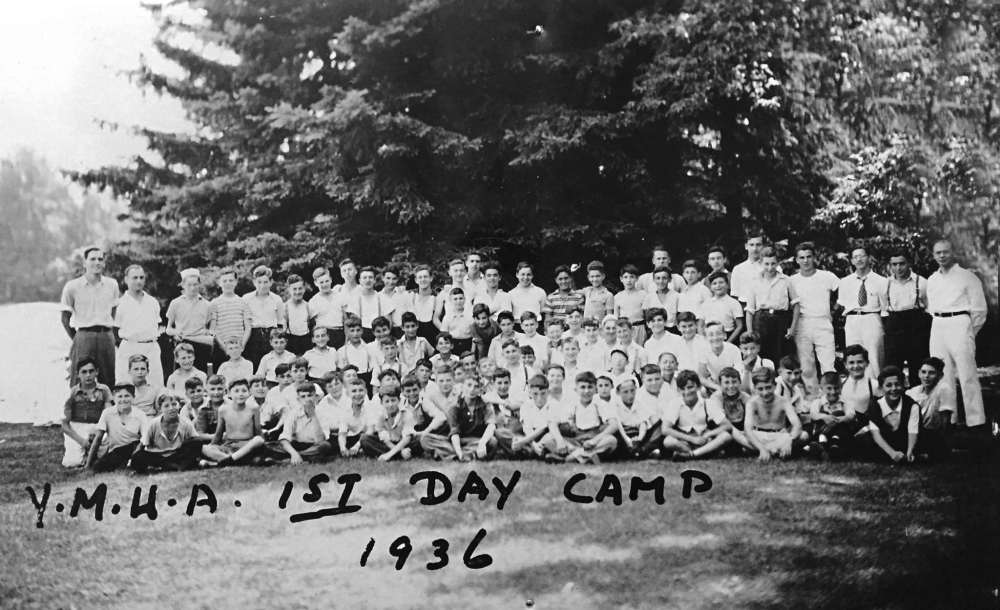
The former warehouse was the last remaining section of the Imperial Dry Goods Block and was purchased in 1935 by the family of the late Max Steinkopf, a prominent lawyer in the community, and in 1936 was donated to the YMHA to be converted into a recreation facility. In its formative years, the YMHA ran its programming out of facilities rented on Main Street, serving the large Jewish community nearby in the North End.
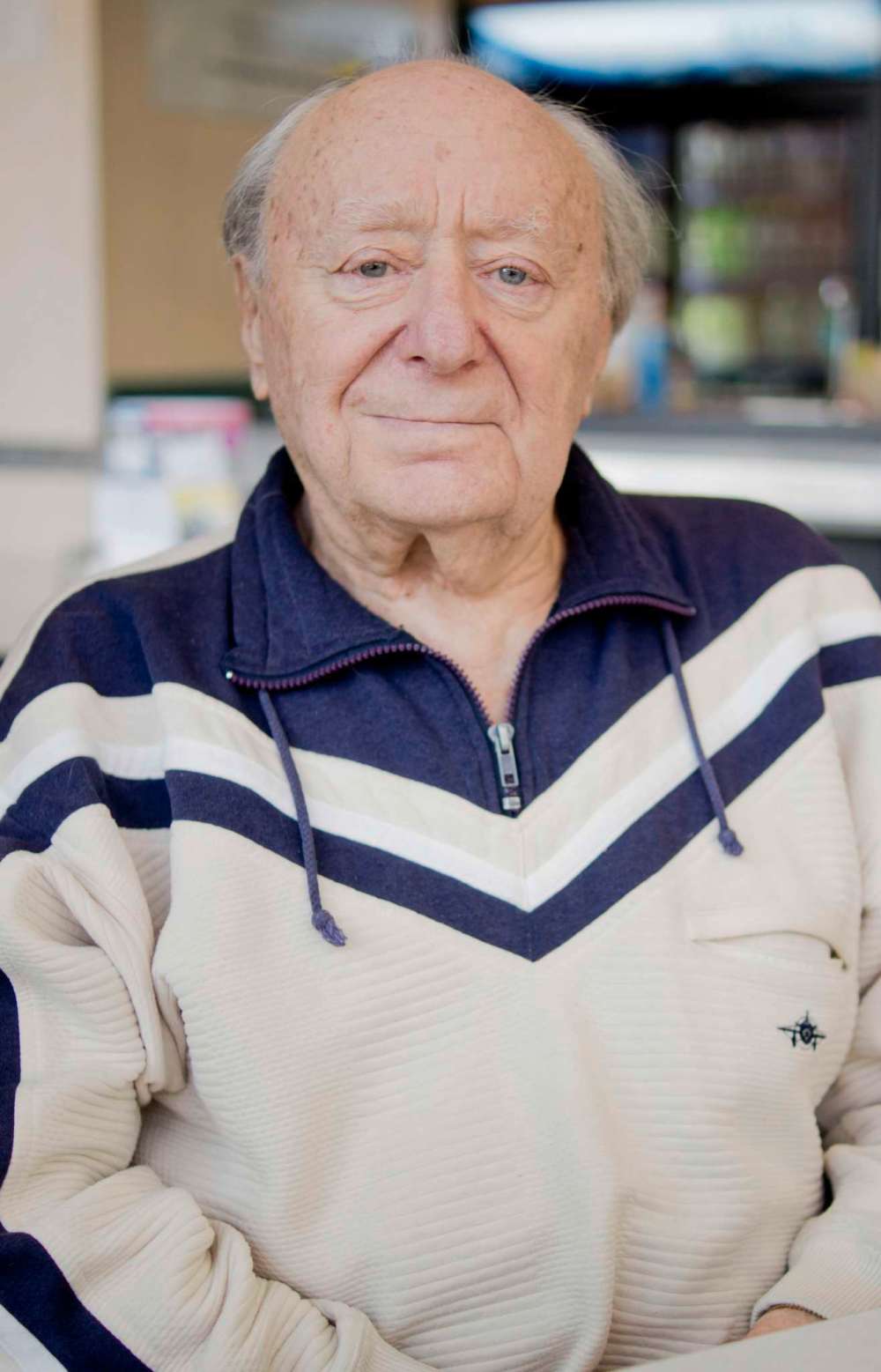
Chisvin lived in the North End with his parents — who had immigrated to Canada from Belarus before he was born — and two siblings. Like many young people in the neighbourhood, he would board a streetcar on Main Street with school friends to spend his Saturday downtown at the “Y.”
“When this place first opened, it became a meeting place for the whole community,” Chisvin said.
Without many opportunities for organized sports available in the community, Chisvin said the YMHA was an attraction if you were Jewish, and a place where youth could feel comfortable and at ease.
“You got to know people. We’d make friends from all over the city, that was very special.”
His day began with sports programs and clubs — tumbling, gymnastics, floor hockey — and finished with a bite at the coffee shop, or a dance in the third-floor auditorium. But it was in the second-floor gymnasium of YMHA that Chisvin learned to shoot hoops, despite the fact there was a pillar in the middle of the basketball court.
“The gym was half the size of a normal basketball court, it was square, and in the middle was a post,” Chisvin, 88, recalled. “The hoops were kitty-corner, not opposite each other, and we played three-man, not five-man, because it was so small, and we could bounce the ball off of the wall.”
While primarily a sports and recreation organization in the 1930s and ’40s — a number of championship teams were produced in this period — the YMHA also offered arts and cultural programming, leadership groups, youth camps, and plenty of social opportunities. The teen canteen saw young people pair up for dances in the auditorium, and youth clubs would bring in players from the Winnipeg Football Club (some of whom trained at the YMHA) to speak, Chisvin said.
He also tried his hand at glee club, though he admits it may not have been his forte.
“I couldn’t carry a tune if it had a handle on it, but I ended up singing,” he said.
The political and social context of the 1930s and ’40s further entrenched the role of the YMHA in the community as a place where Jewish-Canadian identity was developed.
For instance, from 1936 to 1944, the University of Manitoba instituted a quota restricting the number of applicants admitted to the school of medicine based on racial origin and discriminated against Jewish candidates; some private clubs, including the Manitoba Club and the Winter Club, did not accept Jewish members; and a campaign of discrimination at Victoria Beach prevented Jews from owning or renting property at the Lake Winnipeg resort community.
The YMHA, by contrast, was a place for the Jewish community to get together and relate to one another based on their own ethnicity and identity, Carbone said.
“It was predominantly a secular organization, so all Jews could relate to it in the sense that you didn’t have to be religious, or you could be religious. It was one of the places where in many ways, North End and south-end Jews got together and congregated,” Carbone said. “It was an organization that represented all Jews, regardless of their geographical background and class origin.
“It was a point of reference for them to promote their culture and engage one another in a variety of activities that, may have been, and in some cases were prohibited to them,” he said.
Chisvin said it’s hard to encapsulate the impact the YMHA had on his youth. While he did not directly experience anti-Semitism, to simply have a space like the YMHA where one could confidently try out sports, join a public speaking club, and meet like-minded youth, Jewish or not, was special, he said.
The move to Hargrave
In the 1940s, attendance at the YMHA was so strong that board members began to look for a new facility to house the association. In 1944, the YMHA began a campaign to build a new, modern facility, which concluded in 1949.
In 1950, plans for a custom-built community centre designed by Green Blankstein Russell and Associates were revealed for 370 Hargrave St.
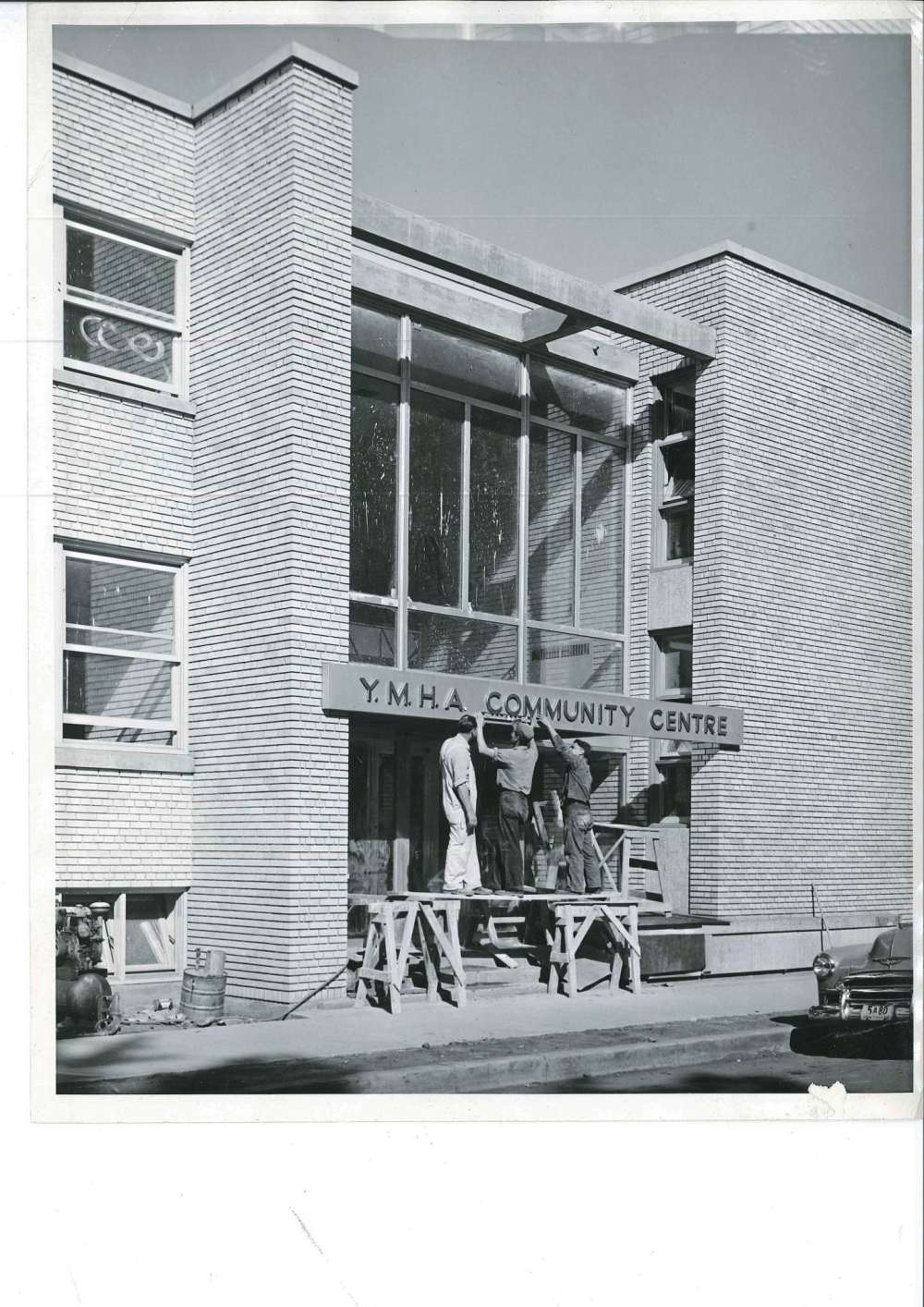
The new community centre would have a gymnasium, chapel, auditorium, meeting rooms, restaurant and lounge, library, and pool, which was unusual for the era. The new facility opened on Nov. 9, 1952.
“When the Hargrave building opened, it was state of the art, it really was,” said Tannis Mindell, 67. “It was centrally located so people who lived all over the city could get to it.”
With the move to Hargrave came a number of changes to the YMHA, including upgraded facilities and a programming shift to better serve the community. The YMHA gradually moved away from organized sports in favour of physical fitness programming, with an aerobics studio, squash and racquetball courts, programming for special needs children, and an expansion of the seniors’ ‘Stay Young’ program.
However, providing opportunities for youth to gain experience and confidence by trying, and perhaps failing, at a variety of activities, sports or otherwise, remained the backbone of the centre.
Mindell, who began attending the Hargrave YMHA as a child, took swimming lessons, gymnastics, leadership programs, youth clubs, and was later hired on to supervise clubs as a young adult.
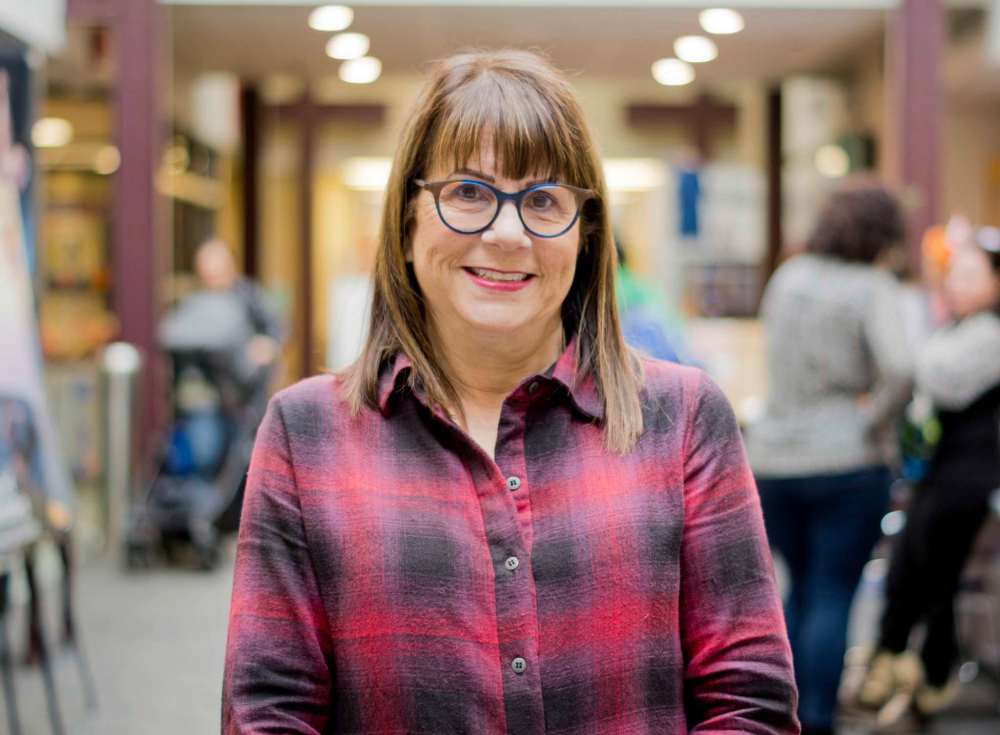
“I did it all. It was like a home away from home,” Mindell said.
She fondly remembers learning gymnastics with coach Bill Nemeth — floor routines were her specialty — and it was at the Y where she fostered friendships that persist today. Now, the retired deputy minister serves as the volunteer co-chair of the 100th anniversary celebration committee, and as a director for the Rady JCC. She credits much of her personal and professional success to the opportunities she had at the YMHA, and in her retirement has returned to the centre to help carry on its mandate.
“At one time, 100 years would have seemed like an eternity but as you get on, it’s not as long as it seems,” Mindell said. “I think the fact that the community rallied that many years ago and has sustained and improved on all of the activities that relate to Jewish culture is amazing.”
‘This place is a great example of welcoming all facets of the community’
While the YMHA enjoyed a number of successful years at its Hargrave location, in the mid-1990s, it became evident that change was needed.
“There were leaders in the community, like Marjorie Blankstein, who realized that a dream of having a campus that incorporated the schools, and all of the fitness facilities, and all of the cultural facilities in one place, would be unique to Manitoba, and they went full force,” Mindell said. “They were bound and determined to make it happen.”
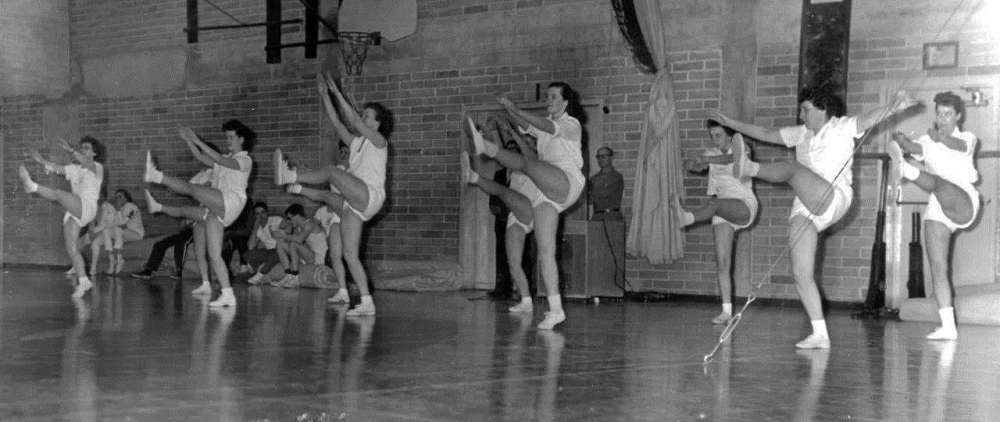
Blankstein, the daughter of Rose and Max Rady, the namesake of the RJCC, was chairwoman of the planning committee of the Winnipeg Jewish Community Council at that time, and discussions focused on the future of various Jewish organizations in the city.
“We were concerned that most of our institutions seemed to be having problems, and we were wondering what we could do about it,” Blankstein said. “Registration was down at the Y, the registration at the school was down, it didn’t look good.
“A lot of the institutions needed renovations, and so we decided we would take a look at a new facility that everyone could share and benefit from.”
Blankstein and community council chief executive officer Bob Freedman went on what she described as a “dog and pony show,” consulting with all the community stakeholders who were willing to provide input on a potential community campus. The biggest point of concern was location, Blankstein said, as the council considered developing a campus at the former Fort Osborne Barracks off Tuxedo Avenue.
“The population was moving, shifting to the south end area, and we didn’t want to stay downtown because that was not an area people wanted to go to,” she said. “And when this property came available, it seemed the right fit.”
In 1997, the new Rady Jewish Community Centre opened at 123 Doncaster St. as part of the Asper Jewish Community Campus.
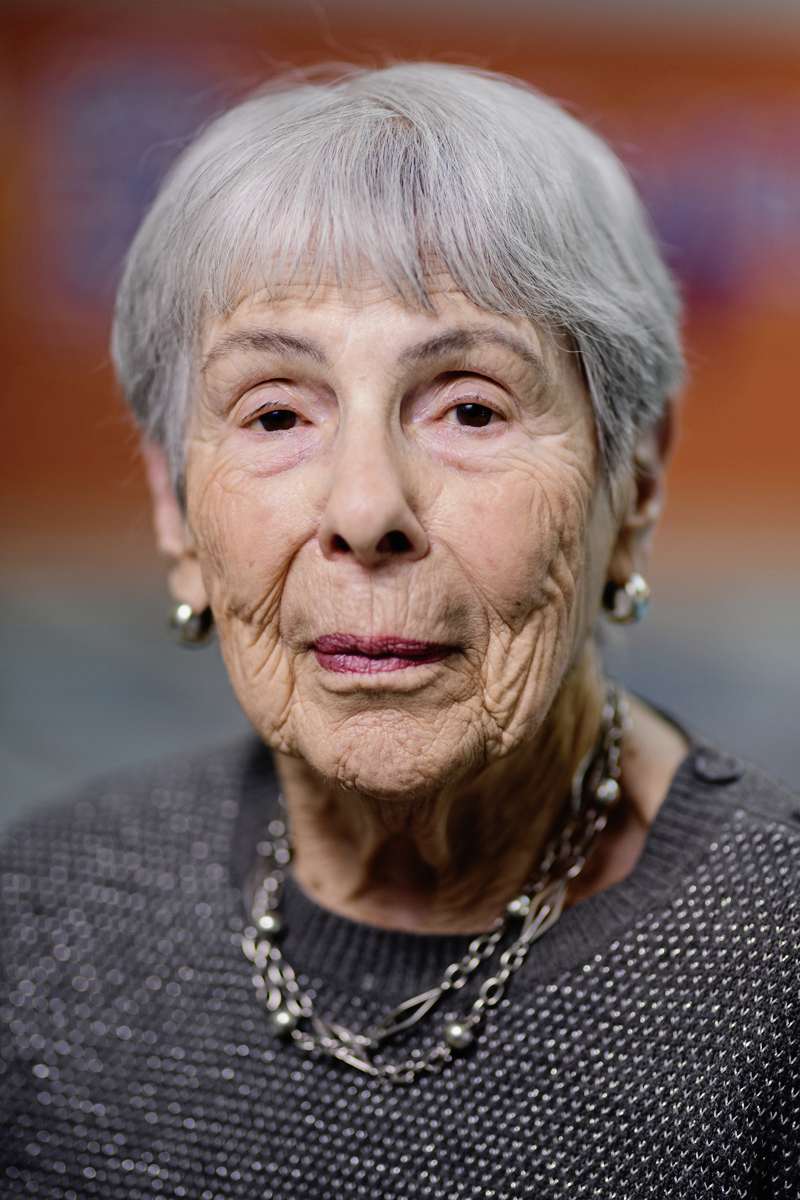
The centre today spans 54,000 square-feet, operates three daycares, runs summer camps for kids, offers aquatics programming, has a well-appointed fitness centre, runs a variety of cultural programs, offers newcomer and seniors programs, and also hosts the annual Israel pavilion at Folklorama. Between 2017 and 2018, according the RJCC annual report, the centre was visited one million times and has 5,500 fitness centre members.
Blankstein, 90, still attends programming regularly, and said the centre meets the needs of the community today, and going forward as needs change, she expects the centre will continue to evolve.
“I think it’s wonderful that there’s been this organization developing and growing for 100 years,” Blankstein said. “I think it’s quite amazing and I’m delighted that I’ve had a small role to play in its new growth.”
In its 100th year, the Rady JCC also has a new executive director in Rob Berkowits, who joined the organization in August.
As leadership at the Rady contemplates its future, and its 100-year legacy, Berkowits said the centre will continue to be a good citizen of the community following the Jewish tenant of “tikkun olam,” what he describes as “making gifts to make the world whole.”
“The reality is that this place, and even the old YMHA, served the community at large,” Berkowits said. “There was no need to be Jewish to attend, there’s no rules about that, and this place is a great example of welcoming all facets of the community.
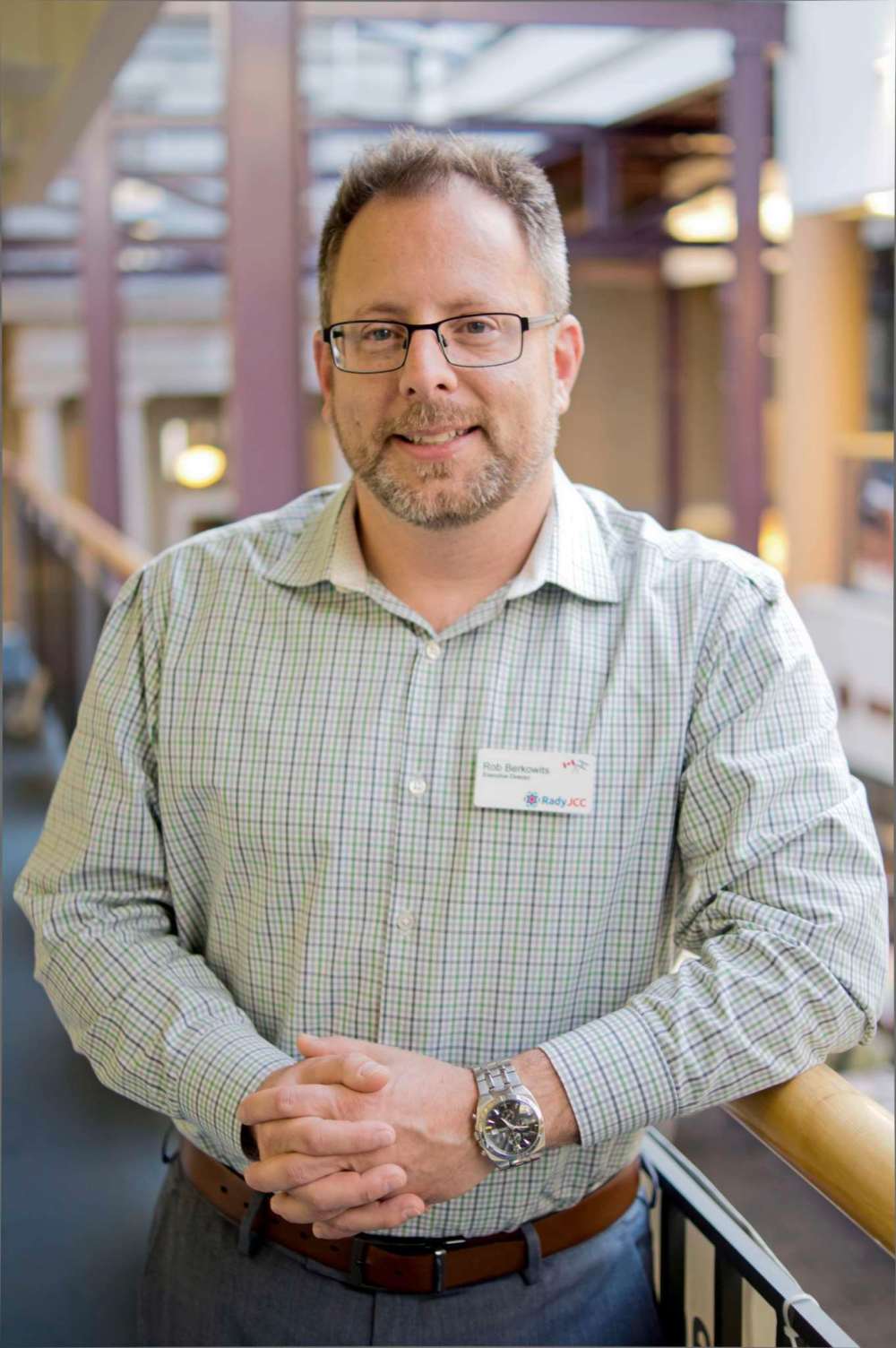
“We are a collaborative co-operative community member in understanding the greater needs of not just the Jewish community, but the community around us,” Berkowits said, adding there is an ongoing effort to remove barriers to participation for families and youth, financial or otherwise.
“We believe strongly in doing our part to create an environment and society that is reflective of how we wish to live as people.”
The YMHA and the Second World War
The Young Men’s Hebrew Association on Albert Street provided space and services to members of the Canadian Forces throughout the Second World War, and at its conclusion, the association welcomed Jews who suffered unimaginable losses in Europe into the community.
According to the Rady JCC, from 1939 to 1945, the YMHA at 91 Albert St. was used as a military barracks, and the canteen served as a club that opened daily to members of the Canadian Forces.
“It was a gathering place. They made arrangements to open the doors to people and help them with being able to have a place to gather,” said Tannis Mindell, co-chair of the YMHA-RJCC 100th anniversary celebration committee.
By 1948, those who had survived the Holocaust and were displaced by war began to arrive in Winnipeg.
Two young men, Saul Alpern and Ben Blum, were billeted with Allan Chisvin’s family.
Alpern and Blum arrived in the country believing most of their family to be dead, Chisvin said, and he invited the men to the YMHA, where other Holocaust survivors had formed their own club.
“They blended in and we taught them how to become Canadians, not by teaching them, but through osmosis here,” Chisvin said. “That was a special thing.
“They were like family,” he said.
Rob Berkowits’ father Alex also landed in Canada in 1948, having survived the Holocaust, but he arrived as an orphan, his entire family killed in concentration camps.
Berkowits said his father described the reception he received at the YMHA as a big hug from the Jewish community.
“The old Y on Hargrave was an important place for him when he arrived here,” Berkowits, executive director of the Rady JCC, said. “He would tell me how important it was for him, and it gave him the opportunity to meet friends, and be social, participate and go swimming.”
— Danielle Da Silva
Memories of the YMHA: Highlights of the 91 Albert and 370 Hargrave Panel
As part of the centennial celebration, the Rady JCC hosted a panel on Oct. 29, where community members and guests could share their memories of the former YMHA locations at 91 Albert St. and 370 Hargrave St.
Here are a few highlights:
“The Saturday night dances — on Monday, I would get the phone calls from the restaurant about ‘Your people’ coming into the restaurant and causing trouble on Portage Avenue. So we knew we had a good attendance at that dance.”
— Les Marks, executive director of the YMHA from 1967 to 1996.
“They used to have nude swims at the Y… Men only of course… But I remember one time, I knew it was the nude swim and I was very excited to go, because it’s fun, right? There I was, I took my clothes off, I go through that little milky pool, just before the pool, and you smell the chlorine. I make that right turn and I jumped in the water, and I realized it was full of women. I jumped right out again.”
— Kinzey Posen, member of the YMHA since age nine.
“We all went by bus… and the neat thing was you met people at the bus stops.
“I felt that we were always meeting kids. I was meeting girls from other schools, I was meeting boys from other schools, I was meeting south end kids… these things were huge in my life.”
— Roz Greenfeld, YMHA member since 1961.

Young Men’s Hebrew Association – Rady Jewish Community Centre Centennial Celebration
• Nov. 15 – 6 p.m. – Shabbat Dinner – Shabbat dinner followed by musical entertainment and singing as well as sharing memories and reconnecting with old friends. Tickets are $45 for adults and $20 for children.
• Nov. 16 – 7:30 p.m. to midnight –‘Y’ Days Canteen Dance – Experience the music of 10-piece live band Rewind, dancing, reminiscing with friends, and the traditional hot dog special. Tickets are $45.
• Nov. 17 – 10:30 a.m. to 12:30 p.m. – Brunch & Schmooze – An informal brunch with a chance to look at old photos, check out memorabilia, and reminisce. Tickets are $25.
• Nov. 17 – 2 to 5 p.m. – Floor Hockey Tournament – Free – advance registration required.
All events happen at the Rady JCC at 123 Doncaster St. For more information go to radyjcc.com
Advertisement Advertise With Us
Advertisement Advertise With Us
History
Updated on Wednesday, November 13, 2019 10:50 AM CST: Archival photos supplied by the Rady Jewish Community Centre, courtesy of the Jewish Heritage Centre of Western Canada.