



Bird watching easier to learn in winter
Advertisement
Hey there, time traveller!
This article was published 25/01/2021 (1897 days ago), so information in it may no longer be current.
It might seem the opposite of what you could expect, but bird watching is actually easier to learn in the winter months.
And it’s a perfect pandemic hobby that’s easy for people to take up, according to Laura Burns, a research conservation specialist with the Assiniboine Park Conservancy.
“It’s perfect to learn right now because there are fewer bird species around,” Burns said, adding the lack of foliage on the trees also makes it easier to spot birds. “In the spring and fall migrations, you’ll see up to 300 bird species visit the province. That can be overwhelming when you’re starting out.”
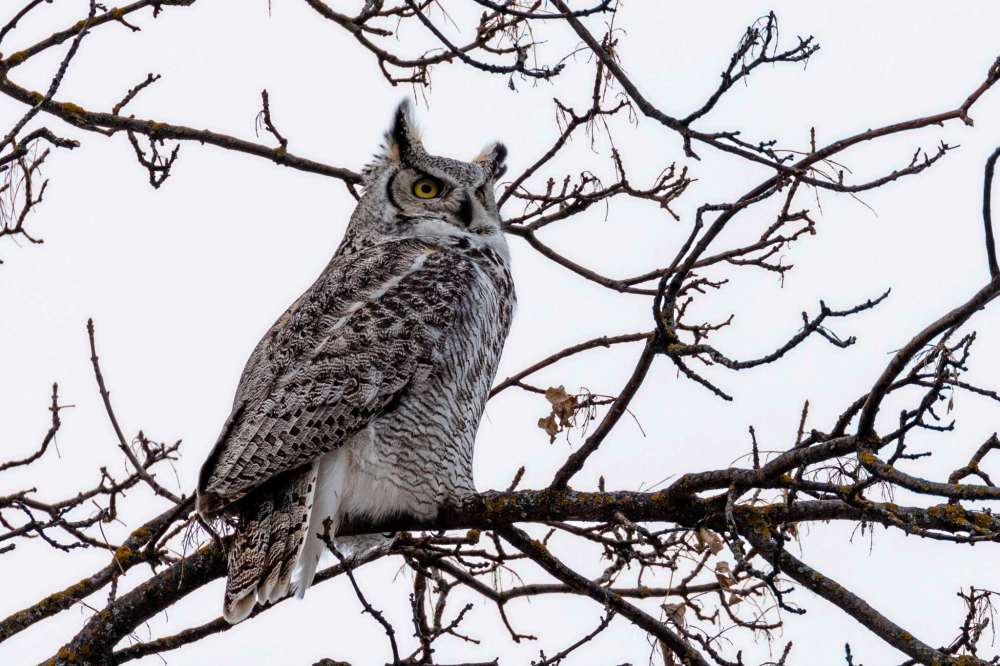
Right now, some of the native birds that are relatively easy to spot include owls, corvids such as ravens, crows and jays, along with woodpeckers, chickadees and nuthatches, she said. And of course, there are the adaptable house sparrows, which are a species introduced from Europe, along with curiosities like the Hungarian partridge, an introduced game bird.
“The best time to spot birds is to get up at dawn, when the birds are most active,” Burns said. “The nice part about winter is that it gets light later on in the morning. So, you don’t have to get up so early to see them.”
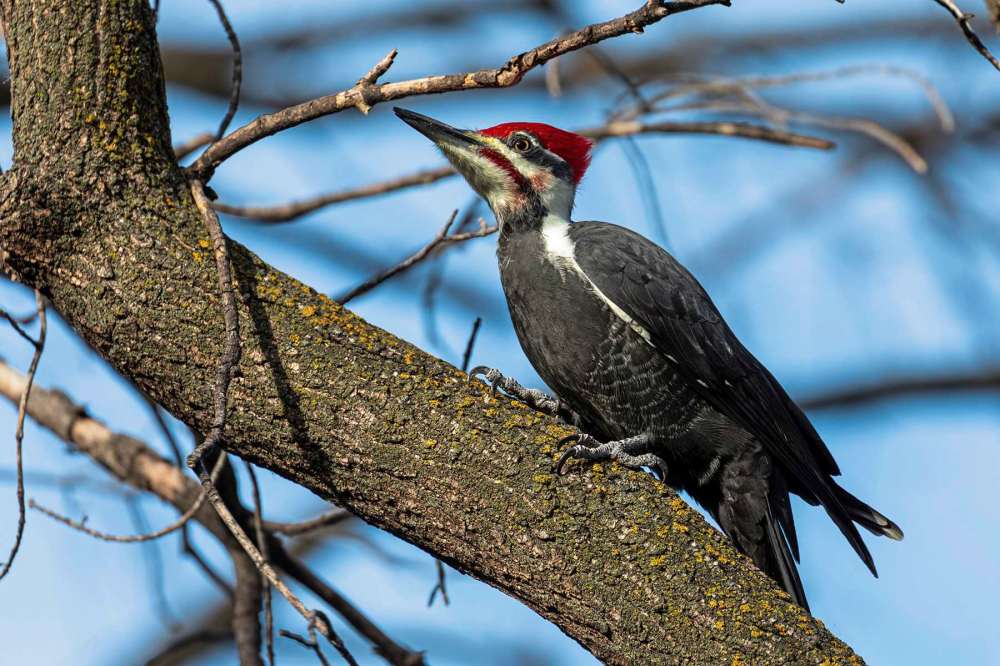
Assiniboine Park, particularly along the Assiniboine River, offers a good place to start, as the different types of trees attract a lot of birds. Another place is the trees around the old Zoo entrance, which is home to a big, pileated woodpecker with an impressive red crest. “They like to drum on wood, to establish their territory,” Burns said, adding this bird is easily spotted after people hear the loud noise it makes.
Bird watching is something that can be done along with other activities, such as walking or cross-country skiing, she said.
When you do spot a bird, Burns recommends noting it in the iNaturalist app on your smartphone or making a note when you get back to your desktop computer. “You upload a picture of the bird, or plant, or animal, and your phone adds a geotag,” she said. “The app is pretty good at guessing the ID. Researchers around the world then can log-in and give you a definitive ID on your photo.”
Burns said she and other researchers at the park set up a filter so they can see uploaded photos that are specific to Assiniboine Park. She is an expert at butterfly identification and is part of a project that is conserving the Poweshiek skipperling butterflies. “We have 60 skipperling caterpillars overwintering at the zoo in the freezers here,” she said, adding the temperature is set at -4 C.
“The best part about the community uploading photos to iNaturalist is that it generates huge data sets,” she said. “Scientists can track change in animal species, for example, during the pandemic lockdown or see if climate change has an effect on them.”
Another beginner birding app is Merlin, which helps identify birds by presenting you with a number of options. “It will show you a body shape, and ask you for colours, and then filters the answers for your geographic area,” Burns said, adding an app for more advanced birders is eBird.
A bird feeder in your yard can be a good way to watch birds safely from a distance. Place it at least 10 metres away from a window to prevent the birds from accidentally flying into it. Burns also reminds the public not to feed birds or animals in the park as it can habituate them to human contact, and can increase the risk of negative interactions for both people and animals.
The best part about looking for birds in the city is that avians are familiar with humans, unlike their country cousins.
“Go for a walk. Take your binoculars, and keep your eyes open,” Burns said. “It’s like playing Pokemon Go, but in the real world.”