



Why are there so many wasps?

Advertisement
Hey there, time traveller!
This article was published 04/10/2023 (933 days ago), so information in it may no longer be current.
Is it just me, or does it seem like the wasp situation keeps getting worse each year? As another barbecue season winds down, I’m realizing that we didn’t eat on the deck as much this year because we were often distracted by wasps buzzing around the food. I decided to do a little digging on this theory, and thought I’d share the results with you.
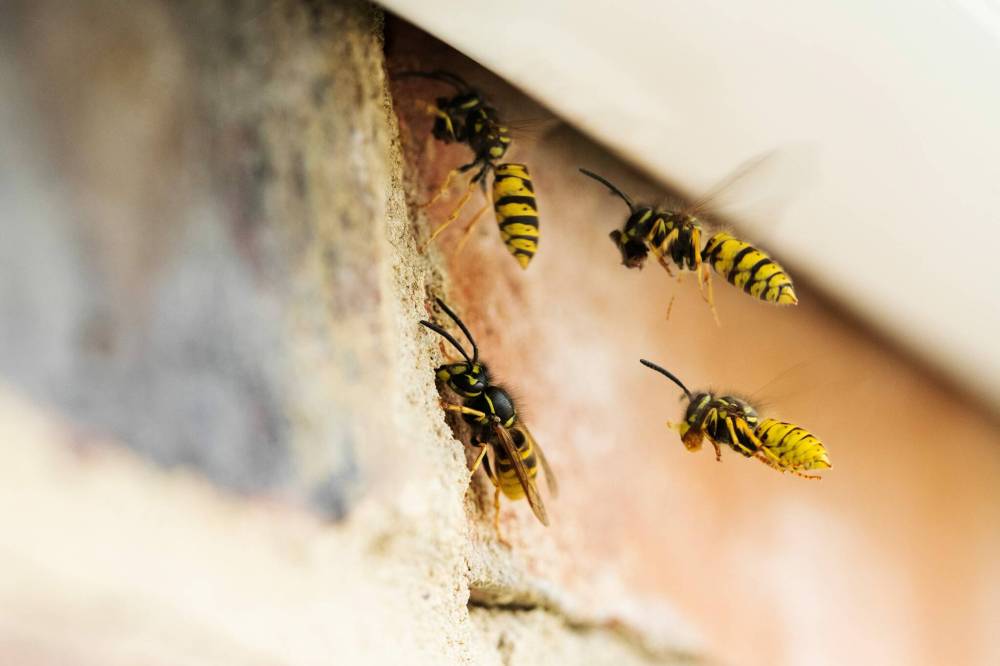
It’s probably useful to start with a brief summary of wasp biology. The typical black-and-yellow striped wasps are called yellowjackets (genus Vespula), and there are species which nest in the ground or hang in the air.
The wasp lifecycle begins early spring, when the queen emerges from hibernation and searches for a suitable site for a nest. The fact that they won’t build one close to an existing nest means you can deter them from setting up shop near your home by purchasing an artificial nest. Once the site has been located, the queen builds a nest using chewed up woody material and lays about 10-20 eggs. After about two weeks they hatch into sterile, female “worker wasps” who then enlarge the nest while the queen focusses on laying more eggs, with numbers increasing — she can lay an incredible 4,000 to 10,000 over a summer. As the eggs hatch into larvae, they need food, so the worker wasps search for small spiders, flies, aphids and other insects. The worker wasps feed on nectar from flowers or from sugary secretions of the larvae as they’re being fed. As summer progresses, the larvae mature, the flowers disappear, and the adult wasps search for new sources of food, including your plate on the deck as you’re trying to enjoy a meal. In late summer, the queen produces males and new queens, which leave the nest to mate. The queen, workers, and male wasps then die and the newly mated queens search for a place to hibernate – and the lifecycle continues.
Dreamstime
Experts say we may simply have to get used to seeing more and more wasps in late-summer and fall if our springs continue to be warm and dry.
So why are there be so many more wasps these days? Many researchers seem to be blaming climate change. Certainly, climate change is causing the spread of insect populations into new areas. Some European wasp species are gaining a foothold in Canada, and an aggressive species of yellowjacket has appeared in the southern U.S. Most researchers point to a recent prevalence of warm, dry springs. Based on several decades of research in the U.K. and New Zealand, wasp populations are heavily linked to warm, dry spring periods. They need enough flowers to feed on, and the production of insects to feed the larvae. By contrast, cool, wet springs reduce the success – there is less floral growth, and the nest is susceptible to rain and low temperatures, and ground-based nests can be flooded.
So, I’m afraid, we may have to get used to dealing with these late-summer/fall pests — maybe by becoming more proactive in managing them and trying to appreciate the positive role they play in controlling other insect pests in the garden.
Nick Barnes
Whyte Ridge community correspondent
Nick Barnes is a community correspondent for Whyte Ridge.
Our newsroom depends on a growing audience of readers to power our journalism. If you are not a paid reader, please consider becoming a subscriber.
Our newsroom depends on its audience of readers to power our journalism. Thank you for your support.
Nick Barnes
Whyte Ridge community correspondent
Nick Barnes is a community correspondent for Whyte Ridge.
Our newsroom depends on a growing audience of readers to power our journalism. If you are not a paid reader, please consider becoming a subscriber.
Our newsroom depends on its audience of readers to power our journalism. Thank you for your support.
Advertisement Advertise With Us