


Hope from Hope Centre
Hope Centre Health Care runs Indigenous studies program

Advertisement
Hey there, time traveller!
This article was published 01/11/2023 (939 days ago), so information in it may no longer be current.
Hope Centre Health Care recently celebrated the graduation of its second class of students who have completed its in-house Indigenous Studies program.
A group of 12 students of all ages — Alanna Sinclair; Cecilia Variquett; Jennifer Tuckanow; Susan Jorgensen Sarson; Evelyn Pollard; Tia Harvey-White; Cynthia Stevenson; Brandy Stevenson; Lucie Bruce; Karman Racette; Yolanda Desmarais; Chris Zirk — received certificates on Oct. 24 commemorating their completion of the program, taught by elder Jacinta Wiebe, which covered an in-depth introduction to Indigenous cultural practices.
The program is offered free to members of Hope Centre Health Care, located at 240 Powers St., and high school-aged students were also given a half-credit for attending the weekly classes during school hours.
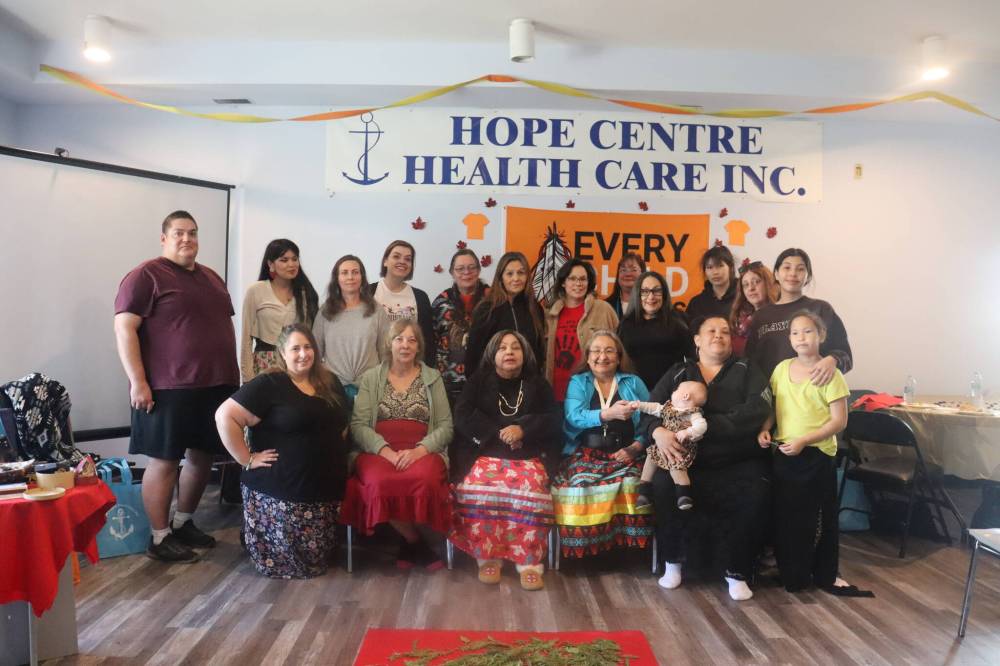
Photo by Emma Honeybun
The 2023 graduating class of Hope Centre Health Care’s Indigenous studies program is pictured (along with family members). The first level of the program teaches the basics of different Indigenous cultural etiquettes and practices.
Wiebe, a residential school survivor, holds bachelor’s degrees in commerce and arts from the University of Manitoba. She has taught Indigenous culture at the U of M, and says that this class has a different, community-based dynamic. As students accepted their certificates, they were met with mutual tears and hugs.
“I think the reason one of the reasons we’ve talked about doing (this) was because of the large Indigenous population in this area,” Wiebe said. “And there wasn’t really much in terms of the culture being taught. Like most people, most Indigenous people don’t get to learn about their culture until they get to the university or college. The (post-secondary institutions) have money to pay elders to do programs, but small community centres don’t.
“So that’s one reason to have it … they don’t have to go to university and pay $6,000 to go to learn about their own culture, as there was so much colonization in the community.”
The first level of the class covers “basics,” Wiebe said, such as etiquette, identification of different medicines and their significance, and ceremonial practices. She regularly opens the floor for all kinds of questions and discussion.
“This is an orientation,” she said. “The things you should know to be respectful of the culture. ‘If I want to go to a ceremony, what should I expect? And what do people expect of me? Should I do this? Should I do that? What’s the circle about? And what is the smudging and the medicines about?’
“Just the basic stuff just to get them going, because when they get to a ceremony, the elder doesn’t have time to teach them the basics you’re expected to know,” Wiebe said. “This is a good place to start.”
Because the first two Level 1 classes were so successful, some graduating students will returning for a Level 2 class next May, Hope Centre staff said. Staff are just beginning to discuss what will be included and how they will navigate the program in the future, as is just at the beginning of its lifespan.
“The process (of colonization) is changing very slowly,” Wiebe said, referring to younger people and survivors connecting — or reconnecting — with their own culture.
“But, unless we operate in the community, it’s not going to happen.”
For more information, call Hope Centre Health Care at 204-589-8354, or visit hopecentrehealthcare.com
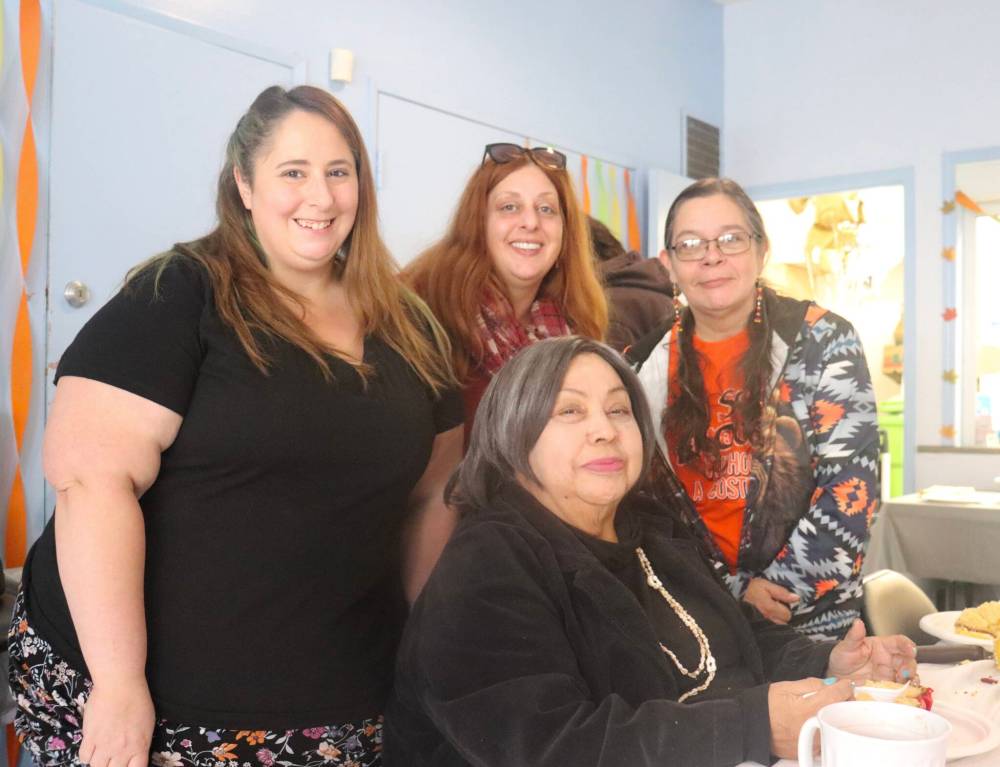
Photo by Emma Honeybun
Hope Centre Health Care’s in-house Indigenous studies program, taught by elder Jacinta Wiebe (middle front), has been offered for two years.
Our newsroom depends on a growing audience of readers to power our journalism. If you are not a paid reader, please consider becoming a subscriber.
Our newsroom depends on its audience of readers to power our journalism. Thank you for your support.
Our newsroom depends on a growing audience of readers to power our journalism. If you are not a paid reader, please consider becoming a subscriber.
Our newsroom depends on its audience of readers to power our journalism. Thank you for your support.
Advertisement Advertise With Us
Advertisement Advertise With Us