


Bumblebees in Whyte Ridge

Advertisement
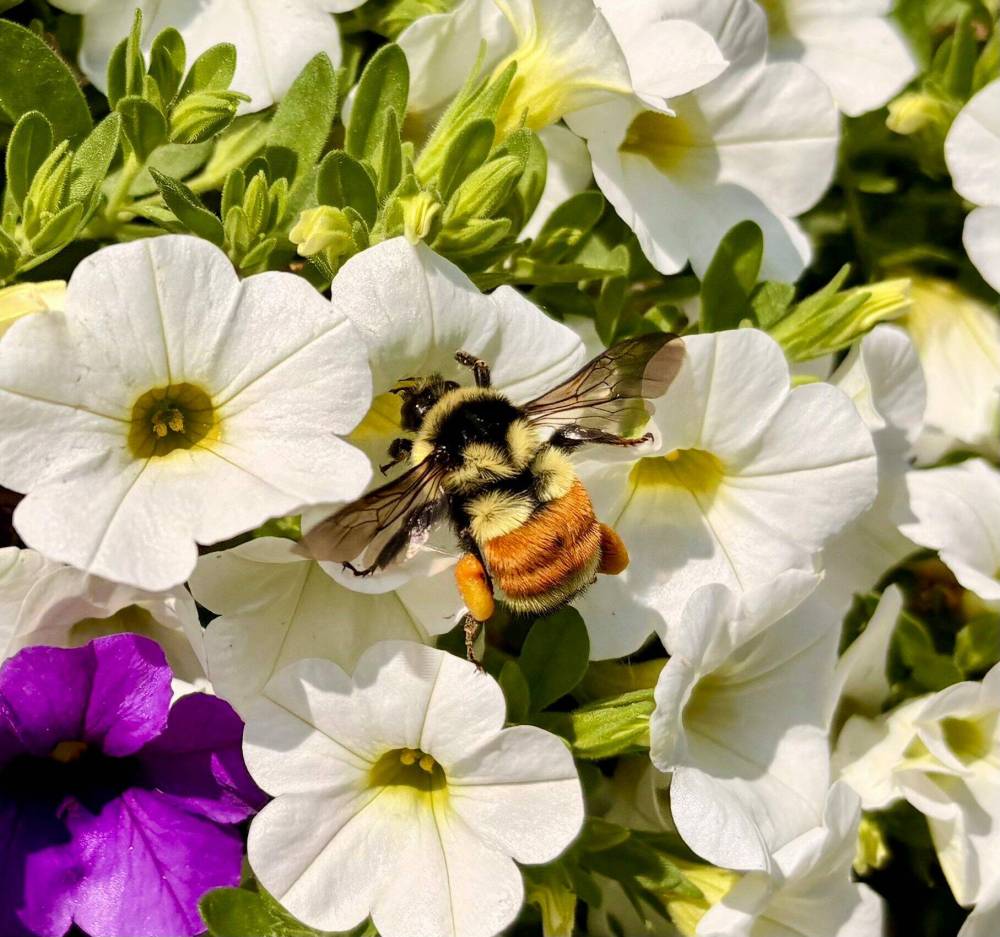
I was doing some yard work earlier this spring and noticed a bumblebee on my flowers. I don’t recall ever seeing one in my yard before, so I watched her flitting around gathering nectar for quite some time.
Based on the time of year, she was likely a queen, emerging from her overwintering site to forage for nectar and pollen to start a new colony. Once she found a new nest site, she would have built wax cells to lay the eggs that were fertilized the previous year. These hatch and develop into female workers to feed the young and carry out other tasks similar to honeybee workers. The nests can house 50 to 200 individuals — far fewer than the tens of thousands in honeybee hives. In the fall, new young queens leave the nest and mate with male drones. Before things get too cold, the queen finds a safe place underground — in a rodent burrow or the base of a tree — and the workers and drones die off. It’s a life cycle that’s been going on for more than 30 million years.
There are about 40 species of bumblebees in Canada, and while they don’t produce honey, they’re important pollinators. Unfortunately, over the past few decades, populations have declined — not only in Canada, but across North America, Europe, and Asia. The decline has been caused primarily by habitat loss and more efficient agricultural practices, with factors including climate change and pesticide use. In Canada, several species have been officially assessed by the Committee on the Status of Endangered Wildlife in Canada to be in decline. Here in Manitoba, the yellow-banded bumble bee is one of those species, and can create challenges for project developers in managing potential effects. It’s easy to spot the patches of flowers that serve as food, but very difficult to find the overwintering sites.
Supplied photo
Community correspondent Nick Barnes recently had a bumblee visit his garden. Over the past few decades, bumblebee populations have declined across the world.
I’m not a professional entomologist, but the one in my yard looked like a tri-coloured bumble bee, based on the colouring. The bands of bright colours (including yellow, red, orange, and white for some species) have evolved as a visual warning to predators that they could get a painful sting. Unlike the honeybee, a bumblebee’s stinger lacks barbs, so they can sting repeatedly without leaving the stinger in the wound and injuring itself. However, they aren’t normally aggressive, except in defence of their nest, or if harmed.
Bumblebees gained fame through the composer Rimsky-Korsakov’s Flight of the Bumblebee, and subsequent inclusion in Walt Disney’s animated musical Fantasia. The surname Dumbledore in the Harry Potter series is reportedly an old name for bumblebee. Regardless, I was just pleased that we got our little visitor, and enjoyed taking a few minutes to experience a slice of nature in our urban community.
Nick Barnes
Whyte Ridge community correspondent
Nick Barnes is a community correspondent for Whyte Ridge.
Our newsroom depends on a growing audience of readers to power our journalism. If you are not a paid reader, please consider becoming a subscriber.
Our newsroom depends on its audience of readers to power our journalism. Thank you for your support.
Nick Barnes
Whyte Ridge community correspondent
Nick Barnes is a community correspondent for Whyte Ridge.
Our newsroom depends on a growing audience of readers to power our journalism. If you are not a paid reader, please consider becoming a subscriber.
Our newsroom depends on its audience of readers to power our journalism. Thank you for your support.
Advertisement Advertise With Us