


Impacts of food insecurity widespread

Advertisement
Meagan Girard knows what it’s like to struggle and she is not ashamed to admit it.
The 35-year-old runs a community food bank in Selkirk, Man., every week. She drives all the way to Winnipeg to pick up food from Community Helpers Unite (CHU), an Indigenous-led non-profit organization based in the North End, and brings it back to Selkirk.
Girard was a social work student doing her practicum with CHU earlier this year where she saw and realized how people within the community were struggling to access food.
Supplied photo
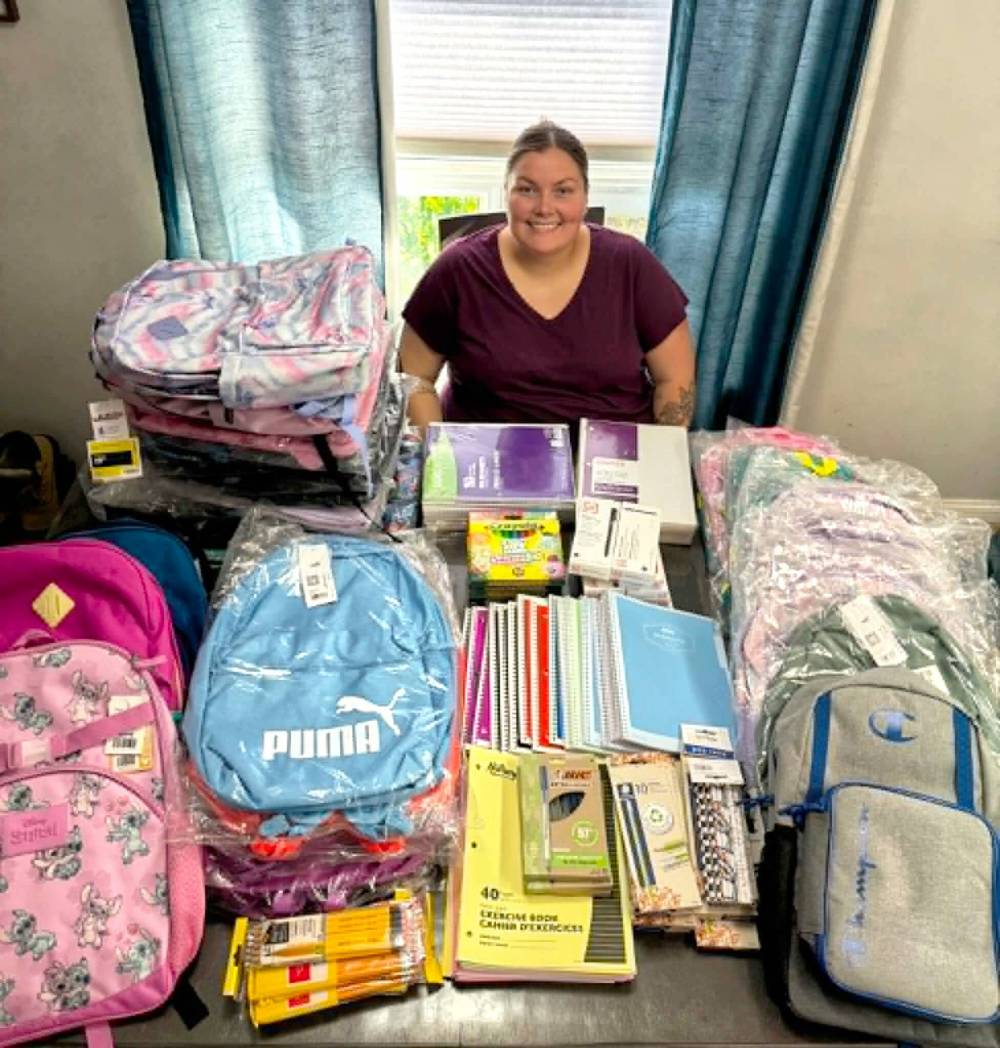
Meagan Girard, started a backpack drive last April. She hopes to fill one hundred backpacks with school supplies to help the children in school.
“I kept seeing the same thing over and over again. People are struggling, but many are too embarrassed to ask for help,” Girard said. “Or they have had a negative experience trying to access support.”
According to her, food insecurity happens to diverse people.
“I met parents who had to choose between paying rent and buying groceries, seniors deciding between food and medication, and people who couldn’t access other food banks because they didn’t have identification,” said Girard.
According to Brandy Bobier, CHU’s chief executive officer, there’s a lot of living situations that aren’t being taken into account — the rising cost of bus tickets, having no vehicle to drive to the city, and no proper documentation to access the resource.
“The whole system of documentation is hard to come around,” said Bobier.
People and volunteers in the community with a heart like Girard’s are a much-needed resource, according to Bobier.
“Our goal is to help assist as many volunteers and smaller groups like Girard,” she added.
For Girard, the work is personal in more ways than one. As an Indigenous woman, she said the way she was raised shapes how she sees the community she’s serving.
“I was raised with the belief that we take care of one another, especially during difficult times,” said Girard.
She points to the barriers she sees echoing something larger where many Indigenous families continue to face the effects of generations of trauma and systemic inequality.
“I know what it’s like to struggle, and I’ve seen how much a little kindness can mean to someone,” she said.
Those experiences have taught her to support people without judgment, and to treat everyone with dignity and respect, she added.
In May, Girard also started a backpack drive with a goal to fill more than 100 backpacks with school supplies. With four school-aged kids of her own, Girard knows how expensive school supplies can be for parents, and how difficult it can get with limited resources.
“No child should have to feel embarrassed because they don’t have a backpack or school supplies,” said Girard. “I want kids to start the school year feeling confident and included.”
The work Girard does for the community goes beyond the doors of the food bank centre where she distributes the food.
“When the food bank closes, the work isn’t over,” said Girard.
On food bank day, once the doors open, it’s usually busy — volunteers help carry groceries and take time to talk with community members. She makes sure nothing goes to waste. Excess food is delivered to the local soup kitchen or schools to use for breakfast programs.
It’s a tedious process, but “knowing the food is helping people throughout our community makes it worth it,” she said.
To donate to Girard’s food bank or backpack drive, contact her at mlauren15@hotmail.com
Maryrose Villena
Our newsroom depends on a growing audience of readers to power our journalism. If you are not a paid reader, please consider becoming a subscriber.
Our newsroom depends on its audience of readers to power our journalism. Thank you for your support.
Maryrose Villena
Our newsroom depends on a growing audience of readers to power our journalism. If you are not a paid reader, please consider becoming a subscriber.
Our newsroom depends on its audience of readers to power our journalism. Thank you for your support.
Advertisement Advertise With Us
Advertisement Advertise With Us