


Habitat for Humanity going green in Elmwood
Advertisement
Hey there, time traveller!
This article was published 10/06/2010 (5915 days ago), so information in it may no longer be current.
Habitat for Humanity’s largest ever project in Winnipeg will also be one of the country’s most energy-efficient residential developments.
The Sir Sam Steele Innovative Housing Development will see 32 homes constructed on property previously owned by the Winnipeg School Division at the corner of Nairn Avenue and Chester Street.
A dozen of the homes have already been completed. Another 10 home are are expected to be completed by late this year, while the final 10 houses are scheduled to be completed some time next year.
What makes the project unique is the fact that all of the homes are being built to Leadership in Energy and Environmental Design standards. Until now the standards have been used in Canada almost exclusively for commercial developments like Manitoba Hydro Place.
All of the Habitat homes are expected to earn at least LEED Gold certification with many earning LEED Platinum, the highest certification possible. The homes will also incorporate all of the energy-saving features recommended by Manitoba Hydro through its Power Smart program.
Habitat CEO Sandy Hopkins said LEED design will help make owning the homes more affordable by reducing ongoing utility costs for families.
“We look at everything through the eyes of the families we serve,” Hopkins said, noting that many families can’t afford to own their own home because of the high cost of heating and sewer and water services.
Independent, third-party tests have determined the 12 completed homes are among the most energy efficient in a province where housing is, on average, the most energy efficient in the country.
An EnerGuide Rating test — which grades homes on a scale of zero to 100, with the latter number indicating the home produces as much energy as it requires — determined the homes had an average score of 85. That’s only three points less than state-of-the-art homes with geo-thermal heating, Hopkins said.
“We expect the families living in these homes to pay $100 to $125 for utilities each month,” Hopkins said, noting that is enough to provide heat, water, and electricity for an average family of six.
“We’re building in a way that’s environmentally sustainable and it might be a bit more expensive up front but the payback is huge and it’s simply the right thing to do. We’re very, very happy and proud.”
So happy, in fact, that plans are already in the works for a 20 to 26-home development on the west side of Princess Street between Ross and Pacific avenues. Homes in the proposed development will meet the same strict standards of energy efficiency and will share a communal garden and playground.
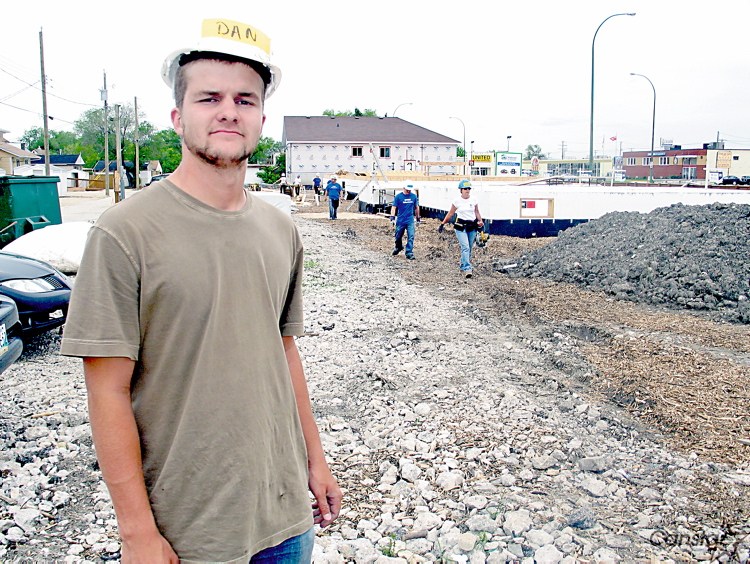
Dozens of volunteers were on-site last week helping with the construction of the project’s next 10 homes. The sounds of construction were mixed with cheers and laughter.
“It’s really rewarding to work with the future homeowners,” said volunteer Dan Paetkau. “It’s really nice to know exactly who we’re working for and to be working alongside them.”
Habitat for Humanity Winnipeg is always looking for additional volunteers, Hopkins said. Donations are also accepted and 100% of the money received is spent on the charity’s projects. Administrative costs are covered by profits from the charity’s ReStore, which accepts donations of merchandise.
For more information, visit www.habitat.mb.ca.