



The contemporary garden style
Advertisement
Hey there, time traveller!
This article was published 24/04/2013 (4728 days ago), so information in it may no longer be current.
Everyone wants low maintenance— actually, what we really want is spring to arrive. We’d probably be happy to accept some maintenance if spring would arrive with it!
In my design practice, ‘low maintenance’ is always on the list of must-haves. The contemporary garden style incorporates low maintenance practices with functionality, comfort, and bold edgy elegance.
The palette tends to be simplified but don’t mistake that for sparse and stingy/meagre. Everything in the contemporary garden is done big. Ironically, it is a style perfectly suited for smaller yards, though it works equally well in big ones.
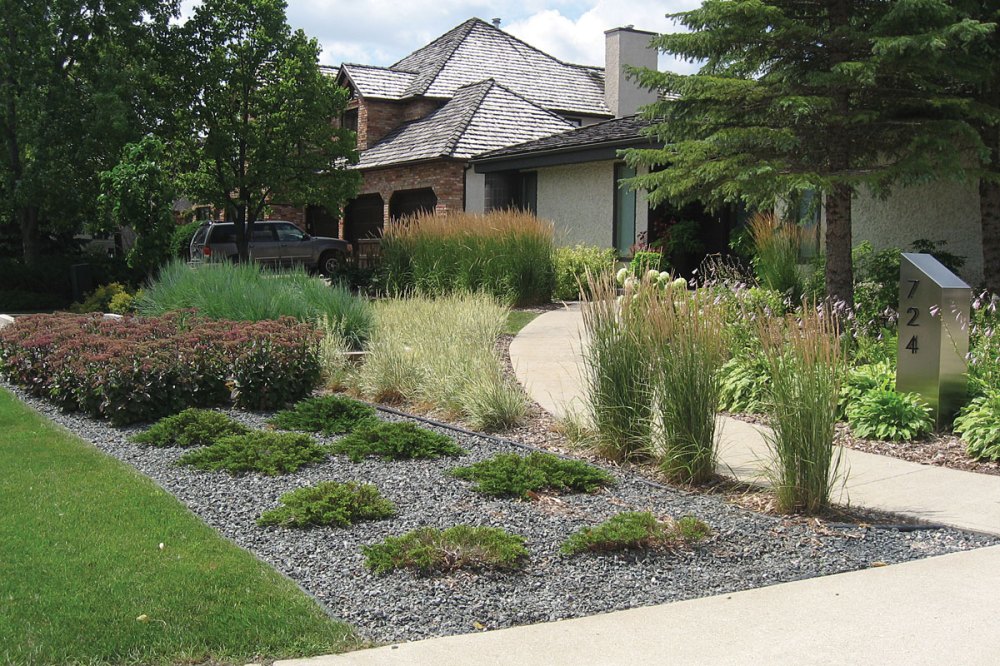
Geometry plays a central role. Patios, walkways, beds and borders tend to be squares or rectangles. Retaining walls and raised beds run in straight lines or a simple arch. Planting is either in straight lines or in masses.
Way too controlling and tedious?
It is very controlled, but in a positive way. The spaces fit together cohesively, and one flows into the next. Flow is key. Walkways flow into patios, adjacent beds flow upward into tiered beds. But before anything gets too entrenched in grids and predictable, a circle or one free-flowing edge busts through, shaking out of any kind of tedium.
In fact, shaking it up is a big part of the style. This is most obvious in the hardscaping, which is as important as the planting. It’s not just bigger patios and wider walkways (which they are), it’s playing with the materials. Juxtaposing wood against poured concrete, or precast concrete pavers surrounded with large rounded river rock, or corrugated tin shouldered up with smooth cut cedar. Individually each material breaks up a large space into smaller interesting units. Butted up together, they add surprise and edginess.
Plants are all about architecture. What has height, mass, and presence? Forget fussy flowering, this is all about texture and year-round interest. Swaths of ornamental grasses, masses of sturdy perennials, anchoring shrubs, a single sculptural tree — all selected to suit the growing conditions. In dry locations, drought tolerant plants are used.
Finishing touches include one perfectly placed oversized pot, or perhaps a whole row.
Great for the stylish, as well as the green-minded. Recycled hardscape materials are a natural fit, organic mulch adds a textural interest. And what about our Big Bluestem and Little Bluestem? Absolutely low maintenance, they own the seasons, summer through winter.
Carla Keast has a master’s degree in landscape architecture and is a Winnipeg-based freelance landscape designer. She can be reached at contact@carlakeast.com.