



Fruit production all about pollination
Advertisement
Hey there, time traveller!
This article was published 01/05/2013 (4715 days ago), so information in it may no longer be current.
Growing fruit is a surprising endeavour.
We’re familiar with raspberries, strawberries, and crabapples of course. But cherries, grapes, plums, and full-sized apples grow equally well in our climate. There’s also the intriguing gooseberry and haskap. And the often overlooked saskatoon.
Harvesting is just as surprising. Fruit ripens on its own schedule. If you’ve got plans for travel, downtime, or 16-hour workdays, the fruit still ripens. You’ll have to deal with it.
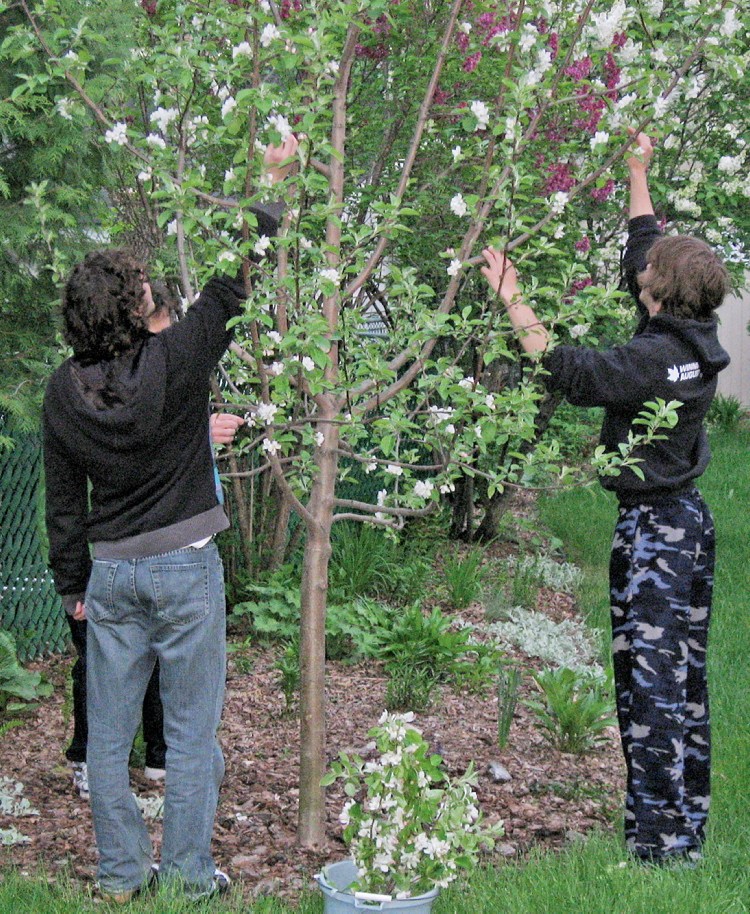
The bounty can be beyond surprise, veering into dismay. What exactly does one do with a dozen ice-cream pails of fully ripe grapes?
The biggest surprise though, is when the bounty fails to arrive. The plant flowered. The plant is healthy. Yet there is negligible fruit.
Fruit production is completely tied to pollination. Simple as that. Yet it is anything but simple.
Some plants manage pollination on their own, the self-pollinators (also referred to as self-fertile). Others require a different cultivar to provide pollen. Sometimes any plant with a vague family tie will suffice; sometimes not.
The simple group — those that are able to self-pollinate— includes raspberries, strawberries, and saskatoons. If you’re very keen on one specific variety, you can stick with it, and get a good yield.
Currants and gooseberries are also self-pollinators but you’ll get a better yield if there is a pollinator plant available.
At the other end of the pollination spectrum are those that require a pollinator plant. As a general rule, plants that serve as pollinators need to be within 450 feet (135 m). Theoretically, a neighbour’s apple is a pollinator for your apple tree. In reality, pollination can be hampered by cold wet weather and/or lack of pollinating insects.
Pears and haskap both require pollination by a different cultivar.
Apples require a pollinator. However, any apple will do — edible, ornamental, doesn’t matter.
Right in the middle of the spectrum are the cherries, grapes, and plums.
Many cherries require a pollinator, however Evans, Juliet, and the Prunus x kerrasis line do not, as they are self-fertile.
Most grapes are self-fertile, however Minnesota 78, Severnji, and Eona require a pollinator.
Plums require a pollinator, and have very specific requirements. Just any old plum will not necessarily do. Start by selecting the cultivar that is going to produce the fruit you’ll enjoy the most, and then figure out the pollination requirements. Our local nurseries are an excellent source of information.
Carla Keast has a master’s degree in landscape architecture and is a Winnipeg-based freelance landscape designer. She can be reached at contact@carlakeast.com.