


Geometry in the vegetable garden
Advertisement
Hey there, time traveller!
This article was published 15/05/2013 (4808 days ago), so information in it may no longer be current.
All too often, the vegetable garden sits like an afterthought in the back corner, a sad statement about a part of the yard that gives so much culinary pleasure.
Why not give the vegetable garden itself some prominence within the garden?
We’re not talking transforming a substantial part of the yard into a vegetable garden, or making it the major focal point. We’re talking about making it a distinct little nugget unto itself. A pleasure to be in; a delight to work in.
Vegetable plots lend themselves naturally to lines. When we think garden, most of us think rows of carrots, beans, peas… Rows are efficient for planting, watering, weeding, and harvesting. No need to fight the rows. Work with them. Take the idea of lines, and enlarge them into squares, rectangles, circles, or ovals.
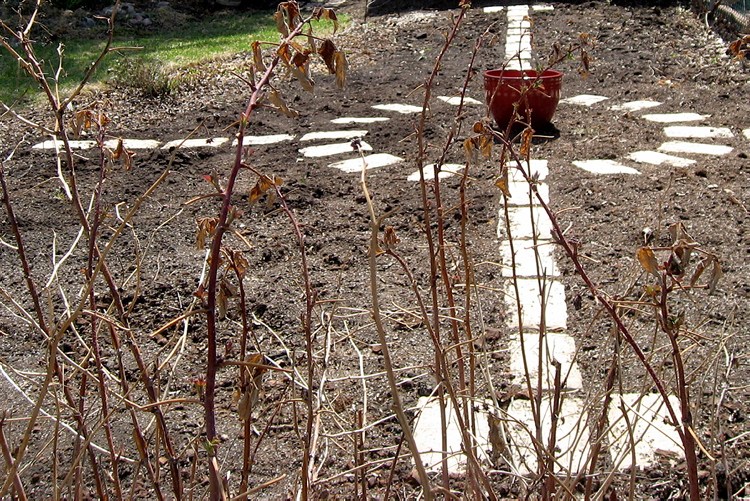
In my design practice, this kind of geometry scares the organics out of most people. But keep in mind this is one small part of the overall yard.
A small geometric nugget can easily fit into any styled yard by simply tucking it behind a border of perennials, ornamental grasses, or small shrubs. Partially hidden, it becomes a destination.
Our clay-based soil is just fine with rows too. Rows that direct and control the walking will do wonders for the soil, as even stepping lightly on our clay-based soils compacts it. Take that square or circle, and put a line down the middle and maybe another going the other way.
These are the paths. Add one around the outside of the shape.
Paths can be easily marked with stakes and string. Stay within the lines, and the compacted routes will become obvious quickly. Paths can be covered in a mulch such as leaves or bark chips. Laying down large pavers will highlight the geometry through three seasons.
The resulting cells will hold the vegetables. Base the size of each cell on being able to reach halfway across without stepping off the path.
Incorporate generous amounts of organic material into the cells yearly. Plant in rows as usual, or get whimsical with some broadcast seeding. Leaf lettuce, spinach, beets, and carrots are ideal candidates.
At this point, you’ve got a visually interesting, and very functional vegetable garden.
Add an oversized pot with some herbs as the centrepiece, or an arched entry covered in vines, and you’ve got a vegetable garden with pizzazz.
Carla Keast has a master’s degree in landscape architecture and is a Winnipeg-based freelance landscape designer. She can be reached at contact@carlakeast.com.