


Non-flowering climbers green up property
Advertisement
Hey there, time traveller!
This article was published 03/07/2013 (4713 days ago), so information in it may no longer be current.
Continuing with last week’s topic on climbers, this week’s column on non-flowering climbers is for those who want to add a bit of colour, seasonal interest, or simply soften a wall or fence without an attention-grabbing floral display.
As always, figure out your needs first. The non-flowering climbers offer summer-long greens, some have amazing fall colour, or great winter effect. Are you content to let the vine meander or do you prefer a tidier look? Would fruit be an added bonus or burden?
Virginia creeper and its cousin Engleman’s ivy are the go-to green climbers. We’ve all seen them covering walls, fences, slow-moving dogs. They are reliable, fast, and exuberant. One plant can easily reach 15 to 20 metres in length.
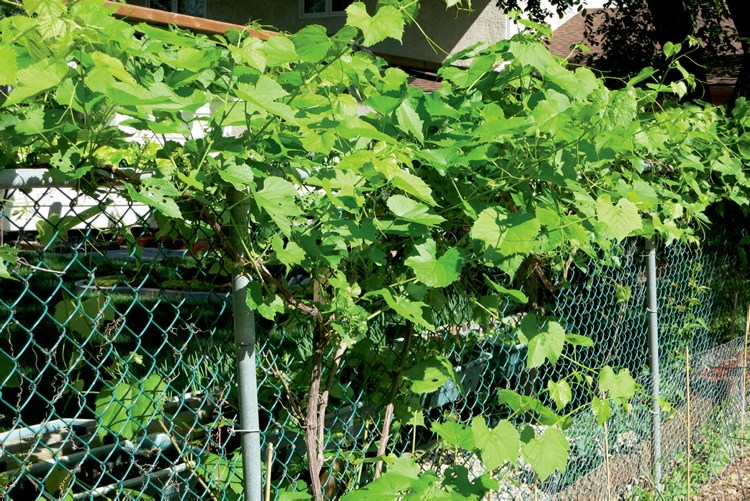
Virginia creeper requires a support, as it uses tendrils to hold itself up. Simply unleash Engleman’s ivy and it’ll take it from there. It uses suckers and can self-attach. It has been reported to damage wood so is not the best choice for house walls with wood siding.
Both these vines turn flaming red in the fall. Absolutely stunning. They also produce small blue berries, which provide a bit of winter interest while the birds enjoy them. Light is not a concern for these climbers — full sun to full shade, and anything in between will do just fine. They require moist, well-drained soil. In very dry soil, Engleman’s ivy will lose its grip and the entire vine will drop to the ground.
Both Virginia creeper and Engleman’s ivy are difficult to eradicate, so make sure they are the right plant for you before planting either of them.
Bittersweet and grape offer the same lovely summer green, but on a smaller, more controllable scale. Both reach a length of about 6 metres.
Bittersweet requires a fence or trellis support. It will happily leap onto small trees or shrubs and choke them, so locate it carefully. This climber really shines in the fall with its yellow leaf colour and bright orange berries. With the exception of ‘Autumn Revolution’, which is self-fertilizing, a male and a female plant are required for fruit production. It prefers full sun and is drought-tolerant when established.
Grapes vines produce edible grapes. Some are self-fertilizing, others require two plants for pollination. A support is needed and a chain-link fence is ideal. Keep it tidy with a spring pruning. It will grow in partial sun, but full sun is required for good fruit production. It requires moist well-drained soil.
Carla Keast has a master’s degree in landscape architecture and is a Winnipeg-based freelance landscape designer. She can be reached at contact@carlakeast.com