



Focus on texture
Advertisement
Hey there, time traveller!
This article was published 17/07/2013 (4548 days ago), so information in it may no longer be current.
Without a doubt, exciting colours, large blossom, heavenly scents — the mainstay offering of flowers — are big-time attention grabbers.
But whether your garden abounds in complex floral displays or calmly drifts along in soothing greens, texture has a hand in creating its overall feel.
Foliage, more than a mere holder of the flower, is the primary source of texture.
Texture is simply the size of the leaves. Such a big to-do over leaf size?
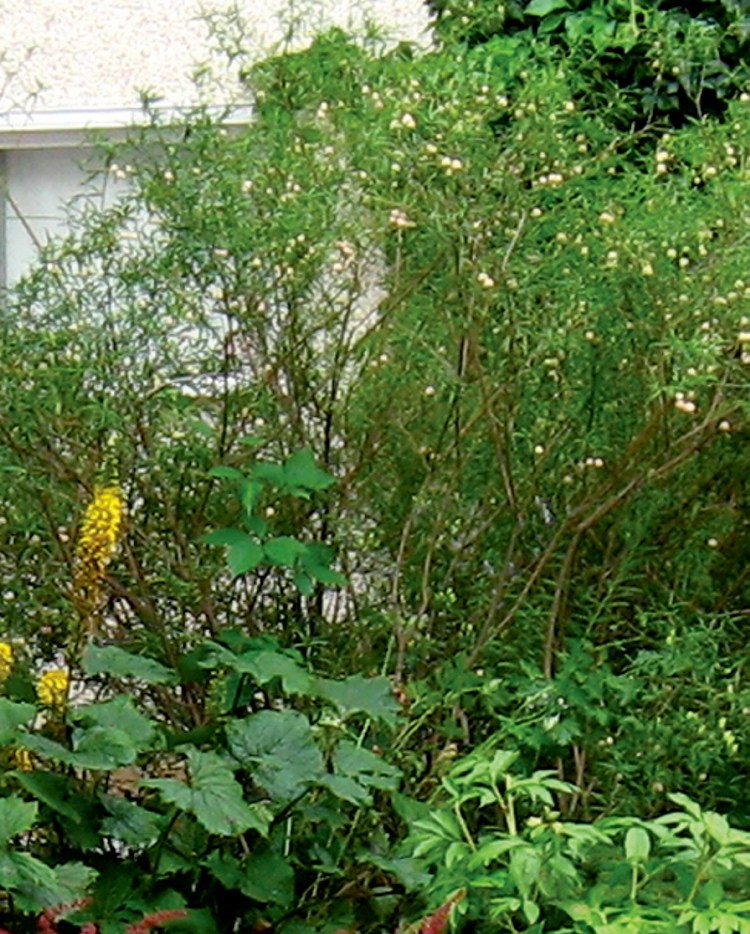
Think of it as a wizard’s magical wand. Fence feeling too close? Put some fine-textured plants against it and they’ll visually nudge it back a bit. Yard too big and hollow-feeling? Add a mass planting of coarse-textured plants to reel it in a bit.
Don’t get carried away with using those fine-textured plants though — a yard full is going to add tedium and even a weedy look. Same thing with a yard full of coarse- textured plants — they can be both tedious and tiring.
Fine texture is characterized by small, narrow leaves and stems. It tends to give an open, airy feel. Birch, Turkestan burning bush, caragana, dwarf blue leaf arctic willow, silver mound, astilbe, sweet woodruff, Russian sage, ferns, and ornamental grasses are among the group at the far end of the fine-textured plants.

Coarse texture is characterized by large leaves, often with exotic shapes, bold colour contrasts, or a leathery, waxy feel. Coarse texture plants, with their bold leaves, add drama. They want attention, and our eyes oblige. Black walnut, bitternut, golden elder, hydrangea, hosta, bergenia, peony, globe thistle, and ligularia are among the group at the far end of the coarse-textured plants.
Predictably, medium texture is somewhere in the middle, and the majority of plants belong in this group.
However, depending on the pairing, plants can change groups. A dogwood has a fine texture when hanging out with ligularia, but fairly course when paired up with astilbe. Use this as more wizardry on your part.
You absolutely love coral bells? Then it certainly should be the centre of attention. Keep the hosta and its much coarser attention-grabbing texture well out of sight.
Instead, pal it up with a finer textured plant like periwinkle or one of the low growing daylilies. Their medium texture becomes fine texture next to the coral bells, and they’ll graciously concede centre stage to it.
Carla Keast has a master’s degree in landscape architecture and is a Winnipeg-based freelance landscape designer. She can be reached at contact@carlakeast.com