



Museums provide insight into Native American history

Advertisement
Hey there, time traveller!
This article was published 21/08/2013 (4609 days ago), so information in it may no longer be current.
As Winnipeg awaits the opening of the Canadian Museum for Human Rights, there is much discussion about what it will contain.
One of the exhibits being planned is about Canada’s treatment of aboriginal people. While I’m sure it will be both compelling and controversial, it won’t be the first museum to shine light on aboriginal history.
In Phoenix, Ariz., the Heard Museum is one of the world’s most renowned destinations for learning about Native American arts and culture. Its mission is to educate about the Indigenous peoples of the Americas, emphasizing the tribes of the southwest.
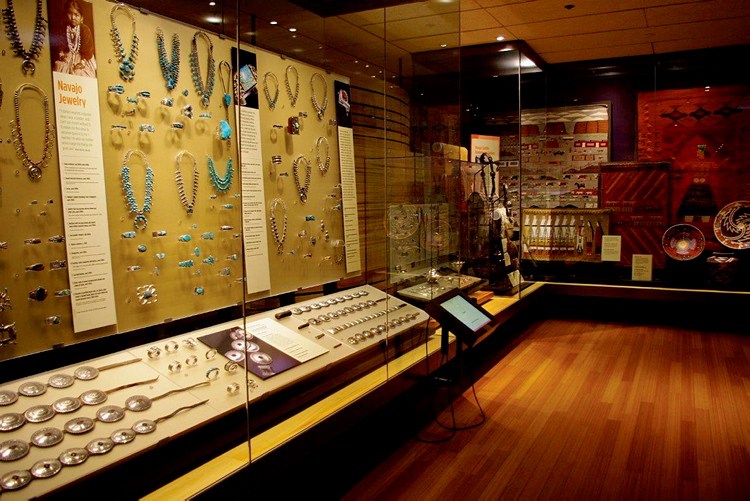
The Heard Museum was founded in 1929 by Dwight and Maie Bartlett Heard, a prominent couple who moved to the valley from Chicago in 1895, and who wanted to share their private collection of Native American artifacts and art. It has since grown in size and stature to where it is recognized internationally for the quality of its collections and educational programming.
Dedicated to the sensitive and accurate portrayal of Native American cultures, the Heard Museum collaborates with native people to present first-person voices. Visitors enjoy guided tours, artist demonstrations, film screenings, guest speakers, and community gatherings in indoor and outdoor spaces. It also hosts markets, festivals, competitions and special events, like an upcoming presentation on Oct. 10 by the legendary Buffy Sainte-Marie, who will speak about her music career and role as a native rights and education activist.
I was fortunate to tour the Heard Museum last year. For me, the most moving exhibit was called “Remembering Our Indian School Days: The Boarding School Experience.”
Using four generations of first-person recollections, writings, art, and memorabilia, it very vividly recreates what life was like for children taken away to government-run boarding schools. It is incredibly sad and shocking, and something everybody in North America needs to see.
Hopefully it will help create more understanding and compassion for the devastation to Native families in the U.S. — and also Canada.
In Washington D.C., New York City, and Suitland Md., you’ll find the National Museum of the American Indian (NMAI). The NMAI is a component of the Smithsonian Institute, the world’s largest museum complex. It is responsible for one of the most expansive collections of Native artifacts covering the entire Western Hemisphere, including objects, photos and archives.
I got to visit the New York location earlier this year, along with a contingent of a few dozen Canadians and a few hundred New Yorkers, all there to take in a music showcase called Native America North. This inaugural event featured performances by three of Canada’s best aboriginal artists — Don Amero, Digging Roots, and Elisapie. It was an incredible afternoon of music, and went over so well that it set the framework for an annual event.
So if you happen to be in New York in January 2014, be sure to visit NMAI for some great Canadian music, impressive exhibits, and moving stories from past and present.
Admission is free. The experience is priceless.
RoseAnna Schick is an avid traveller who seeks inspiration wherever she goes. Email her at rascreative@yahoo.ca
RoseAnna Schick
Travelations
RoseAnna Schick is an avid traveller and music lover who seeks inspiration wherever she goes. Email her at rasinspired@gmail.com
Our newsroom depends on a growing audience of readers to power our journalism. If you are not a paid reader, please consider becoming a subscriber.
Our newsroom depends on its audience of readers to power our journalism. Thank you for your support.
RoseAnna Schick
Travelations
RoseAnna Schick is an avid traveller and music lover who seeks inspiration wherever she goes. Email her at rasinspired@gmail.com
Our newsroom depends on a growing audience of readers to power our journalism. If you are not a paid reader, please consider becoming a subscriber.
Our newsroom depends on its audience of readers to power our journalism. Thank you for your support.
Advertisement Advertise With Us