



Putting bad plants to good use
Advertisement
Hey there, time traveller!
This article was published 15/09/2015 (3862 days ago), so information in it may no longer be current.
I love plants, but even I have a few I could do without.
While we all have personal aversions, most of us share a hardy dislike for the same plants. And this group share a common trait: growth. They grow too fast and spread too much. Ironically, ornamental plants that don’t grow well or quickly enough are the source of a great deal of gardening heartbreak. So how about we re-examine some of the heartily disliked and see if they can be put to good use?
A word of caution though, embracing undesirable plants is not an invitation to weeds. While weeds are a motley catchall group of mostly undesirables, among this group are the invasives. Don’t toy with invasives. They displace native plants, destroy habitat, and once unleashed, can be exceedingly difficult to eradicate. And don’t be fooled by a pretty face — Ox-eye daisy, Purple Loosestrife, Himalayan Balsam, Common Tansy, and Invasive Phragmities — all give most of us a momentary yearning. Don’t go there. Consult the Invasive Species Council of Manitoba website for excellent information prior to inviting a weed into your yard.
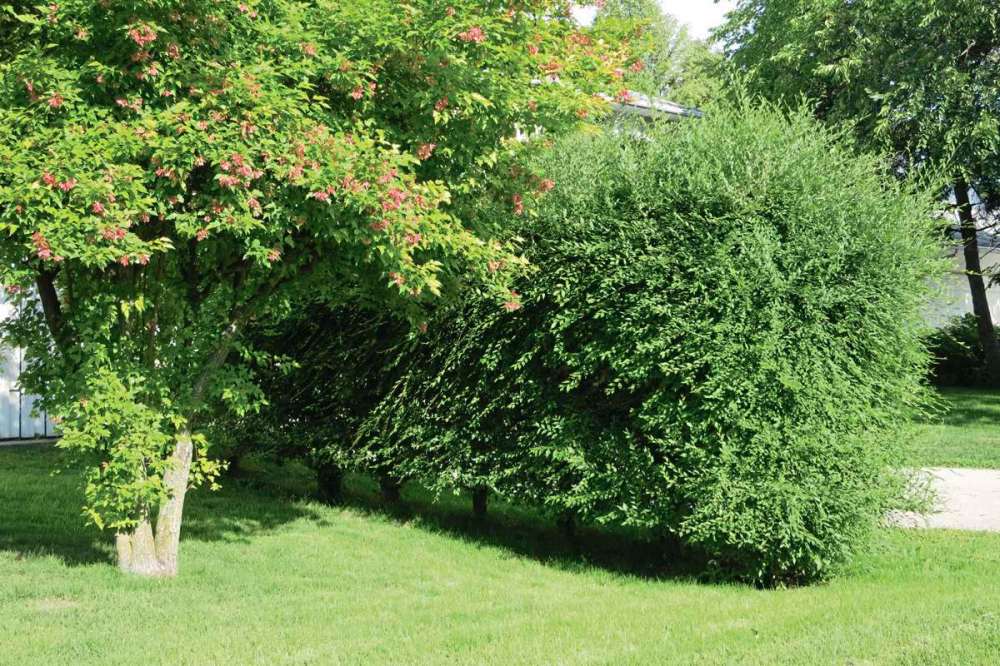
Ironically, one of the big nuisance plants for many of us is in fact a tree. Oh, the pleasure of weeding a billion Siberian Elm saplings out of our gardens every spring. But if you need a fast-growing, hardy, put-up-with-anything hedge that won’t break the bank account, Siberian Elm is worth considering. Fast growing hardly describes it. And just as nicely, it’ll tolerate plenty of trimming, which offers the potential for it to provide good screening in a clean, tidy manner. I’d specifically plan for the first pruning to coincide with immediately after flowering, prior to seed set.
Prior to the introduction of chemical herbicides, clover was a part of most lawn seed mixes. And it did nothing but good. As a nitrogen fixer, it actually improved the growing conditions for the grasses. Drought-tolerant, with tiny flat foliage that helps deter weeds, and white flowers the bees love — what’s not to embrace here? Use the white clover, and mow it with the rest of the lawn.
I hear a heartbreaking number of complaints about ferns. Spread, they do. Put them in full sun without enough moisture and they’re a brown disaster. But in that difficult moist shady spot? Lush, green, dependable, they make a fine-textured statement with an exotic flare. Isn’t that exactly what we want in those spots?
Carla Keast has a master’s degree in landscape architecture and is a Winnipeg-based freelance landscape designer. She can be reached at contact@carlakeast.com.