


Strong parent-child relationships help counter bullying
Advertisement
Hey there, time traveller!
This article was published 22/02/2017 (3366 days ago), so information in it may no longer be current.
Having your child come home crying about a bully at school might be upsetting to hear as a parent but sometimes being “bullied” is your child’s misinterpretation of losing a small quarrel with a classmate.
As a parent, it’s your job to ask the right questions to determine whether more action is needed than just a simple hug.
Stephanie Ens, intervention and outreach team co-ordinator at NorWest Co-op Community Health Centre, says bullying is an adaptive behaviour that accomplishes a goal — often related to obtaining resources or improving one’s reputation or social status.
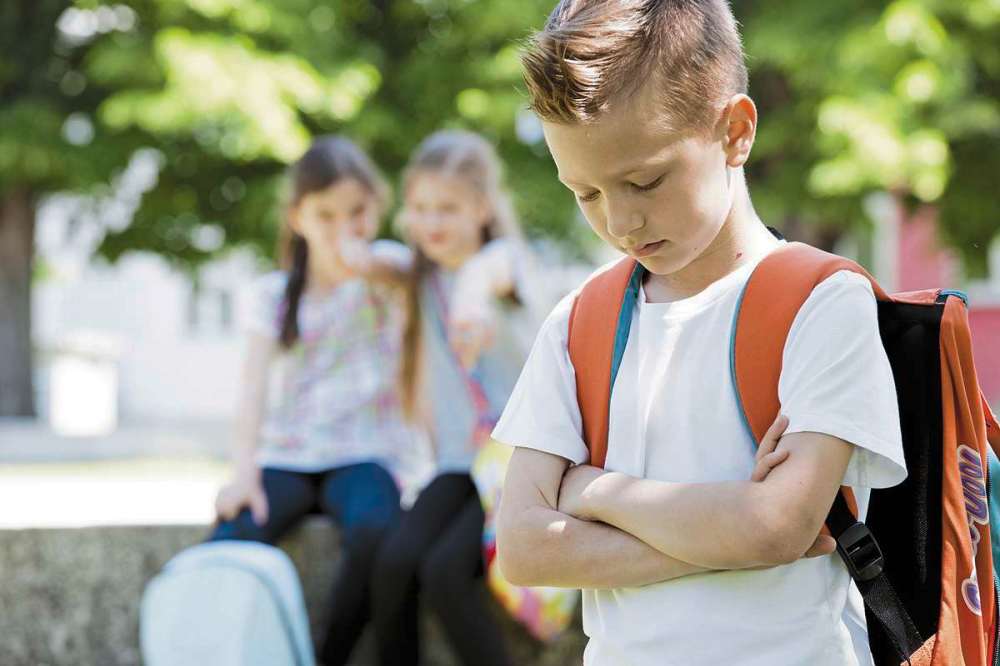
“When your three-year-old hits another child for touching the toy they are playing with, this is not considered bullying. To be considered bullying, the action must be harmful, purposeful, and repeated,” Stephanie said.
“There must also be a power imbalance, which can manifest in physical or social ways. Typically this sort of behaviour is not seen until a child’s brain can comprehend these more abstract concepts, usually starting around the age of eight,” she said.
Studies show that children who were bullied at around the age of eight can suffer from depression and anxiety in the long run. Females have shown an increased risk of suicidal tendencies in adulthood and bullying has also been linked to school violence.
“Parental knowledge is the key to determining whether or not your child is being bullied or is bullying others,” Stephanie said.
The phrase “parental knowledge” goes beyond parental monitoring.
“Knowing where your child is, who they are with, and what they are doing is important, however parental knowledge — knowing your child’s friends, interests, and triggers — is even better,” she said.
This knowledge can only be established through a loving and trusting relationship created by interacting with your child on a regular basis. This will help reveal problems such as bullying and children with strong parent-child relationships experience less negative effects of bullying.
To determine whether a situation is actually “bullying,” ask yourself:
• Is this behaviour purposeful?
• Have I seen this happening before?
• Will there be physical or social harm to the victim?
• Does there seem to be a power imbalance?
If the answer to most of these questions is “no,” perhaps you can step back and see if the children can figure it out for themselves.
If the answer to most of these questions is “yes,” then it’s time to intervene.
Teach your child to be assertive against a bully by using eye contact, neutral and strong body language, and by using an “I” statement such as: “I want you to stop” or “I don’t like that.”
Safeteen, a violence-prevention program founded by Anita Roberts, teaches assertiveness skills to empower teens and prevent violence. Research conducted on the effectiveness of the Safeteen program shows that these assertiveness skills actually work to decrease victimization.
For more information on Safeteen, visit www.safeteen.ca.
If you think your child is being bullied or your child is bullying others, you can call the 24-hour crisis line at 204-615-0311 or NorWest Co-op Community Health Centre at 204-938-5900.
Nancy Heinrichs is the executive director for NorWest Co-op Community Health Centre. For any questions or comments, please email nheinrichs@norwestcoop.ca