



Museums offer deeper look into history of war

Advertisement
Hey there, time traveller!
This article was published 06/11/2018 (2696 days ago), so information in it may no longer be current.
Remembrance Day is a time to reflect upon those who fought for freedom.
Next year will mark 80 years since the start of the Second World War in 1939, considered the largest and deadliest war in history, and involving more than 30 countries. Today, wartime museums around Europe are frequented year-round by those wanting to learn more.
Perhaps the most famous of Second World War battles was the D-Day invasion of June 6, 1944, which saw Allied forces primarily consisting of Canadian, British and American troops swarm the Normandy coastline in Northern France. A 60-mile stretch was chosen for its firm and flat beaches, and divided into five sectors codenamed Sword, Gold, Omaha, Utah, and Juno. The latter was under Canadian leadership and manned by 14,000 Canadian troops. Today’s Juno Beach Centre in Courseulles-sur-Mer is a contemporary museum in the shape of a maple leaf, dedicated to the Canadian soldiers who fought here.
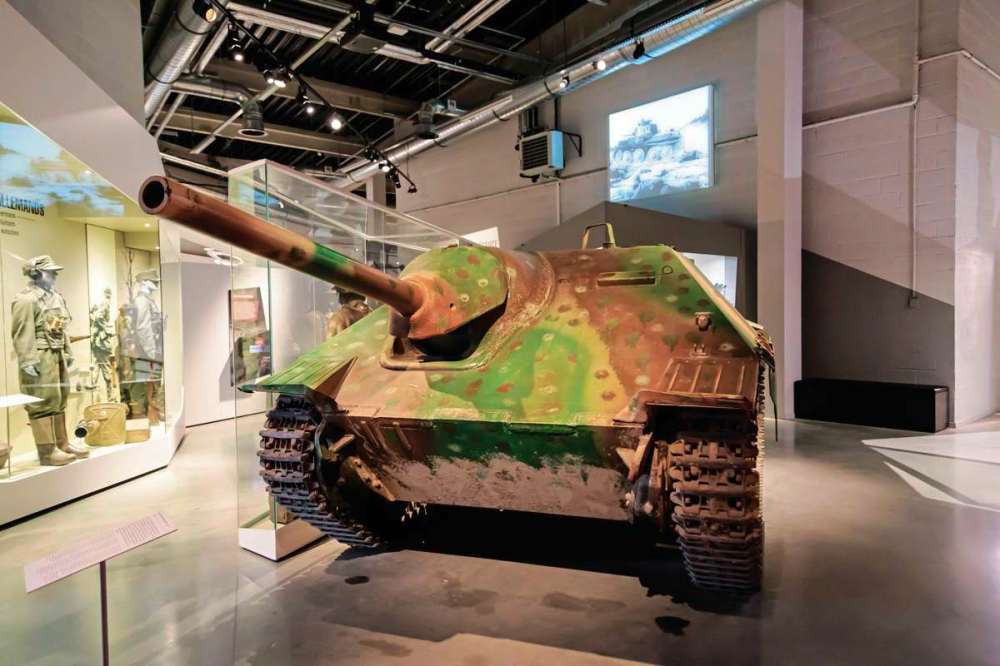
The Bastogne War Museum brings the Second World War in Belgium to life. The nearly six-week-long Battle of the Bulge started Dec. 16, 1944, and continued right over Christmas. It would be the last major German offensive on the Western Front, as the forested Ardennes region of eastern Belgium became a surprising stronghold in resistance. The German army ended up with severely depleted armored forces which they were never able to adequately replenish, and this triggered the beginning of the end of Germany’s relentless advancement westward across the European continent.
From the outside, on one of Amsterdam’s busiest streets, it looks like any other 17th century canal house commonly seen in the urban centre. What’s remarkable about Prinsengracht 263 is that eight people hid for two whole years in its secret annex to escape Nazi persecution, before being discovered and deported to concentration camps. And the whole world knows about it now because of the writings of a young girl named Anne Frank. While she did not survive the war, her diary was published in 1947, and her home became the Anne Frank House museum in 1960.
Beneath the streets of London lies the nerve centre where Winston Churchill directed the Second World War. History was made in the underground bunker, a labyrinth of rooms and corridors that sheltered Churchill and his wartime cabinet from German aerial raids. The Churchill War Rooms museum depicts what life was like for around-the-clock staffers who spent thousands of hours working, living, and sleeping underground from 1938 onwards, as world leaders secretly plotted the route to Allied victory. The Map Room itself has remained exactly as it was left on Aug. 16, 1945, the final day it was used.
The German Tank Museum in Munster explains the history and development of tank technology from earliest examples right up to present-day NATO equipment. More than 150 tanks and related armored vehicles are featured, with 40 being from the Second World War. During this era the advancement of tanks progressed fast in all countries, with tanks produced around the world in high numbers. Today, these sentinels of steel remain a stark reminder of the scale of destruction that comes from war.
Lest we forget.
RoseAnna Schick is an avid traveller who seeks inspiration wherever she goes. Email her at rascreative@yahoo.ca
RoseAnna Schick
Travelations
RoseAnna Schick is an avid traveller and music lover who seeks inspiration wherever she goes. Email her at rasinspired@gmail.com
Our newsroom depends on a growing audience of readers to power our journalism. If you are not a paid reader, please consider becoming a subscriber.
Our newsroom depends on its audience of readers to power our journalism. Thank you for your support.
RoseAnna Schick
Travelations
RoseAnna Schick is an avid traveller and music lover who seeks inspiration wherever she goes. Email her at rasinspired@gmail.com
Our newsroom depends on a growing audience of readers to power our journalism. If you are not a paid reader, please consider becoming a subscriber.
Our newsroom depends on its audience of readers to power our journalism. Thank you for your support.
Advertisement Advertise With Us