


Canoeing Pigeon River is not for the timid

Advertisement
Hey there, time traveller!
This article was published 01/07/2020 (2165 days ago), so information in it may no longer be current.
I’ve always loved a good adventure, and paddling has been an important and impactful part of my life. It has given me insight and inspiration. It has brought pleasure and peacefulness and also fear and anxiety. I usually experience a combination of all those things, on any given voyage — particularly the eight-day canoe trip I once did on the Pigeon River.
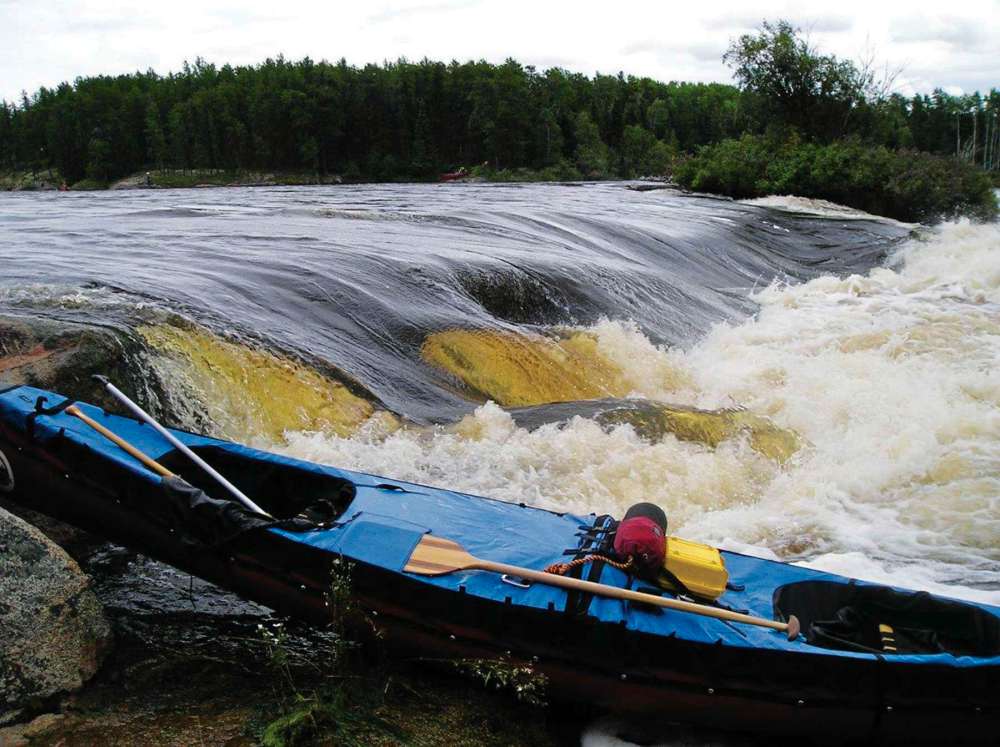
With runs of rapids comparable in size and frequency to the Colorado River, Manitoba’s Pigeon is a whitewater dream — or nightmare, if you suddenly realize big waves aren’t your thing.
The journey began with a three-hour drive from Winnipeg through the heart of the Interlake up Highway 8 and Provincial Road 234 to the end of the road — literally. We took a ferry to reach Matheson Island, loaded our gear into a float plane, fastened four canoes to the floats, and were whisked away to the wild.
A short time later, we landed in the middle of Vickers Lake. The pilot proceeded to cut the engines, open the airplane doors, and start lowering our gear down onto the floats below.
“OK, here’s where you get off,” he announced.
“Right here?” I asked him. “Yes,” he replied.
“You mean right here, right here? In the middle of the lake?”
“Yup, right here,” he replied.
Well then, I thought to myself, it’s a good thing we brought canoes.
From the drop spot it was a short paddle to the tributary mouth. Located in Atikaki Provincial Wilderness Park, the Pigeon River is one of Manitoba’s most unique waterways, and a great test of both bravado and limitation. Carving its way through Canadian Shield country, it flows northwest with an elevation drop of 80 metres over 90 kilometers before emptying into Lake Winnipeg. The natural descent presents paddlers with an exhilarating stretch of over 50 sets of rushing rapids and spectacular falls. It’s terrain that challenges the most skilled and courageous canoeist, while scaring the crap out of the rest of us.
Most of the rapids on the Pigeon are not too technical, which means you don’t need to zigzag very much to get through. However, what they lack in technicality is more than made up for in volume. To put it simply, they are big. In fact, the majority are too massive to run in open canoes, making spray-skirts a must. Precision reigns here, with simple results for any given set — choose the right line to shoot through unscathed, or face the consequences of error, which almost always means dumping into churning waters.
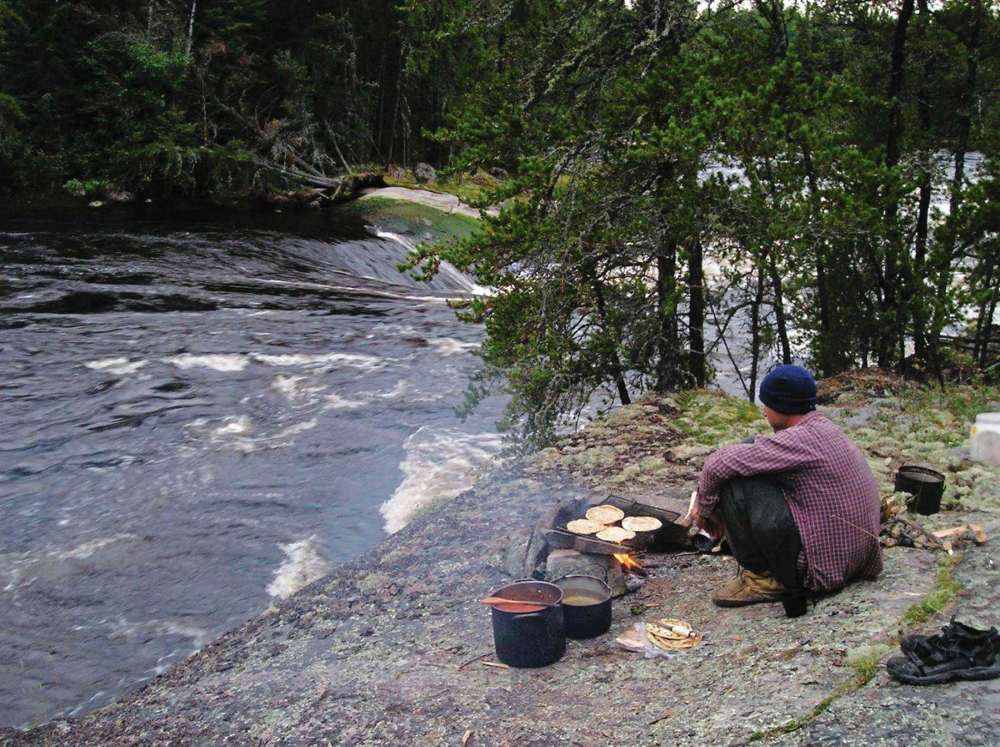
The whitewater will get your adrenaline going, over and over again, broken up by short breaks of calm in between. This is not the kind of river you want to run blindly, so if you hear the roar of raging water up ahead but can’t see what’s around the next corner, err on the side of caution and scout from the shoreline. If a run is deemed too dangerous, or someone is unsure of their ability, the presence of portage trails allow you to keep your feet on solid ground.
The Pigeon is best travelled by experienced paddlers, led by skilled and knowledgeable wilderness guides, who make sure that safety is the No. 1 priority. The thing I like the best about guides is they will let you paddle in their canoe on days when your nerves of steel suddenly melt into little pools of molten metal, as you discover that maybe great big rapids aren’t necessarily your thing.
At the end of the day, as the sun sets and the campfire glows, the absolute best thing about the Pigeon is that it is unpopulated, pristine, and precious. With very few people travelling its waters each season, seeing others on the river is rare — making the wilderness experience as good as it gets.
Now if only those rapids were just a wee bit smaller.
RoseAnna Schick is an avid traveller and music lover who seeks inspiration wherever she goes. Email her at rascreative@yahoo.ca
RoseAnna Schick
Travelations
RoseAnna Schick is an avid traveller and music lover who seeks inspiration wherever she goes. Email her at rasinspired@gmail.com
Our newsroom depends on a growing audience of readers to power our journalism. If you are not a paid reader, please consider becoming a subscriber.
Our newsroom depends on its audience of readers to power our journalism. Thank you for your support.
RoseAnna Schick
Travelations
RoseAnna Schick is an avid traveller and music lover who seeks inspiration wherever she goes. Email her at rasinspired@gmail.com
Our newsroom depends on a growing audience of readers to power our journalism. If you are not a paid reader, please consider becoming a subscriber.
Our newsroom depends on its audience of readers to power our journalism. Thank you for your support.
Advertisement Advertise With Us
Advertisement Advertise With Us