


Winnipeg’s history on the diamond

Advertisement
Hey there, time traveller!
This article was published 09/09/2020 (2097 days ago), so information in it may no longer be current.
Who knows what the future of minor league baseball will be. The leagues that belong to the National Association of Professional Baseball are not operating this season due to the pandemic.
Before they were shut down, Major League Baseball (MLB) unveiled a plan that would see teams affiliated with the majors cut to a total of 120 with each MLB team operating four teams.
Forty-two teams would disappear from affiliated organized baseball ranks.
Leagues also would be reorganized geographically for the 2021 season. If there is one.
Another question is whether independent leagues such the American Association where the current version of the Winnipeg Goldeyes play will thrive or disappear as a result.
Winnipeg’s connection to what is known as organized baseball can be traced back to the 1903 season when the Maroons played in the Northern League. That season the Northern became an affiliated league at the Class D level. At the time there were four levels from A down to D. The city’s last organized baseball team was the Winnipeg Whips, a Montreal Expos farm team, that played in the AAA International League during part of the 1970 season and in 1971.
After being without an organized team from 1922 to 1932, Winnipeg returned to the Class D Northern League in 1933. At the time, the minors had 14 leagues including three classified as AA.
By the early 1940s, around 45 leagues were operating and more than 300 communities had a minor league team in organized baseball. Maroons, who called Sherburn Park home, won the Northern League championship three times between 1935 and 1942, the team’s final season. Success came despite the Maroons not having a working agreement with a major league team.
The Maroons had to hunt for players not owned by a major league team. In 1939 when Winnipeg won its second title, local multi-sport athlete Hugh Gustafson was named to the all-star team at first base.
During the Second World War, many leagues stopped play and by 1945, only a dozen operated.
The period from 1946 to 1951 is sometimes described as The Golden Age. By 1949, 438 communities, some with less than 2,000 citizens, played in 59 leagues with six classifications from AAA to D. There were 26 leagues at the lowest level. The Brooklyn Dodgers had 25 farm teams and the New York Yankees 21.
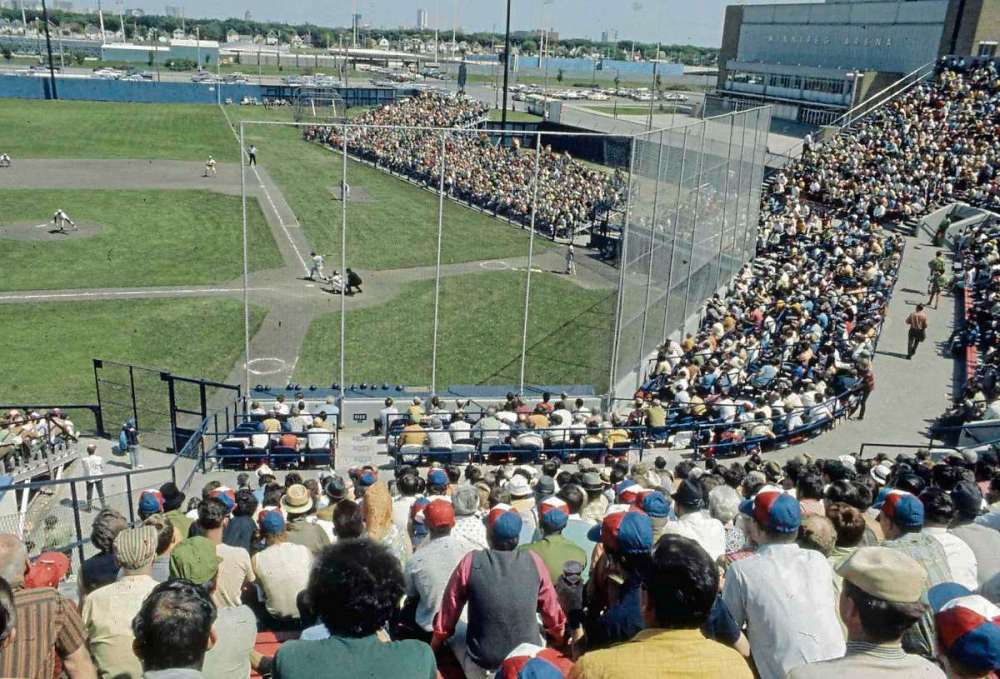
Manitoba was without a team during this period of growth. In 1954, organized baseball returned to Winnipeg with a new Class C Northern League team called the Goldeyes.
A diamond in the northwest corner of the new Winnipeg Stadium became its home and the St. Louis Cardinals of the National League was the team’s parent club. The Goldeyes won three championships in the team’s 11 years in the league.
In 1957, they beat Duluth-Superior White Sox in the final and the next season their victim was the Aberdeen Pheasants. Winnipeg pitcher Bill Carpenter led the league with 19 wins.
The third championship happened 60 years ago today on Sept. 9, 1960. A future Cardinal, 20-year-old rookie Harry Fanok, pitched a four-hit 9-0 shutout over Duluth-Superior to give Winnipeg its third title in four seasons. Fanok also hit a home run and triple.
The partnership with the Cards allowed local fans to see future major league players in their formative years. Goldeyes who went on to the majors included National Baseball Hall of Fame pitcher Steve Carlton, pitchers Tom Hilgendorf, Dick Hughes and Ray Sadecki, catcher Jim Schaffer, infielder Julio Gotay, outfielders Johnny Lewis and Walt (No Neck) Williams, and Dal Maxvill, who became a Cardinals shortstop and general manager. Lou Brock, Orlando Cepeda, and Joe Torre won Northern League batting championships, and Willie Stargell, Jim Palmer and Gaylord Perry also played for opponents.
The six became Hall-of-Famers. Fans also got to watch future MLB pitchers Jim (Mud Cat) Grant, Denny McLain, Dave Boswell, and fireballer Bo Belinsky, all of whom led the league in pitching categories.
Memories of Sport appears every second week in the Canstar Community News weeklies. Kent Morgan can be contacted at 204-489-6641 or email: sportsmemories@canstarnews.com
T. Kent Morgan
Memories of Sport
Memories of Sport appears every second week in the Canstar Community News weeklies. Kent Morgan can be contacted at 204-489-6641 or email: sportsmemories@canstarnews.com
Our newsroom depends on a growing audience of readers to power our journalism. If you are not a paid reader, please consider becoming a subscriber.
Our newsroom depends on its audience of readers to power our journalism. Thank you for your support.
T. Kent Morgan
Memories of Sport
Memories of Sport appears every second week in the Canstar Community News weeklies. Kent Morgan can be contacted at 204-489-6641 or email: sportsmemories@canstarnews.com
Our newsroom depends on a growing audience of readers to power our journalism. If you are not a paid reader, please consider becoming a subscriber.
Our newsroom depends on its audience of readers to power our journalism. Thank you for your support.
Advertisement Advertise With Us
Advertisement Advertise With Us